
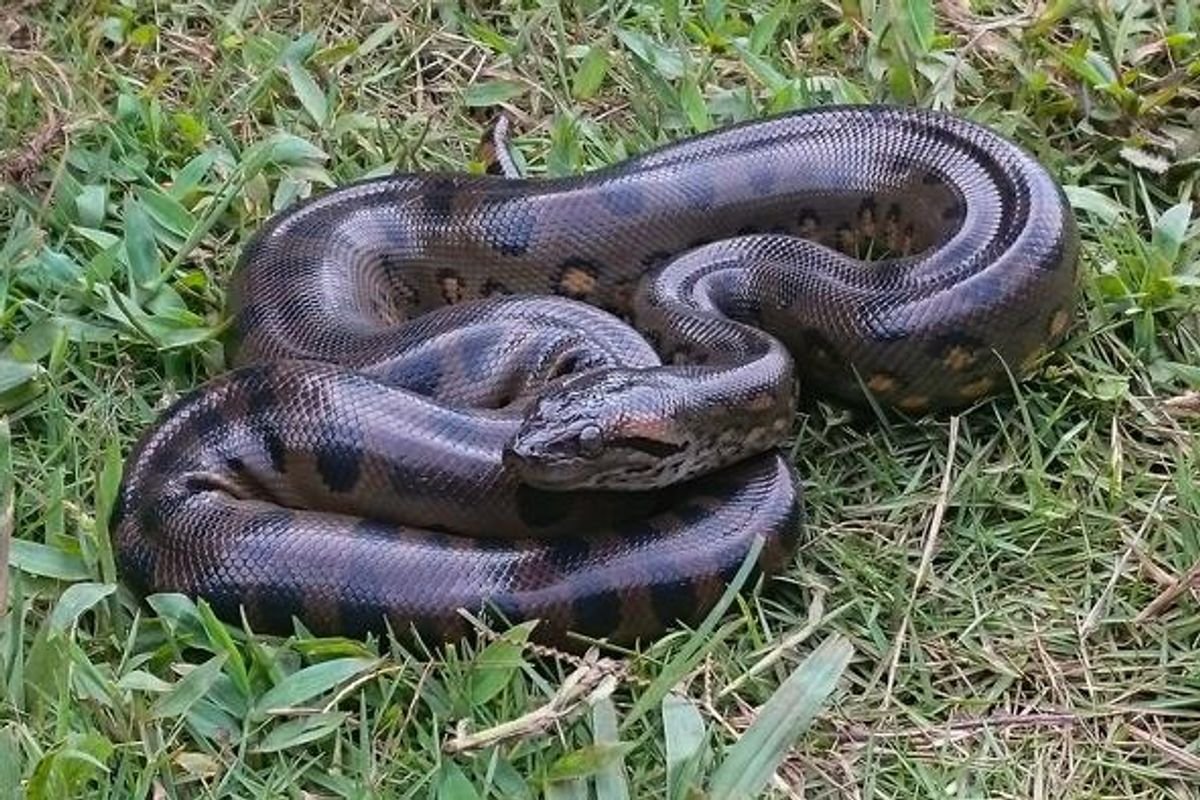
Rare Anaconda Fossils Prove They Have Always Been Enormous and Outlived Other Prehistoric Giants
The Miocene, 23 million to 5.3 million years ago, brought a warm, humid climate, allowing flora and fauna to flourish and reach record-breaking sizes due to abundant resources. As the climate shifted, with temperatures dropping overall, some species faced extinction, and other animals shrank, adapting to scarcer environments. Not so the anaconda, the queen of all snakes, however.
Newly discovered fossilized anaconda bones from excavation sites in Venezuela suggest that one of the largest snakes on Earth hasn’t changed at all over the past 12 million years, beating the odds of reptile evolution, previously thought to be at the mercy of even minuscule temperature changes.
Published in the Journal of Vertebrate Paleontology, the study from the University of Cambridge, working in collaboration with the University of Zurich and the Museo Paleontológico de Urumaco in Venezuela, states ancient anacondas spanned 13 feet to 16 feet, identical to the anacondas that still slither around tropical South America today.
Read More: Ancient Crocodile Fossil from Egyptian Desert Rewrites One of Earth’s Greatest Survival Stories
Anacondas and Other Reptiles Became Gigantic During the Miocene

Anacondas can have more than 300 vertebrae in their backbones, and measurements of the size of individual fossilised vertebrae can provide a reliable indication of how long a snake was.
(Image Courtesy of Jorge Carrillo-Briceño)
The non-venomous constrictor snakes are fascinating reptiles, with females reaching record lengths of up to 23 feet and giving birth to live young.
“Despite lacking limbs, they thrive in an extraordinary range of ecosystems, climbing trees, swimming, burrowing, and even gliding,” says study lead author Andrés Alfonso-Rojas, Ph.D. student in the Department of Zoology at the University of Cambridge. “Understanding how such a seemingly simple body plan has made them so successful is what continues to inspire my research.”
They emerged in the swamps, marshes, and rivers of the rainforest region that stretched across vast parts of prehistoric South America, alongside other reptiles such as the ten-foot giant freshwater turtle from the genus Stupendemys, or the massive 40-foot Purussaurus caimans, which unfortunately couldn’t adapt to drastic climate shifts after the Miocene ended. Their modern relatives are much smaller now.
Although ideal habitats are diminished today, anacondas’ favorite prey — fish, medium-sized vertebrates like caimans and capybaras, as well as other snakes — are still bountiful. But how this compares with the Miocene and whether anacondas have changed since then were unknown.
Read More: 5 Dangerous Animals That Call The Amazon Rainforest Home
Rare Snake Fossils Give a Clue to Anacondas’ Original Body Size

The team measured 183 fossilised anaconda backbones, representing at least 32 snakes, discovered in Falcón State in Venezuela, South America.
(Image Courtesy of Jason Head)
Luckily, the research team made an exciting discovery in the arid landscape of Venezuela’s Falcón State. They unearthed 183 fossilized anaconda vertebrae originating from around 30 ancient anacondas.
“Snake fossils are exceptionally rare, so finding such a large collection across multiple rock layers spanning the Middle to Late Miocene was extraordinary,” adds Alfonso-Rojas. “From the moment we realized how many specimens we had, we knew this was a significant discovery.”
Based on the fossils’ size and using “ancestral state reconstruction,” which takes the whole family tree of snakes into consideration, extinct or alive, the researchers suggest that anacondas had already reached the whopping lengths of today’s snakes as far back as 12 million years ago.
Temperature Impacts Reptiles Differently
So what makes anacondas different compared to their extinct megafauna neighbors from the Miocene?
Alfonso-Rojas believes that “their ecological function within the ecosystem remained stable.” Their preferred habitat, in close proximity to large bodies of water, still provides an abundance of prey.
“Those resources were already abundant in the Miocene, meaning anacondas didn’t face the same ecological disruptions that drove many other giants to extinction,” he says.
The discovery closes a huge gap in the fossil record and opens the floor for new research questions. Because reptiles depend on very specific warm temperatures, a general rule of thumb is: the warmer the weather, the larger reptiles grow. That idea holds up for animals like crocodiles, but it doesn’t seem to be a major factor for anacondas — something that will need further research.
Read More: Titanoboa Was a 45-Foot Long Giant Snake That Ruled Prehistoric Earth
Article Sources
Our writers at Discovermagazine.com use peer-reviewed studies and high-quality sources for our articles, and our editors review for scientific accuracy and editorial standards. Review the sources used below for this article: