
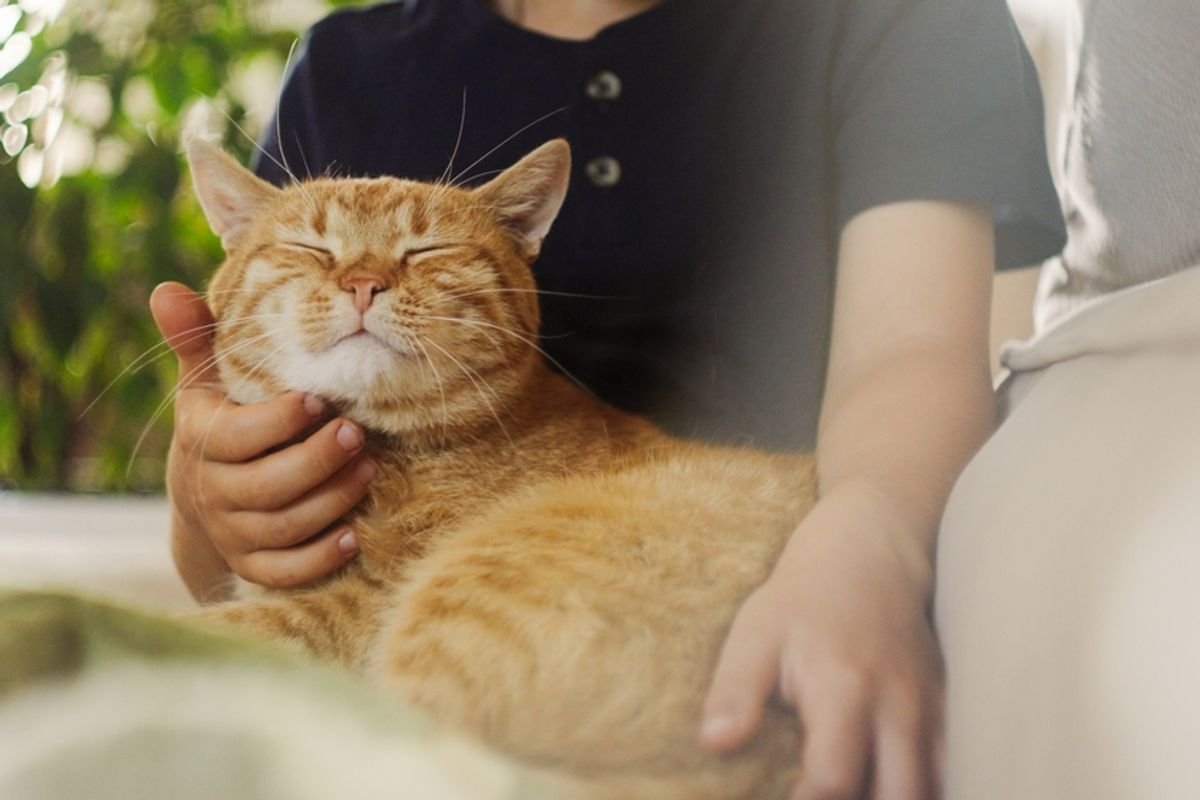
Purrs Convey Cats’ Identities Better Than Meows — Domestication Reveals Why

Cat-owners know the precious purrs and meows of their feline companions by heart, and it probably comes as no surprise to them that both sounds have their own meanings. A chatty cat will meow for any number of reasons — to greet someone, plead for treats, or even complain about an inconvenience. Purrs, while not as vocally flexible, tell a whole different story.
A new study published in Scientific Reports has shown that a cat’s purr reveals much more about its individual identity than a meow. Looking at the acoustic characteristics of the two sounds, researchers determined that distinct purrs are easier to recognize among individual cats, whereas meows fluctuate greatly based on what a cat needs or feels. These differences highlight the lasting influence of domestication on cats, especially in the ways that they “talk” to us.
Read More: Why People Love Their Chaotic, Misbehaving Cats
The Evolving Language of Cats
Cats were likely domesticated around 10,000 years ago in the Middle East, and they’ve since developed a wide range of meows to meet their needs. Cats don’t meow as much when interacting with each other; if they do meow, it’ll likely be during territorial disputes or mate attraction, and it’s more common in cats that haven’t reached full maturity yet.
A meow, rather, is the perfect vocal strategy for domestic cats to communicate with humans. Over time, they’ve gained the skill to modify the duration, frequency, and tone of their meows to get what they want from us.
Purring, meanwhile, has always had a connection to social bonds between cats. Contrary to the variability in meows, purrs are low-frequency sounds that remain constant. In most interactions with humans and other cats, they reflect a sensation of calmness, although they’re sometimes used for self-soothing when a cat is scared or in pain.
Purrs vs. Meows
For the new study, researchers recorded vocalizations from 27 individual cats in 2020 and 2021, collecting audio of meows whenever the cats expressed a desire for food or human attention, and purrs whenever they were being pet.
Using methods originally developed for automatic speech recognition in humans, the researchers then determined how well a computer could recognize each individual cat’s vocalizations.
This analysis showed that purrs and meows could both be individually distinguishable, but purrs were the better marker of a cat’s identity. Each cat recorded, the researchers say, had its own characteristic purr.
“People primarily pay attention to meows because cats mainly use these sounds towards us,” said lead author Danilo Russo, a professor of ecology at the University of Naples Federico II, in a statement. “But after we examined the acoustic structure in detail, the steady purr turned out to be the better means of identifying different individuals.”
Building a Vocal Bond
The researchers also compared domestic cats’ meows to those of five wild cat species — the African wildcat, European wildcat, jungle cat, cheetah, and puma — using audio from the animal sound archive of Berlin’s Museum of Natural History. With this acoustic data, they found that domestic cats’ meows show much greater variability than wild cats’ meows, once again showing that domestication caused cats to adapt their meows based on interactions with humans.
The researchers suggest that purrs may reflect a “default” acoustic profile for every individual cat, shaped by vocal tract features and not emotional influences. Meows, on the other hand, seem to be less important for communicating identity cues and better suited for eliciting specific responses from humans.
“Living with people who differ greatly in routines, expectations, and reactions has likely favored cats that could flexibly adapt their meows. Our results support the idea that meows have evolved into a highly adaptable tool for negotiating life in a human-dominated world,” said senior author Mirjam Knörnschild, a behavioral ecologist at the Natural History Museum, Berlin.
Read More: Cat Whiskers Help Them Navigate and Can Tell Us How a Cat’s Feeling
Article Sources
Our writers at Discovermagazine.com use peer-reviewed studies and high-quality sources for our articles, and our editors review for scientific accuracy and editorial standards. Review the sources used below for this article: