
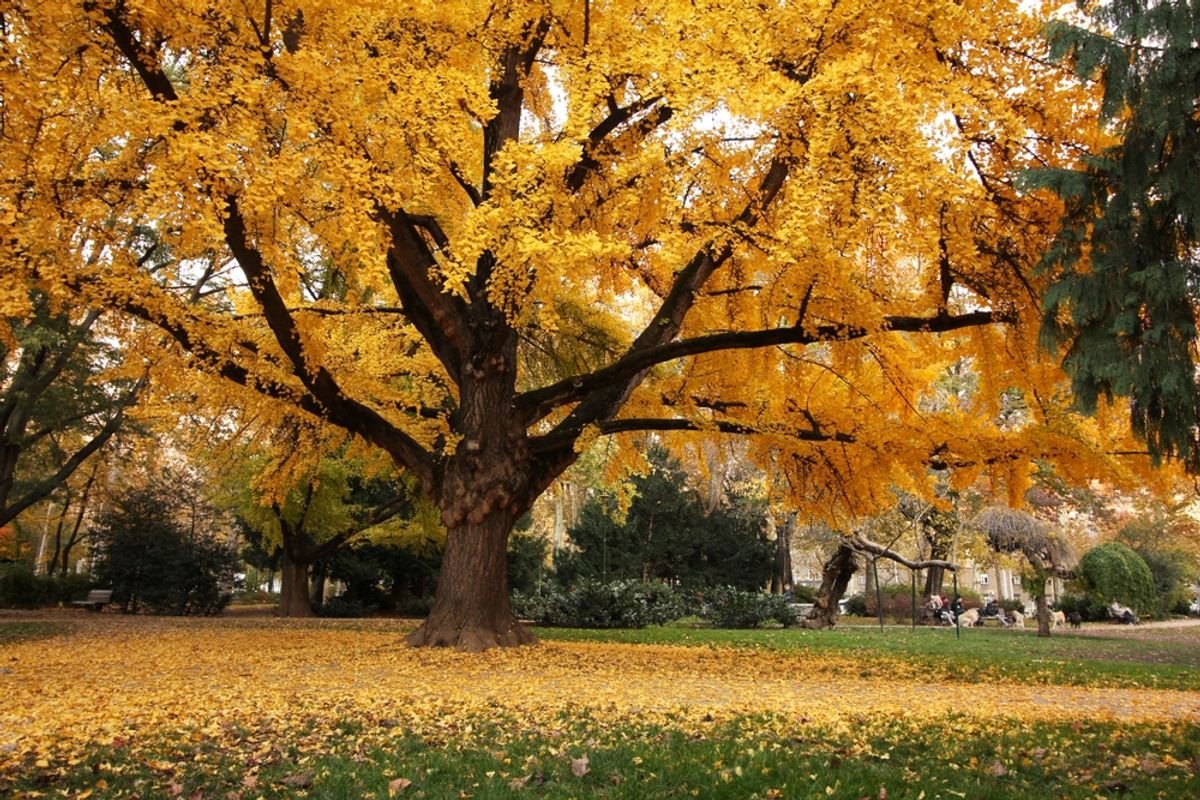
Prehistoric Trees That Survived Extinction — The Ginkgo and More Still Thrive Today
Key Takeaways on Prehistoric Trees
- Prehistoric trees still exist today. Ancient species like the Ginkgo and Monkey Puzzle tree can still be found in certain parts of the globe.
- Prehistoric trees like the Ginkgo genus date back to the Jurassic Period, 174 million years ago.
- Prehistoric trees existed before the dinosaurs. Some of these tree species began emerging during the Triassic period, about 250 to 201 million years ago.
The oldest individual trees in the world go back so far that they predate most of the products and inventions that have since been made from wood. One Great Basin bristlecone pine in California named Methuselah has been measured at more than 4,850 years old, predating the pyramids at Giza and all Mesoamerican pyramids. A cypress in Chile, meanwhile, has a ring count of more than 3,650.
Both these trees are prehistoric in the sense that they predate the written record in the areas where they are found. But aside from individual trees, some species found today belong to genera that are downright primeval — dating back at least to the time of the dinosaurs.
Read More: New Fossil Discovery Reveals Surprising Insights into Prehistoric Human Behavior
Do Any Prehistoric Trees Still Exist?
Technically speaking, almost all extant species are prehistoric, since they evolved in times before the invention of writing, when the historical record began, around 5,000 years ago. Methuselah, indeed, predates the recorded history of the Maya by about a millennium and a half and is only a few centuries younger than the first Sumerian cuneiform and Egyptian hieroglyphs.
It’s nearly impossible, based on the fossil record, to determine the oldest tree species. But some trees today belong to genera that are primeval. Paleobotanists know some of the oldest surviving genera based on discoveries in China and South America — Ginkgo and Araucaria.
“Those are your two oldest contenders for oldest genus,” says Peter Wilf, a paleobiologist with The Pennsylvania State University.
How Old Are Ginkgo Trees?
Ginkgo biloba — sometimes called the maidenhair — is the only surviving tree of the Ginkgo genus. Based on fossil records, species of Ginkgo with reproductive organs similar to those of biloba date back to the Middle Jurassic Period, which began about 174 million years ago. Ginkgo yimaensis is so far the oldest known tree from this genus — fossils from the Late Jurassic genus seemed a little closer to the modern Ginkgo biloba than the more primeval yimaensis, according to a study in Review of Palaeobotany and Palynology.
While there used to be more Ginkgo species around, the G. biloba is the last, sometimes considered a living fossil. It’s not only the last in its genus — it’s the last member of a class of seed-bearing plants that dates back much further than the Jurassic — Ginkgoales first appeared 270 million years ago in the Permian.
G. biloba is considered endangered by the International Union for Conservation of Nature due to logging — it’s not entirely clear even today whether some so-called wild ginkgos in parts of Asia were actually once planted by Buddhist monks, who believe it sacred, according to the book Eyewitness Companions: Trees.
How Old Are Monkey Puzzle Trees?
Part of the reason it’s difficult to study really ancient fossil trees as whole organisms is their size — most of the time, researchers only discover leaves, a few branches, or pieces of wood. It’s hard to get a picture of a whole, towering primeval tree.
This isn’t the problem with Araucaria trees. While we only have bits and pieces of ancient Ginkgo, we have entire fossilized Araucaria in Patagonia.
“It’s just sort of on another level of paleobotany,” says Wilf.

Prehistoric trees like Araucaria can be found fossilized in Cerro Cuadrado Petrified Forest
(Image Courtesy of Peter Wilf)
Many of the best-preserved specimens are Araucaria mirabilis, found in Santa Cruz province, Argentina, in what’s known as the Cerro Cuadrado Petrified Forest. Entire petrified tree trunks are still preserved in this area, along with fossilized seed cones and even embryos and seedlings that were easily more than 60 meters [about 200 feet] tall when they were alive, Wilf says.
These fossilized A. mirabilis also date back to the Middle Jurassic, similar to the oldest Ginkgo.
He adds that there are older Araucaria fossils, but they are more fragmentary than the mirabilis preserved in Patagonia.
There are still a number of living species of Araucaria, which are a type of coniferous tree found today mainly in the Southern Hemisphere. One of the species most often called monkey-puzzle (Araucaria araucana) is found in southern South America, while others are found in Australia, New Caledonia, and New Guinea.
Did Trees Exist Before Dinosaurs?

The fossilized cone of the Prehistoric tree Araucaria mirabilis
(Image Courtesy of Peter Wilf)
The early ancestors of Ginkgo trees date back much longer than the dinosaurs. And while artists often erroneously depict modern monkey-puzzle trees alongside dinosaurs, species like A. mirabilis were certainly around.
“[Monkey-puzzle trees] are very popular in dinosaur reproduction,” Wilf says.
The first dinosaurs began to appear in the Triassic Period, which preceded the Jurassic. But many trees still around today descend from groups that date back to the Permian, which preceded the Jurassic.
Amazing fossils also provide insights into the oldest trees and forests, which go back even further than the Permian. Paleobotanists have found fossil forests from the Middle Devonian in New York state, mostly dominated by primitive tree ferns.
By the Late Devonian, which began about 382 million years ago, waterways were dominated by trees with fern-like foliage and a conifer-like trunk. These plants are from a genus called Archaeopteris, which was widely distributed around what are now the U.S. Northeast and Europe. The trees aren’t seed plants at all — they reproduced with spores that depended on water to complete their life cycles. They likely grew to be about 45 to 50 feet [14 to 15 meters tall], Wilf says.
The first large seed-bearing trees began to appear in the Carboniferous, which started about 323 million years ago, in early conifers and an extinct conifer relative called Cordaites.
“Now we’re talking about something that’s more like a modern forest,” Wilf says. These trees made extensive forests that covered the land surface, with massive trunks that reached up to about 165 feet [about 50 meters] in height.
Once non-bird dinosaurs went extinct about 66 million years ago, forests really began to change to something more familiar to us today. The thing is, the angiosperms, or flowering plants that dominate most of the world today, were diverse but not dominant or large when dinosaurs were still alive. They only really began to dominate after the Chicxulub asteroid struck Earth.
“The modern rainforest doesn’t appear until after the dinosaur extinction,” Wilf says.
Read More: Scientists Are Probing How Ginkgo Trees Stay Youthful for Hundreds of Years
Article Sources
Our writers at Discovermagazine.com use peer-reviewed studies and high-quality sources for our articles, and our editors review for scientific accuracy and editorial standards. Review the sources used below for this article: