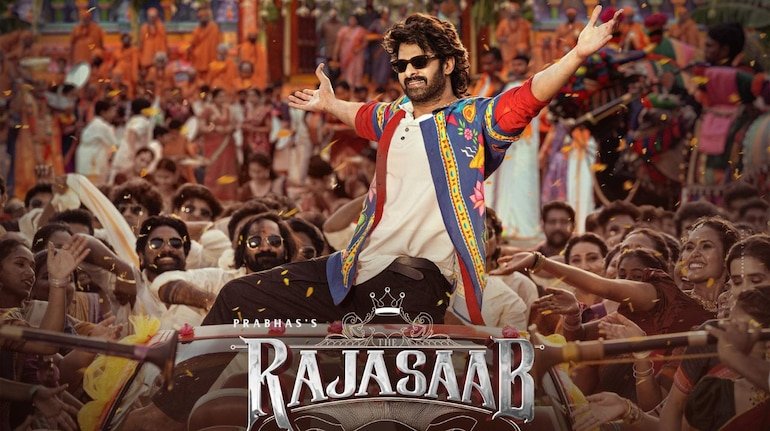
Prabhas’ popularity in Japan started with Baahubali 2, grew with Salaar, and reached new heights with Kalki 2898 AD. These films collectively garnered anywhere between 80 million yen and 170 million yen. “I don’t want to quote numbers. But our film will establish new box office records. The Raja Saab is a wholesome entertainer with a universal theme, loaded with action, romance, music, and eerie moments. Prabhas plays a larger-than-life and unique role, and the film has the potential to do significant business and captivate non-Telugu viewers across the world,” he adds.
In fact, the overseas market for Telugu cinema has expanded significantly over the last ten years, from Baahubali to Kalki 2898 AD, which itself earned over Rs 250 crore overseas. “Audiences abroad are welcoming big-ticket Telugu movies, and Prabhas is one of the biggest crowd-pullers today. He has even outperformed some Bollywood stars overseas. We are releasing the film across the USA, Europe, and select ASEAN countries since our magnum opus will appeal to global family audiences,” he says.
Vishwaprasad also dismissed rumours that the team is considering shifting the January 9 release to avoid competition with Tamil superstar Vijay’s Jana Nayagan, which is also releasing worldwide. “These rumours are false and baseless,” he clarifies. “We initially planned to release our film on December 5 this year, but had to postpone due to pending VFX work. Trade circles also advised us to choose January 9 because the Sankranthi season ensures a better release window in both Telugu states, North India, and South India. It was an amicable and strategic decision,” he concludes.