
Plastic-Eating Microbes Could Help Tackle Our Environmental Mess

Each year, the world produces upward of 450 million metric tons of plastic waste — far more than the combined weight of every person on Earth, according to Our World in Data. A 2023 study in Yonsei Medical Journal found that this pollution may be a growing hazard to humans and most other living creatures, as they can’t digest the countless microplastics embedded in their food. But, unappetizing as these contaminants may seem to us, they present a welcome new buffet for certain organisms.
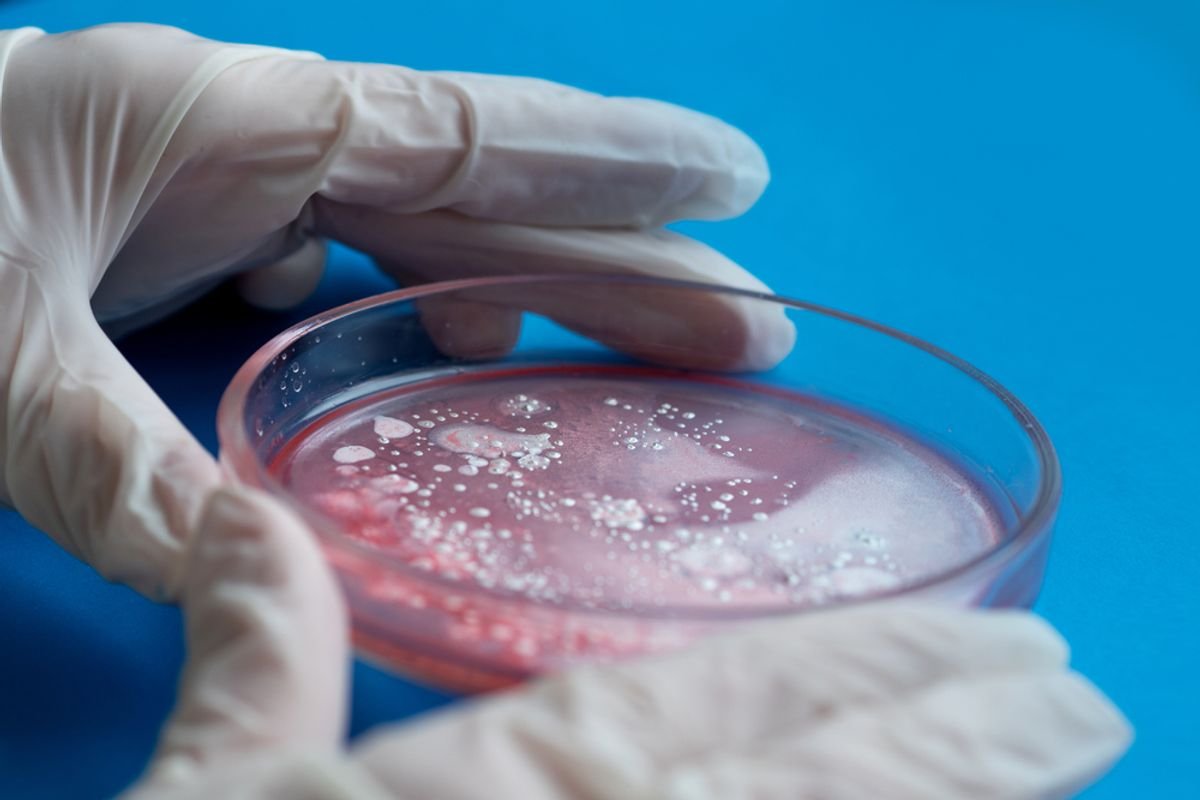
In 2001, researchers in Japan were digging through a garbage dump when they discovered something remarkable: some of the discarded plastic was covered with a slimy coat of bacteria. Endlessly resourceful, the microbes had found a way to break the chemical bonds — and thereby harvest the carbon — in polyethylene terephthalate (PET), which is used in bottles, single-use packaging, and polyester clothing. In other words, they were eating plastic.
The researchers finally published their findings in Science in 2016, naming the species Ideonella sakaiensis. Over the decade, plastic-digesting bacteria have cropped up all around the world, in compost heaps, beach litter, and even hospitals, according to a report in Cell. In the lab, meanwhile, scientists are working to understand how we can use their innate abilities to clean up the land-filling, ocean-choking, ever-expanding mess we’ve made.
Read More: Viruses on Plastic Pollution May Be Fueling Antibiotic Resistance
How Do Bacteria Break Down Plastic?
These industrious microbes didn’t appear out of nowhere. When it comes to evolution, “things very rarely start from a clean slate,” Ronan McCarthy, a geneticist who studies bacteria at Brunel University, told Discover. Instead, their plastic-degrading prowess is probably built on preexisting enzymes that break down natural materials that resemble plastics, such as cutin, a waxy substance produced by plants.
After plastics emerged, those enzymes just needed a few evolutionary tweaks; presumably, they’re becoming more efficient over time. That said, if the goal is to put a meaningful dent in plastic waste, we can’t just leave bacteria to their own devices — they don’t devour plastic, they just nibble at it, perhaps because they haven’t had enough time to refine their enzymes.
In 2023, McCarthy and his colleagues reported in Environmental Microbiology that they had accelerated evolution by growing bacterial communities with no source of nutrients other than plastic. Forced to adapt or starve, many microbes became more efficient at degrading plastic in less than two months. Experiments like this suggest that plastic-digesting bacteria have yet to unlock their full potential.
Engineering Enzymes For Efficiency
Some scientists are taking a more hands-on approach. Within two years of the Japanese team’s announcement, a separate group of researchers carefully analyzed the structure of I. sakaiensis’s PET-degrading enzyme and engineered it for greater efficiency, according to a study in PNAS. In 2020, a Nature study reported they had designed an enzyme that could break down PET by 90 percent in just 10 hours — a huge leap from the I. sakaiensis enzyme, which took weeks.
As of September 2025, more than 250 plastic-degrading enzymes had been discovered, not only for PET but also for polyurethane (used in insulation, furniture, and shoes), polyamides (such as nylon), and many other types of plastic, according to a study in Microbiology and Molecular Biology Reviews. Labs in the U.S. and abroad are working to improve many of those enzymes, and in some cases genetically engineer bacteria themselves to degrade plastic faster.
Despite all this effort, progress is still slow-going. “A lot of this is incremental gains,” McCarthy said. “People are optimizing the enzyme to get 10 or 5 percent increases in efficiency.” But each step brings us closer to the ultimate goal: industrial-scale enzymatic recycling.
From The Lab To The Recycling Plant
A French company named Carbios is attempting to bridge the gap between research and real-world action. Using engineered enzymes, they break down PET daily into chemical building blocks, which can then be remade into new plastic. The firm is constructing a larger plant, slated to open in the first half of 2028, with enough capacity to recycle 50,000 tons per year, according to an article from Resource Recycling, Inc.
It’s unclear how fast industrial enzymatic recycling can scale, and whether it will be enough to keep pace with global plastic production. Carbios is “really kind of driving the field forward,” as McCarthy put it, but he has his own ideas about how plastic-degrading enzymes can best serve humankind.
“I think the solution to this problem is bringing it home,” he told Discover — literally. He envisions a far-off future where, when the recycling bin in your kitchen fills up, you simply add a couple of enzyme tablets and let chemistry do its job. That, he said, “is where you could really have a transformative impact.”
Read More: Fire-Loving Fungi Have Learned to Eat Charcoal — A Useful Skill for Dealing With Industrial Waste
Article Sources
Our writers at Discovermagazine.com use peer-reviewed studies and high-quality sources for our articles, and our editors review for scientific accuracy and editorial standards. Review the sources used below for this article: