
Plants Are Constantly Communicating, and Biodiversity Shapes the Message

Plants are constantly sending chemical messages into the air and soil around them. These invisible signals can summon pollinators, warn neighbors of herbivores, or repel attackers. But new research published in PNAS suggests those messages are not exchanged in simple pairs. Instead, they are shaped by the entire plant community.
In species-rich grasslands, chemical communication operates as a network rather than a series of one-on-one exchanges. And when biodiversity declines, that network begins to break down.
New field experiments show that the number and identity of plant species growing together directly influence how plants communicate chemically. In diverse plant communities, chemical signals become more complex and varied. In simpler communities, those signals are reduced, potentially weakening communication across the ecosystem.
“Plants do not communicate one-on-one, but rather as part of a complex ecological network,” said first author Pamela Medina van Berkum, in a press release.
Read More: A Rare Parasitic Plant Lives Underground Without Photosynthesis and Reproduces Asexually
How Biodiversity Shapes Plant Communication
Plants communicate by releasing volatile organic compounds from their leaves, flowers, and roots. These compounds drift through the air or soil, where they can be detected by insects, microorganisms, and other plants. Together, they help coordinate interactions that are central to ecosystem function, from pollination to plant defense.
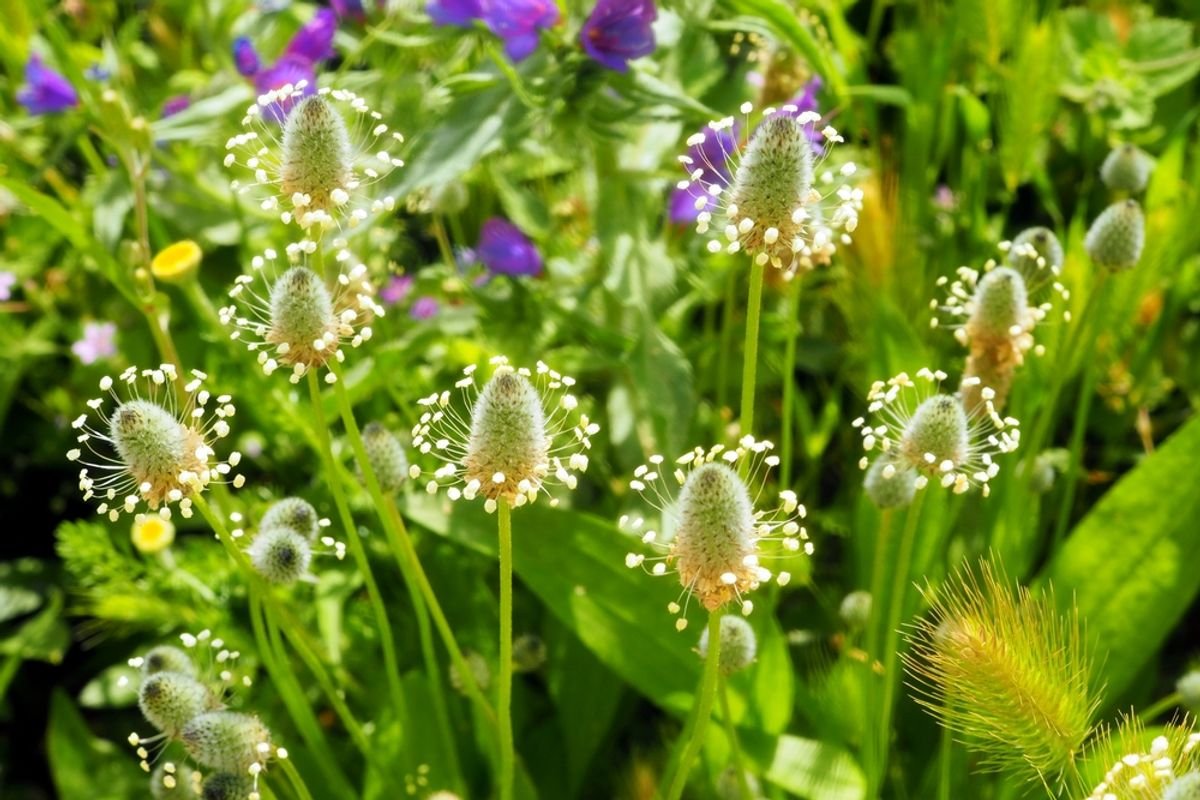
To understand how plant diversity shapes this chemical language, researchers focused on ribwort plantain, a common grassland species with well-documented ecological interactions. Rather than studying isolated plants under laboratory conditions, the team examined plantain growing within natural grassland communities that differed in species richness.
By working in real grassland plots, the researchers were able to observe how a plant’s chemical signals change depending on the surrounding vegetation, capturing interactions that would be missed in simplified greenhouse studies.
Capturing Plant Odors in the Wild
Measuring plant odors in open environments is notoriously difficult. Volatile compounds disperse quickly, and outdoor conditions such as wind, temperature, and humidity can obscure chemical signals. To address this, the researchers developed a field-based system that trapped plant odors at both the community level and the individual plant level.
Transparent enclosures were placed over sections of vegetation to concentrate the chemical signals emitted by entire plant communities. Individual ribwort plantain plants were also enclosed separately, allowing the researchers to compare the odors around a plant with the odors that plant released.
Using sensitive analytical techniques, the team identified and measured volatile compounds released under different biodiversity conditions. At the community level, species-rich plots emitted a larger and more varied mix of volatiles. At the species level, ribwort plantain did not simply change its overall emissions because it was growing in a more diverse plot. Instead, its output shifted with the chemical background created by its neighbors: when surrounding communities were high in green leaf volatiles, plantain tended to dial down its emissions, while terpene-rich neighborhoods were linked to a broader mix of plantain compounds.
Why Biodiversity Loss Disrupts Communication
The findings suggest that plant communication is not a direct exchange between individual plants, but part of a broader, interconnected chemical network. In species-rich grasslands, that network is chemically complex. As biodiversity declines, it becomes simpler.
This loss of complexity may disrupt interactions that depend on chemical cues, including relationships between plants and pollinators, herbivores, and soil microbes. In this way, biodiversity loss alters not only which species are present, but how information flows through ecosystems.
Practices that increase plant diversity, such as planting flower strips, diversifying crops, and reducing herbicide use, could help maintain these chemical communication networks. While the ecological roles of many plant-produced compounds remain unclear, the study highlights that biodiversity supports not just visible interactions, but also the invisible chemical systems that help ecosystems function.
Read More: Is Plant Communication a Real Thing?
Article Sources
Our writers at Discovermagazine.com use peer-reviewed studies and high-quality sources for our articles, and our editors review for scientific accuracy and editorial standards. Review the sources used below for this article: