
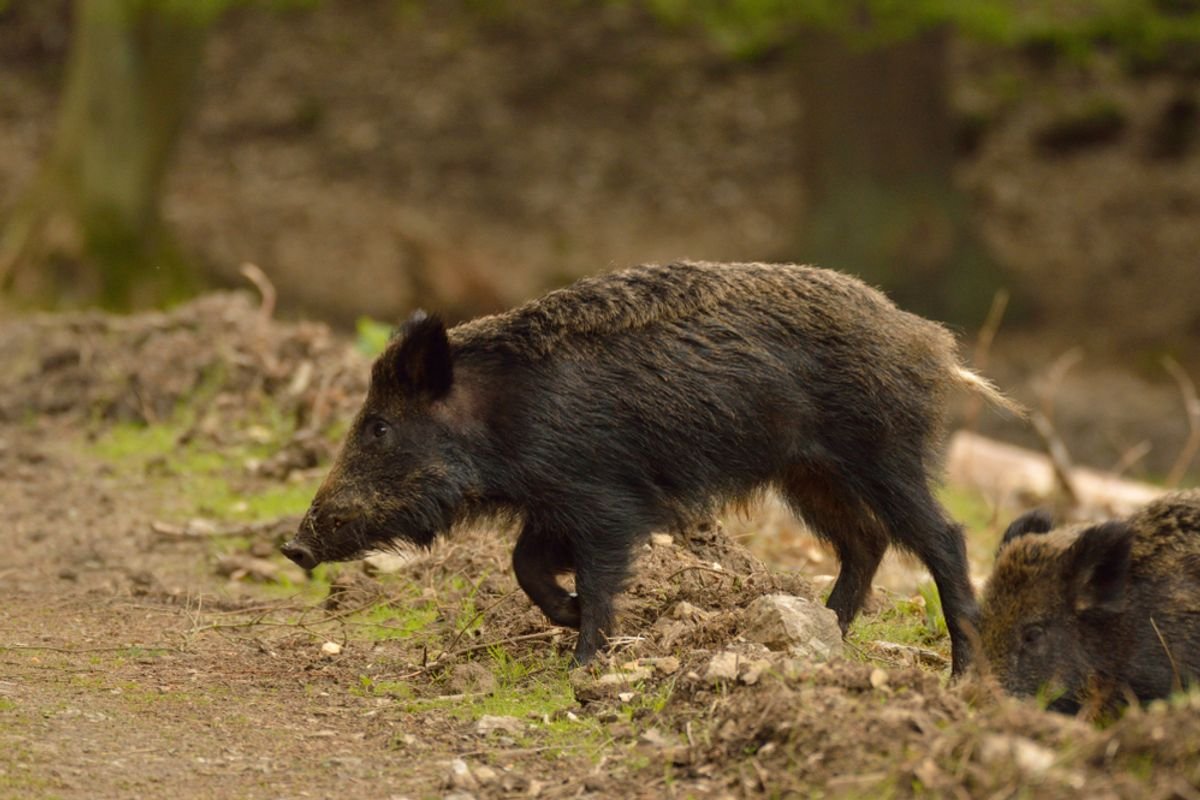
Pig–Boar Hybrids Are Evolving in Fukushima — and Rewriting What We Know About Hybridization

In the evacuation zone in Fukushima, implemented after the nuclear accident in 2011, numerous animals have thrived in the absence of human activity. Even previously domesticated breeds have found a home there, and some are now undergoing significant genetic changes.
While radiation is often assumed to be the main force altering wildlife after nuclear disasters, another process has caught researchers’ attention. Escaped domestic pigs have bred with local wild boar, triggering an unusually large hybridization event that may also be contributing to a booming boar population that is increasingly becoming a management concern.
A study in the Journal of Forest Research found that some Fukushima pig–boar hybrids inherited domestic pigs’ year-round breeding habits from their pig mothers. Because those hybrids reproduced so quickly, they passed through generations faster and repeatedly mated back with wild boar, accelerating the dilution of domestic pig DNA far more rapidly than researchers expected.
Although these observations come from a radiation evacuation zone, experts believe the mechanism likely applies anywhere domesticated pigs and wild boar interbreed, potentially offering useful insights for managing invasive species.
Hybridization of Wild Boar and Pigs
Despite our fascination with hybrid animals, uncontrolled hybridization can disrupt evolutionary processes, rapidly inflate populations, and damage ecosystems. What drives these genetic shifts, however, has remained somewhat unclear.
The hybridization of domestic swine (Sus scrofa domesticus) with local wild boar (Sus scrofa leucomystax) following the Fukushima Daiichi Nuclear Power Plant accident turned out to be an ideal natural experiment.
Researchers analyzed mitochondrial DNA — a key marker for maternal inheritance — alongside nuclear DNA, which reflects an animal’s overall genetic makeup. Samples from 191 wild boar and 10 domestic pigs collected between 2015 and 2018 helped the team estimate how many generations had passed since interbreeding began and how domestic DNA changed over time.
“We hypothesized that the domestic swine’s unique trait, a rapid, year-round reproductive cycle, might be the key,” said co-author Donovan Anderson from Hirosaki University in a press release.
Read More: Dogs In Chornobyl are Mysteriously Turning Blue, But Radiation Is Not to Blame
Pig’s Rapid Breeding Behavior Led to Diluting Their DNA
It was, however, not in the way scientists anticipated. The domestic pig’s rapid breeding behavior did not help preserve pig DNA over the following generations. Maternal lineages (when female pigs mate with male boars) seem to paradoxically speed up the loss of pig DNA in hybrids.
“While it has been previously suggested that hybridization between rewilded swine and wild boars can contribute to population growth, this study demonstrates that the rapid reproductive cycle of domestic swine is inherited through the maternal lineage,” said study lead Shingo Kaneko from the Institute of Environmental Radioactivity, Fukushima University, in the statement.
Surprisingly, wild boar carrying domestic pig mitochondrial DNA actually had lower proportions of pig-derived nuclear genes than hybrids with wild boar maternal lineages. Animals with pig maternal ancestry (21 of the 31 admixed animals) had passed more than five generations since the original hybrid, signaling unusually rapid genetic turnover.
In other words, the very trait that might have been expected to preserve pig genetics instead sped up their disappearance.
Lessons Beyond Fukushima
Despite the results deriving from exceptional circumstances, the implications reach far beyond Japan.
“We wish to emphasize that this mechanism likely occurs in other regions worldwide where feral pigs and wild boars interbreed,” said Anderson in the release.
The study not only enriched our knowledge of how wildlife evolves, but also carries practical weight.
“The findings can be applied to wildlife management and damage control strategies for invasive species,” explained Kaneko. “By understanding that maternal swine lineages accelerate generation turnover, authorities can better predict population explosion risks.”
The findings may help authorities focus control efforts on hybrids with certain genetic traits. With feral pigs spreading across the globe, understanding how maternal lineage drives genetic change may prove essential for conservation and remind us that when humans step back, evolution moves quickly.
Read More: Mold Is Feasting on Radiation in Chernobyl’s Abandoned Nuclear Plants
Article Sources
Our writers at Discovermagazine.com use peer-reviewed studies and high-quality sources for our articles, and our editors review for scientific accuracy and editorial standards. Review the sources used below for this article: