
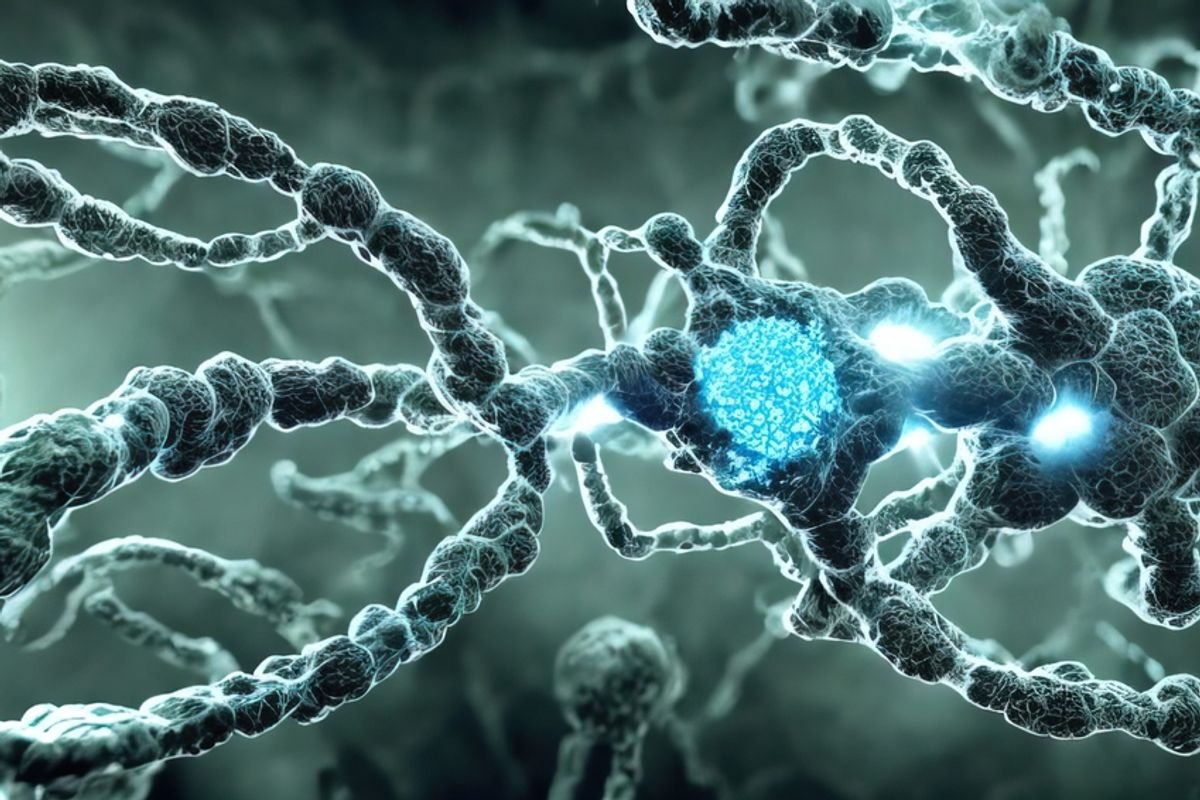
Oxygen May Have Been Key to Sparking the Rise of Complex Life
The story of how complex life began is largely understood, but one contradiction has never quite fit. Plants, animals, and fungi — known collectively as eukaryotes — likely emerged when two very different microbes formed a close alliance. One eventually became the mitochondrion, the energy-producing structure inside our cells.
The partnership paired an oxygen-using microbe with one thought to live without it. If their habitats rarely overlapped, how did they come together at all? A new study in Nature suggests the separation may have been overstated. Some of the microbes most closely related to our earliest ancestors appear to have been capable of using oxygen.
“Most Asgards alive today have been found in environments without oxygen,” explained Brett Baker, a study coauthor, in a press release. “But it turns out that the ones most closely related to eukaryotes live in places with oxygen, such as shallow coastal sediments and floating in the water column, and they have a lot of metabolic pathways that use oxygen. That suggests that our eukaryotic ancestor likely had these processes, too.”
Read More: The “First Predators” Ruled a World Full of Bacteria
Where the Microbial Ancestors of Complex Life Lived

An expanded family tree of Asgard archaea.
(Image Credit: University of Texas at Austin)
The microbes at the center of this study belong to a group known as Asgard archaea. First identified in marine sediments, they’re considered the closest known relatives of eukaryotes.
Until now, most studied Asgards were linked to oxygen-poor environments. That helped shape the idea that the merger leading to complex cells happened under low-oxygen conditions.
The new research paints a broader picture. By assembling thousands of microbial genomes from marine sediment samples collected during multiple expeditions, the team nearly doubled the known diversity of Asgard archaea and built a more complete evolutionary tree.
When they focused on a subgroup called Heimdallarchaeia — the lineage most closely related to eukaryotes — they found genetic evidence of oxygen-based metabolism. These microbes were not strict anaerobes. They appear to have tolerated, and possibly used, oxygen.
Oxygen’s Role in Early Evolution
The timing also fits with shifts in Earth’s atmosphere. For much of early history, oxygen was scarce. Around 2.4 billion years ago, levels rose during what’s known as the Great Oxidation Event. Later increases brought the atmosphere closer to modern conditions. Not long after those rises, the first clear eukaryotic fossils appear in the geological record.
If some Asgard ancestors were already capable of using oxygen, those changes may have offered a powerful advantage. Oxygen-based metabolism generates far more energy than anaerobic pathways. Microbes that could tap into it would have had more fuel to grow, divide, and evolve greater cellular complexity.
Instead of acting as a barrier between two mismatched organisms, oxygen may have helped make their partnership worthwhile.
Reshaping the Asgard Family Tree
The findings come from an enormous sequencing effort. More than 13,000 microbial genomes were assembled from roughly 15 terabytes of environmental DNA. Within that trove, hundreds of new Asgard genomes emerged.
Comparing those genomes allowed the team to build a more detailed Asgard family tree and identify previously unknown proteins. To better understand what some of those proteins do, they turned to AlphaFold2, an artificial intelligence tool that predicts how proteins fold into three-dimensional shapes. Because structure determines function, those predictions matter. Several proteins produced by Heimdallarchaeia closely resemble the ones modern eukaryotes use for oxygen-based energy metabolism.
The origin of complex life remains one of biology’s biggest evolutionary shifts. These results suggest that the ancestor of complex cells may not have been confined to oxygen-free habitats. Instead, it may have been equipped to take advantage of a changing, increasingly oxygen-rich world.
Read More: One-Celled Organisms Laid the Foundations for Complex Life — Here’s How
Article Sources
Our writers at Discovermagazine.com use peer-reviewed studies and high-quality sources for our articles, and our editors review for scientific accuracy and editorial standards. Review the sources used below for this article: