
Over 20 Years, One Mouse Was Cloned for 58 Generations — Until the Line Collapsed

Cloning can recreate an animal almost exactly, at least at first. But with each generation, small genetic changes begin to stack up.
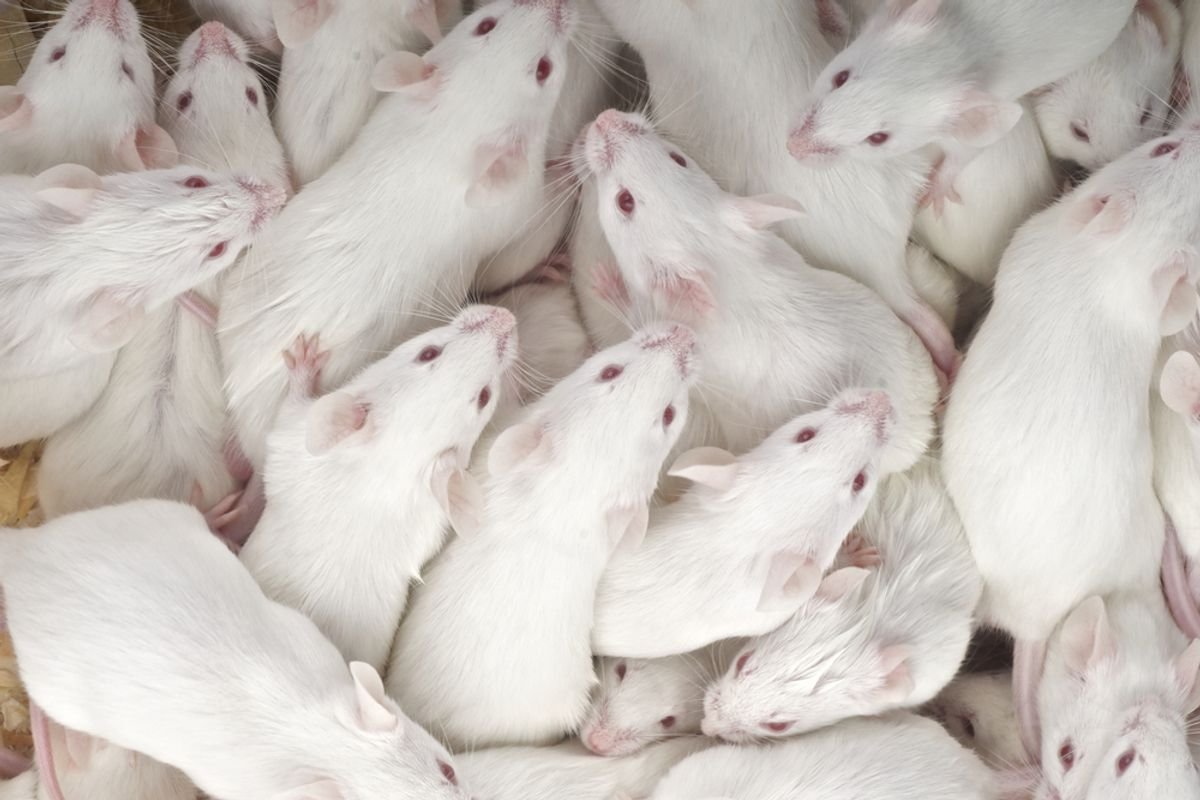
In a 20-year experiment, researchers repeatedly cloned mice from a single original donor, producing more than 1,200 animals across 58 generations. The mice appeared healthy and lived normal lifespans. But with each round of cloning, mutations quietly accumulated in their DNA, eventually reducing success rates and bringing the process to a halt. By the final generations, cloning succeeded less than 1 percent of the time. The findings, published in Nature, show that while cloning can sustain individuals, it may not sustain a species.
The results point to a fundamental limit. “Mammals rely on sexual rather than asexual reproduction to eliminate genetic anomalies caused by clonal reproduction,” the authors stated in the study.
A 20-Year Animal Cloning Experiment
The experiment began in 2005, using cells from a single female mouse. Researchers used somatic cell nuclear transfer (the same technique behind Dolly the sheep) to produce each new generation. In this process, the nucleus of a body cell is inserted into an egg cell to create a new individual. Cells from one cloned mouse were then used to produce the next, repeating the process over nearly two decades.
At first, the results were promising. Cloning success rates improved through the early generations, peaking around the mid-20s. The mice appeared normal, with typical body weights and lifespans of about two years — comparable to naturally bred mice.
After 25 generations, success rates began to decline. By the 57th generation, cloning worked less than 1 percent of the time. The 58th generation was the last as none survived beyond a day after birth.
Read More: Turning Skin Cells Into Viable Human Eggs Could be a Milestone in Treating Infertility
Mutations Quietly Built Up
The decline wasn’t due to visible health problems in the mice themselves. Instead, the issue was hidden in their DNA.
Whole-genome sequencing revealed that each generation accumulated new mutations, about 70 single-letter DNA changes and more than one structural mutation per generation. Over time, these changes added up to thousands of genetic alterations.
By the later generations, those changes included dozens of mutations likely to disrupt gene function, along with larger chromosomal alterations. Overall, mutation rates in the cloned mice were roughly three times higher than in mice reproducing naturally, accelerating the buildup of genetic damage over time.
Some mutations had little effect. Others were more disruptive, including large-scale structural changes like chromosomal rearrangements and deletions that can interfere with normal development.
Early in the experiment, harmful mutations may have been filtered out, allowing cloning success to improve. But as generations passed, that balance shifted. The number of damaging mutations increased, eventually overwhelming the system.
Unlike sexual reproduction, cloning doesn’t shuffle genes or allow harmful mutations to be diluted or removed. Instead, each generation inherits the full set of accumulated changes, along with any new ones.
Why Sex Still Matters
Even near the end of the experiment, many cloned mice remained healthy. But problems emerged when it came to reproduction.
Cells from later-generation clones increasingly failed to support early development. When tested, many embryos failed before development could progress, revealing that the breakdown begins well before birth.
However, when those same mice reproduced sexually with normal males, some offspring developed successfully. The process of meiosis and fertilization appeared to allow viable embryos to form.
That contrast points to a key role of sexual reproduction: not just creating variation, but actively preventing the buildup of harmful mutations over time.
The findings align with an evolutionary idea known as Muller’s ratchet — the concept that in asexual populations, mutations accumulate irreversibly until they become unsustainable.
In this case, the process unfolded over decades. Cloning alone pushed the mice toward a genetic tipping point, one that sexual reproduction could help delay or buffer genetic damage, but not indefinitely avoid.
Read More: The World’s Most-Planted Wine Grape Still Carries Signals From the 1600s
Article Sources
Our writers at Discovermagazine.com use peer-reviewed studies and high-quality sources for our articles, and our editors review for scientific accuracy and editorial standards. Review the sources used below for this article: