
No, Vikings Didn’t Have Horns On Their Helmets — Here’s The True Origins of the Myth

Throughout the last century, the Vikings have been depicted in so many inaccurate ways. They were male-dominated, brutal, homogenous, and, of course, they wore the infamous horned helmet. In reality, things were much less dramatic and, well, horned helmets might have been worn, but they weren’t worn by the Vikings.
The Vikings were a seafaring group of Norse people who, in the early Middle Ages, explored, raided, and conquered other civilizations in and around Europe, as well as regions in the North Atlantic, including Iceland, Greenland, and Newfoundland, according to a report from Smith College. But perhaps even more interesting, the Vikings were not a homogeneous bunch, but rather, they were a mix of many North Germanic tribes.
“The word Viking is an occupation, not an ethnicity,” says Colin Connors, a postdoctoral fellow in the Institute for Archaeology, Conservation, and History at the University of Oslo. People living in Scandinavia at the time would not have used the term “Viking” to describe themselves; rather, they would have used it to refer to the Medieval pirates who raided villages.
“It was more of a job description,” he adds.
Myths of the Vikings
While they were known to be a fearsome bunch, the Norse people weren’t that much more fierce than any other society of the time. While there was a lot of violence committed by the Norse people during the Viking Age, there was also a lot of violence committed by people living in other parts of Europe at the same time.
“It’s a myth to say that the Norse people were especially violent,” says Connors.
It’s also a myth to say that they were especially good at warfare because while they won some battles, they also met some “grisly ends.” The reason that we tend to think of the Vikings as particularly violent is that their violence was written down by the Christian monks who were attacked by them.
If a Christian monk was killed by pagan Vikings, they were considered martyrs and therefore could potentially achieve sainthood, says Connors. If they were killed by another Christian, it was just considered murder. That’s why documenting Viking brutality was more common.
“It was good business for a Christian monk to document attacks from pagans,” says Connors.
Read More: Viking Silver Hoard Reveals How Silver Coins From the Middle East Ended Up in England
Did the Vikings Wear Horned Helmets?
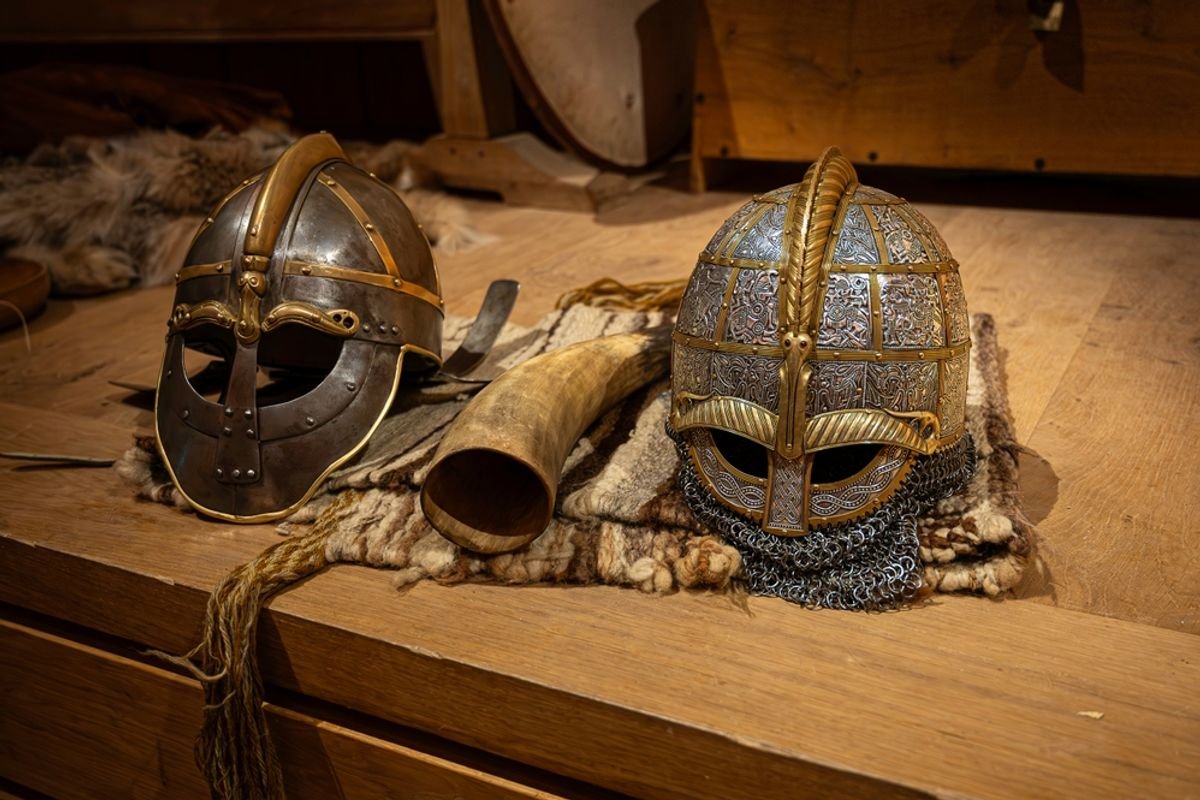
This is probably the most common historical inaccuracy regarding the Vikings. No, they did not wear horned helmets, but the truth behind the myth harkens back to a 19th-century opera. Scientists know how Viking helmets actually looked from a single surviving helmet found in a Viking grave, according to the Museum of the Viking Age. They’re metal with frames that encircle the eyes and have no horns to speak of.
Horned helmets first appeared in the 1876 rendition of Richard Wagner’s opera cycle, Der Ring des Nibelungen, according to the Mystic Seaport Museum. The costume designer Carl Emil Doepler borrowed the idea of horned helmets from native American populations who wore buffalo head dresses. The image was so striking that it stuck, and even today, on every Halloween Viking costume, horned helmets make an appearance.
The Role of Women in Viking Culture
The Vikings were a patriarchal society, as was common in the early Middle Ages. However, women had more rights than in other European cultures. They could own and inherit property and manage their farms. But they were excluded from leadership in society and from representing themselves in court, says Connors.
What’s more, they most likely weren’t warriors normally, although we do have one example of a female warrior grave, according to a study in Antiquity. However, we can’t know from the grave whether she presented herself as a woman at the time, because all we know is that, genetically, she was a woman.
Still, it’s one more example of how we view the Vikings in ways we want to view them to achieve our own modern goals. Ultimately, this can lead to a perspective that’s very different from what actually happened.
Read More: 2,400-Year-Old War Vessel in Denmark Reveals Rare Fingerprint and New Origin Story
Article Sources
Our writers at Discovermagazine.com use peer-reviewed studies and high-quality sources for our articles, and our editors review for scientific accuracy and editorial standards. Review the sources used below for this article: