
New Species Identified On Antarctic Seafloor that was Once Covered By a Massive Ice Sheet

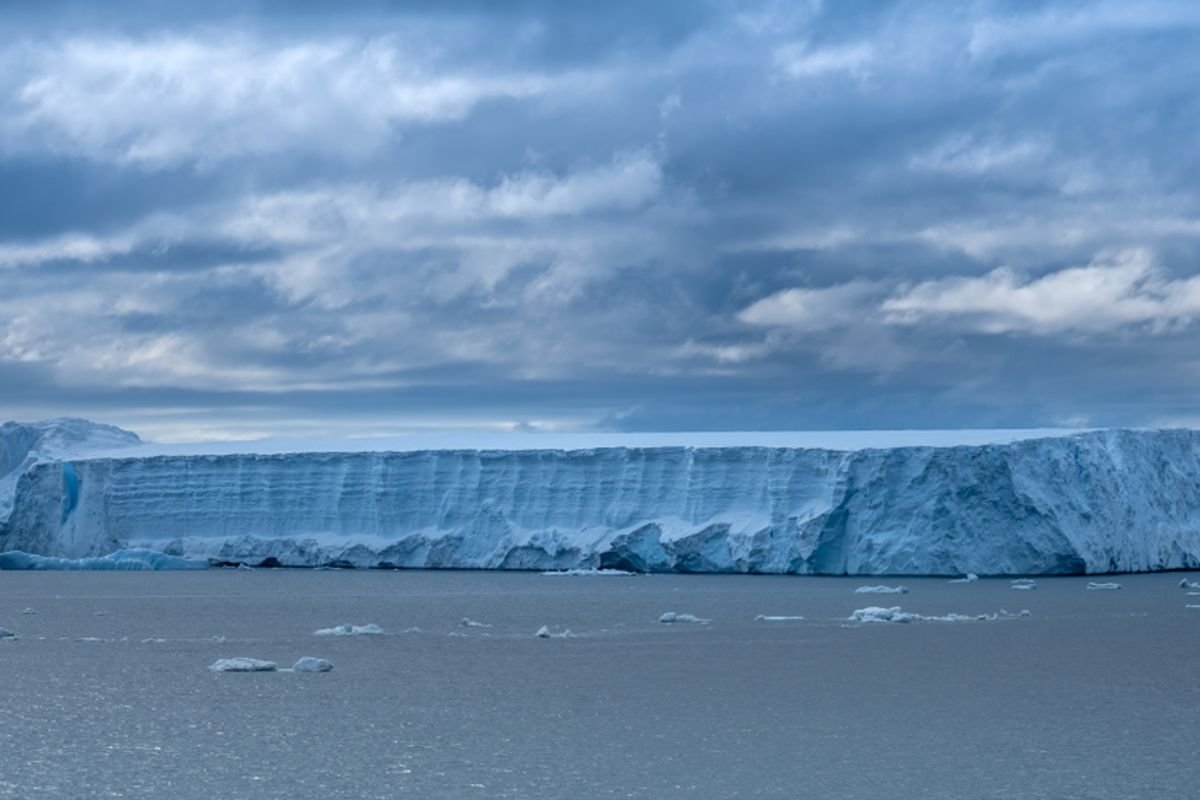
When we think of the creatures that call Antarctica home, emperor penguins, seals, and orcas may be the first few animals to cross our minds. However, as a Chicago-sized iceberg broke away from the George VI Ice Shelf early in January 2025, researchers found the area teeming with life.
The iceberg, named A-84 by the U.S. National Ice Center, is about 19 miles long and 11 miles wide. The area is about 209 square miles, which is close to Chicago’s 230 square miles. As A-84 broke away from the George VI Ice Shelf, it exposed an area of seabed equal in size to the iceberg.
After exploring the seabed for eight days, here is what the research team discovered.
An Ecosystem Beneath the Iceberg
Researchers on the Schmidt Ocean Institute’s R/V Falkor (too) were on a mission in the Bellingshausen Sea when word arrived about the massive ice sheet, known as A-84, becoming dislodged and exposing its seabed.
“We seized upon the moment, changed our expedition plan, and went for it so we could look at what was happening in the depths below,” said expedition co-chief scientist Patricia Esquete of the Centre for Environmental and Marine Studies (CESAM) and the Department of Biology (DBio) at the University of Aveiro, Portugal, in a press release.
“We didn’t expect to find such a beautiful, thriving ecosystem. Based on the size of the animals, the communities we observed have been there for decades, maybe even hundreds of years,” Esquete added in a press release.
Read More: Ice Quakes Cause Glacial Ice to Flow Toward the Ocean
Exploring the Sea Life
For eight days, the crew used the remotely operated vehicle, ROV SuBastian, from the Schmidt Ocean Institute. From the collected data, the research team noted various forms of sea life. Firstly, the team noted an array of corals and sea sponges, which provided homes for other marine life. Among these habitats were octopuses, giant sea spiders, and ice fish. The team also noted that some of the creatures were found at depths of 4,000 feet.
What surprised the research team the most was the extent of life living beneath the ice sheet. In open-ocean settings, deep-sea environments typically rely on nutrients that fall from the surface. However, this ecosystem has been covered by an ice sheet that’s about 500 feet thick for centuries. The team believes that ocean currents are likely the primary source of nutrients in this ecosystem, although further research is needed.
The findings help researchers better understand how life thrives underneath floating ice shelves, as little information exists on the subject. According to the press release, this expedition is the first to utilize an ROV to observe marine life in this setting, and it’s believed that they may have encountered several new species, in addition to several already known to science.
How the Ecosystem Could Change
Another part of the research team’s work involved analyzing how glacial meltwater affected the chemical and physical properties of the area. As the ice sheet broke away, it likely contributed a massive amount of meltwater to the area.
“The science team was originally in this remote region to study the seafloor and ecosystem at the interface between ice and sea,” said Schmidt Ocean Institute Executive Director Jyotika Virmani, in a press release. “Being right there when this iceberg calved from the ice shelf presented a rare scientific opportunity. Serendipitous moments are part of the excitement of research at sea – they offer the chance to be the first to witness the untouched beauty of our world.”
This article is a republished version of this previously published article.
Read More: The Antarctic Ice Sheet Formed By Ideal Coincidence
Article Sources
Our writers at Discovermagazine.com use peer-reviewed studies and high-quality sources for our articles, and our editors review for scientific accuracy and editorial standards. Review the sources used below for this article: