
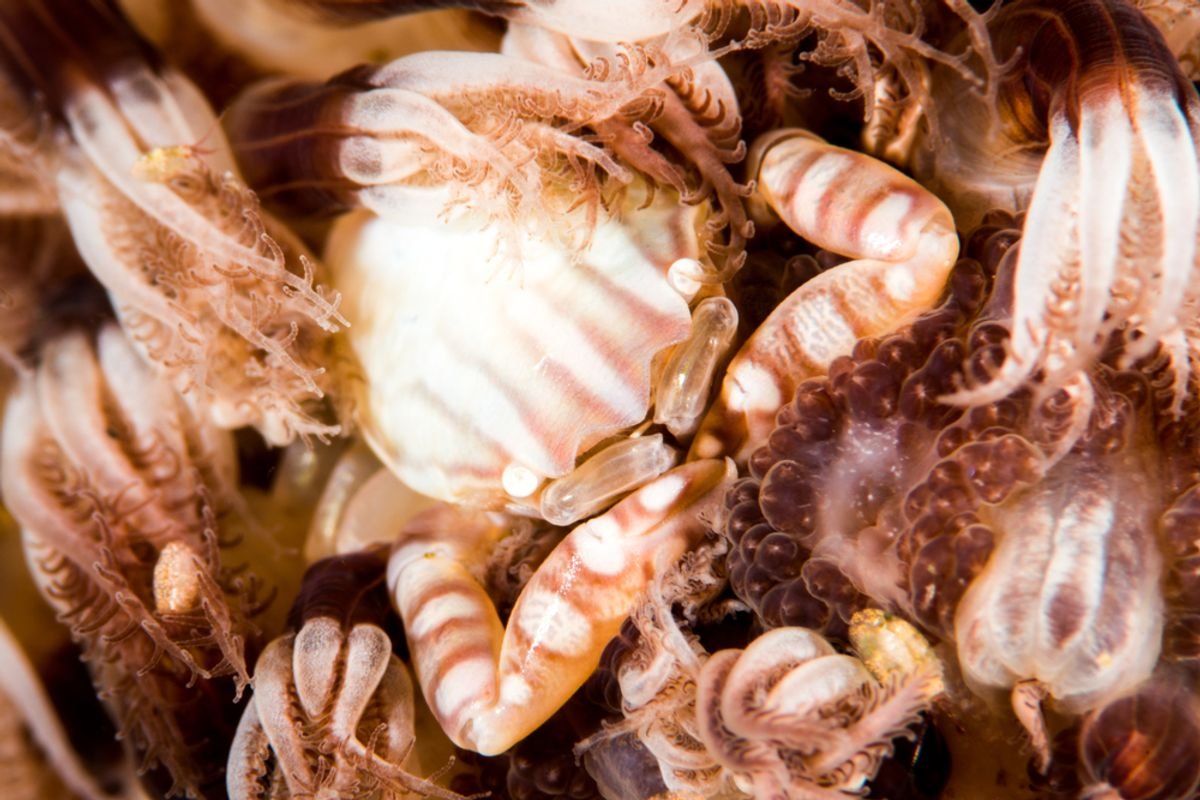
New Deep-Sea Lanternshark and a Pearly White Crab Discovered Off the Australian Coast

There are around 2 million species of plants and animals known to science, with ever more continuing to be discovered every year.
Researchers at Australia’s national science research agency, the Commonwealth Scientific and Industrial Research Organisation (CSIRO), expect to name as many as 600 new species as a result of a single deep-sea voyage to the Gascoyne Marine Park in Western Australia in 2022.
So far, almost 20 new species have been described, including a lanternshark and an alabaster crab similar in size and color to a white South Sea pearl — both of which have recently been featured in papers published in Journal of Fish Biology and Ecology and Evolution, respectively.
Read More: This Adorable Bumpy Snailfish Is One of Three New Species Discovered in the Deep-Sea
New Species: A Little Lanternshark
The recently described Etmopterus westraliensis is a small creature belonging to a mysterious group of sharks known for their bioluminescence, which is generated by glands in their flanks and their abdomen called photophores.
“Lanternsharks are an amazing group of sharks, and this new species was found at depths to 610 meters during biodiversity surveys for Parks Australia in the Gascoyne Marine Park area off Western Australia,” co-author Will White, an ichthyologist from the CSIRO Australian National Fish Collection, said in a statement.
The species are notable for their big eyes, slender bodies, and short dorsal fins. According to CSIRO, E. westraliensis appears to be relatively short compared to other lanternsharks, with the largest of the six specimens collected during the voyage measuring only 40.7 centimeters (16 inches) head-to-tail.
New Species: A Short-Toothed Crab
The CSIRO voyage also resulted in the discovery of a small crustacean belonging to the genus Porcellanella White, a group of crabs found near the coast in tropical and subtropical waters. The small critter has been named Porcellanella brevidentata, meaning “short-toothed”, and is just 15 millimeters (0.6 inches) in length.
“The new species of porcelain crab lives a symbiotic life with sea pens, which are a group of soft corals related to sea fans, where they will hide among the ‘leaves’ of the host,” co-author Andrew Hosie, Curator of Aquatic Zoology from the Western Australian Museum, said in a statement.
“Porcelain crabs are known as filter feeders, feeding on plankton by using modified mouthparts with long hairs to sweep the water for small pieces of food such as plankton, rather than the typical crab method of grabbing and pinching food with their claws.”
P. brevidentata is one of two new species of the genus found in Australian waters that have been described in the paper, the other being P. longiloba.
Future Deep-Sea Expeditions
E. westraliensis and P. brevidentata join other deep-sea critters such as the painted hornshark and crimson-colored Carnarvon Flapjack Octopus discovered as a result of the 2022 voyage.
It is thought that just a fraction of living species are known to science. According to some estimates, there could be as many as 8.7 million species, with 2.2 million of these thought to be marine.
The researchers at CSIRO hope to find more in the near future with a deep-sea expedition to Coral Sea Marine Park, a site covering 382,178 square miles (989,836 square kilometers).
“The benthic zone is the ecological region at the interface of the ocean and the Earth’s crust, so it means we’ll be exploring the deepest habitats where some of the most interesting and least known species of fish and invertebrates live,” White said of the upcoming trip in another statement.
“These include fish without eyes, swimming sea cucumbers, deep-sea corals, and many species perhaps never before seen by human eyes,” White concluded.
Read More: The Demon Shark: A New Shark Discovered Deep Off the Australian Coast
Article Sources
Our writers at Discovermagazine.com use peer-reviewed studies and high-quality sources for our articles, and our editors review for scientific accuracy and editorial standards. Review the sources used below for this article: