
New Bite-Resistant Wetsuit Will Help Protect Both Humans and Sharks from Death

According to the International Shark Attack File, there are fewer than 100 reported shark bites every year around the world. Although shark bites are rare occurrences, those who enjoy activities like surfing and scuba diving want to do what they can to avoid any serious injuries while in the water.
A team from Australia has created a bite-resistant wetsuit to help protect people from shark bites. This new wetsuit, revealed in Wildlife Research, can’t prevent internal injuries but will hopefully lower the number of fatal shark bites and help save human and shark populations alike.
“While these suits don’t eliminate all the risks (e.g., internal injuries may still occur), our results indicate that they can reduce blood loss and trauma from major lacerations and punctures, potentially saving lives,” said Charlie Huveneers, from the College of Science and Engineering at Flinders University, in a press release.
Read More: Shark Skin and Cicada Wings Inspire New Antimicrobial Cutting Boards
Creating a Bite-Resistant Wetsuit
To find the best material for a bite-resistant wetsuit, researchers tested out four different types of materials. They were interested in both how effectively the material could prevent bite damage and how practical it was for use in the water.
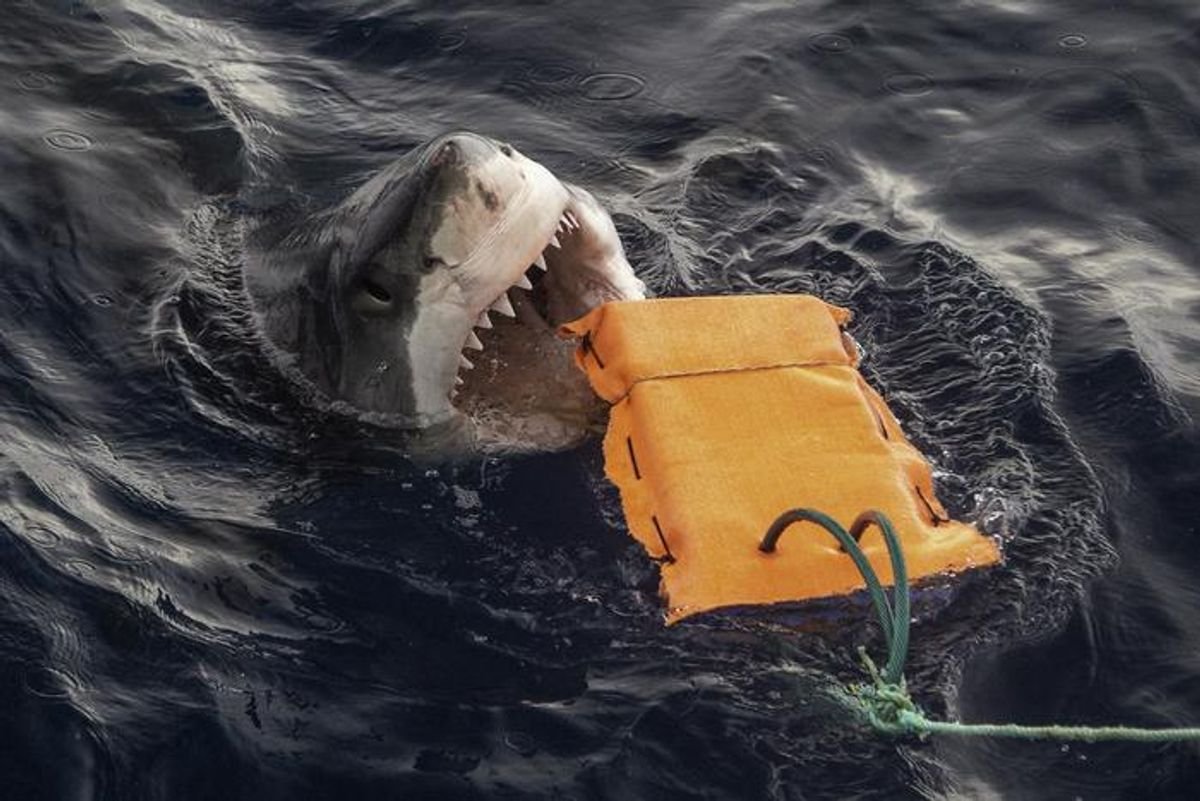
The team of researchers didn’t just include humans, but also involved both white sharks and tiger sharks. These two species of shark are responsible for the bulk of human-shark interactions so they were used for live tests on the material’s strength.
After getting chomped on by the sharks, each material was assessed according to four categories of bite damage that ranged from superficial to critical. Comparisons were then made between the tested material and neoprene, which is currently what standard wetsuits are made out of.
“While there were small differences between the four tested materials, they all reduced the amount of substantial and critical damage, which would typically be associated with severe hemorrhaging and tissue or limb loss,” said Tom Clarke, from Flinders University, in the press release.
One of the most successful materials was chainmail, but these were too heavy and difficult to wear during aquatic activities. The best materials turned out to be those that were both strong and lightweight, like ultra-high molecular weight polyethylene that is used to make sailing ropes.
More Than Just Saving Human Lives
Avoiding losing a limb and incurring fatal blood loss was at the top of the concern list for scientists, but it wasn’t the only way that bite-proof wetsuits can make a major difference.
Mitigation strategies to avoid shark bites have often been lethal in the past, putting many shark species, including endangered ones, at risk. By incorporating more personal protective measures, like bite-resistant wetsuits and electric deterrents, both humans and sharks will be more likely to be out of harm’s way.
Additionally, a fatal shark bite occurring in a popular water-based tourist area can have detrimental consequences for the local area’s economic survival. By preventing shark bites from ever becoming fatal, this new accessible wetsuit can make swimming, surfing, diving, and just enjoying the water a much safer experience for everyone involved.
Read More: DNA Differences in Great White Sharks Have Instigated an Unsolved Mystery
Article Sources
Our writers at Discovermagazine.com use peer-reviewed studies and high-quality sources for our articles, and our editors review for scientific accuracy and editorial standards. Review the sources used below for this article: