
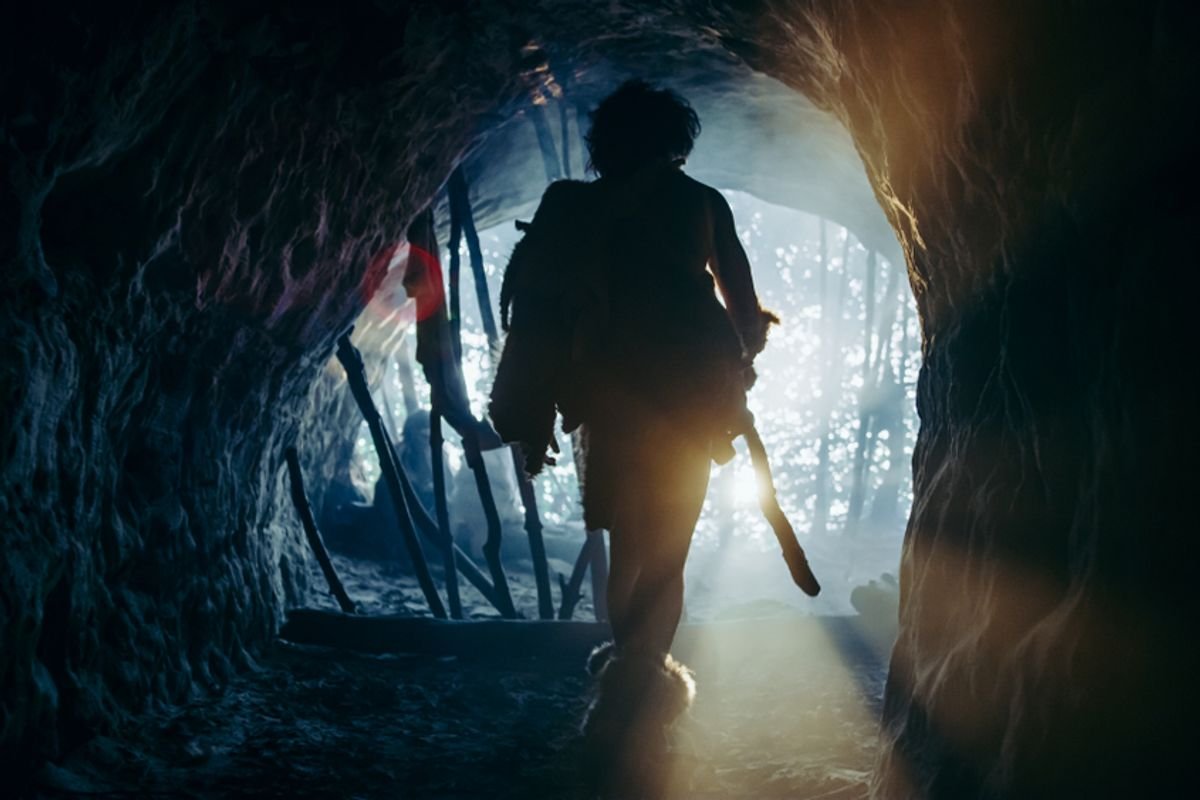
Neanderthals Faced a Genetic Crisis During the Ice Age, Setting the Stage for Their Extinction

During their final years, the dwindling Neanderthal population in Europe was drained of its genetic diversity; the last members of this dying species came from just a single lineage, which would end up going extinct around 40,000 years ago.
A new study published in the Proceedings of the National Academy of Sciences has filled a major gap in the genetic history of Europe’s Neanderthals, revealing how the ancient hominins grew increasingly homogeneous over time. The harsh climate conditions of the last Ice Age hit Neanderthals hard; their diminished genetic diversity would never fully recover, leading them toward extinction.
Read More: Humans Outlived Neanderthals Likely Because of Differences in Anatomy and Social Skills
Gaps in Neanderthal Knowledge
During the Middle to Late Pleistocene, Neanderthals scattered all throughout Eurasia. The earliest clues of their presence in Europe come from the Sima de Los Huesos archaeological site in Spain; archaeologists found that the hominins who once lived here around 430,000 years ago possessed several characteristics seen in later Neanderthals — though these hominins are often described as “pre-Neanderthals”.
Archaeological sites across Europe indicate that Neanderthals had become well-established on the continent by 400,000 years ago. They would go on to live for another 360,000 years, but still, there are many gaps in their genetic history that remain unknown.
“We have evidence that Neanderthals inhabited Europe continuously between 400,000 and 40,000 years ago. However, we have only fragmentary details of their population history,” said study author Cosimo Posth, a professor at the University of Tübingen, in a statement. “So far, we know very little about the evolutionary developments that preceded their extinction.”
Refuge During the Ice Age
The Neanderthals of Europe didn’t always live comfortably, especially during the last Ice Age. The new study found that Neanderthals were pushed into a corner of southwestern Europe 75,000 years ago, seeking refuge as a devastating glacial period threatened populations all over the continent.
To get a better idea of Neanderthals’ population history, the researchers sequenced mitochondrial DNA from teeth and bone samples of 10 new Neanderthal individuals from six archaeological sites in Belgium, France, Germany, and Serbia. They combined the results with 49 previously published samples of Neanderthal mitochondrial DNA and tied everything together by reviewing established data on Neanderthal presence in Europe.
“This allowed us to combine the two lines of evidence and reconstruct the demographic history of Neanderthals in terms of space and time,” said study co-author Jesper Borre Pedersen, a postdoctoral researcher at the University of Tübingen.
Based on this analysis, they determined that from 130,000 to 80,000 years ago, Neanderthals ranged from the Iberian Peninsula in the west to the Black Sea in the east. But shortly after 80,000 years ago, their range dramatically shrank. Archaeological sites occupied by Neanderthals began to concentrate in southwestern France.
Lacking in Genetic Diversity
The researchers shifted their focus to Late Neanderthals, those who lived from around 60,000 to 40,000 years ago. Their analysis of mitochondrial DNA showed that the Neanderthal group that had settled in southwestern France to endure the Ice Age eventually spread across all of Europe. This new population began to reoccupy the areas once left behind, but the problem is that all its members belonged to the same lineage.
The researchers found that Neanderthals experienced a steep decline in population size between 45,000 and 42,000 years ago. Their numbers may have plummeted so quickly because of their low genetic diversity; this was a result of a population bottleneck during the Ice Age, which wiped out many Neanderthal groups, each with its own genetic identity.
“Genetically speaking, the Late Neanderthals were a very homogeneous group,” said Posth. “So it may be that the low genetic diversity — and possibly also the subsequent isolation of small groups — contributed to the disappearance of the Neanderthals.”
Read More: Neanderthals Roamed Across Eurasia Before Modern Humans
Article Sources
Our writers at Discovermagazine.com use peer-reviewed studies and high-quality sources for our articles, and our editors review for scientific accuracy and editorial standards. Review the sources used below for this article: