
Neanderthal Families Took Trips to the Beaches of Portugal Around 80,000 Years Ago

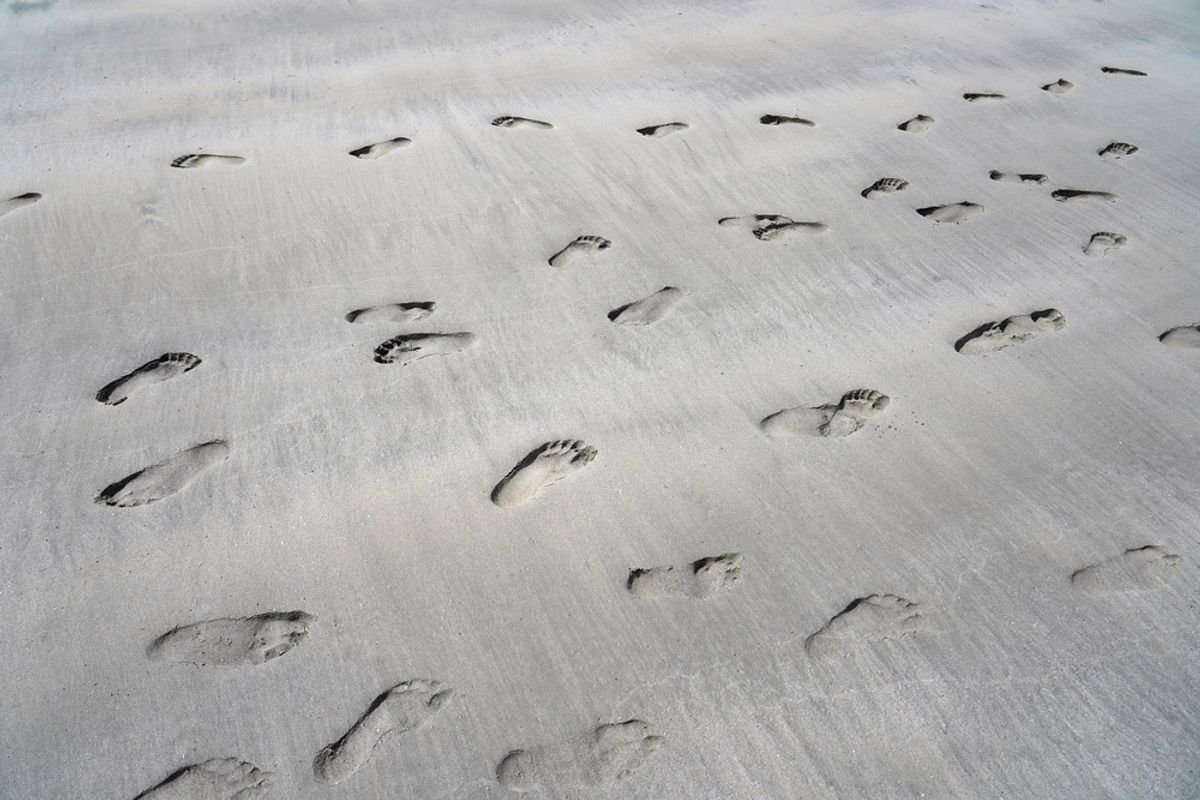
Bones and tools aren’t the only things that tell us about the Neanderthals. A paper published in Scientific Reports in July describes two new Neanderthal sites discovered on the Algarve — the southern coast of Portugal on the southern side of the Iberian Peninsula. The sites themselves are rich in information about the Neanderthals, but instead of fragmented femurs or sharpened stone flakes, they feature fossilized footprints, making them the first Neanderthal tracksites in all of Portugal.
According to the authors of the new paper, the sites advance what we know about the distribution and behavior of the hominins in the Pleistocene Period around 80,000 years ago, supporting the theory that they were well adapted to life on the coasts.
“Footprints record a specific moment, almost instantaneously, allowing us to reconstruct what was happening,” said study authors Carlos Neto de Carvalho, from the University of Lisbon, and Fernando Muñiz Guinea, from the University of Seville, according to a press release. “Footprints show how Neanderthals used space — how they explored coastal environments, forests, dunes, or riverbanks — something that is difficult to infer solely from artefacts.”
Read More: How an Ancient Human Species Formed Family Ties
Footprint Finds
Of course, bones and tools are important sources of archaeological information. They can tell you about the identity of ancient hominins, and about their technological and cultural advancement. But footprints offer their own advantages. Saved in the sediment — and stuck there — they preserve particular moments, testifying to the presence of hominins at a specific time and place.
Not only that; footprints can offer clues that other artifacts such as scrapers and spears can’t always provide, signaling the approximate number and age of the individuals who made them, as well as their possible activities. From the size and arrangement of footprints alone, it is possible to identify adults, adolescents, and children, walking, running, or simply completing their daily chores.
“Footprints offer a unique and dynamic window into everyday behaviour,” Neto de Carvalho and Muñiz Guinea added in the release. “A snapshot of life tens of thousands of years ago.”
Stumbling across the first of the new footprints in 2020, the authors of the new paper uncovered two different tracksites in the Algarve, on what were, in the Pleistocene Period, coastal dunes. Tracing back to around 82,000 years ago, the Praia do Telheiro tracksite features one footprint from an adult female or a teenager. Meanwhile, the tracksite at Praia do Monte Clérigo dates to around 78,000 years ago and features 26 footprints from an adult male and a pair of children, one a toddler as young as a year old.
Read More: First-Ever Genetic Analysis of a Neanderthal Family Paints a Fascinating Picture of a Close-Knit Community
Living Life on the Coasts
That one of the tracksites features footprints from children suggests that the Neanderthals lived nearby — toddlers aren’t famous for their ability to travel long distances. But the Neanderthals weren’t the only inhabitants that called these coasts home. Animal tracks appear at both sites — birds at Praia do Telheiro and deer at Praia do Monte Clérigo — showing that the Neanderthals encountered and even hunted animals along the Iberian coasts.
In fact, some of the tracks at the Praia do Monte Clérigo site hint at a scuffle between a human and a deer, indicating that the Neanderthals found food at the shore, pursuing and ambushing prey along the coastal dunes.
Combining these traces with the finds from other Neanderthal sites throughout the Iberian Peninsula, the study authors say that these hominins likely ate deer, horses, and hares, and supplemented these meals with foods from the sea. Though the evidence is a little limited, some of these sites contain signs that the Iberian Neanderthals actually consumed fish and shellfish, albeit in small amounts.
Taken together, the results reveal that the Neanderthals were probably a stronger fit for coastal habitats than traditionally thought, painting a new picture of these hominins, not as forest-lovers, but as beach-lovers, instead.
Read More: Did Neanderthals Eat Seafood? Neanderthals Cooked and Ate Crab Off the Coast of Portugal
Article Sources
Our writers at Discovermagazine.com use peer-reviewed studies and high-quality sources for our articles, and our editors review for scientific accuracy and editorial standards. Review the sources used below for this article: