
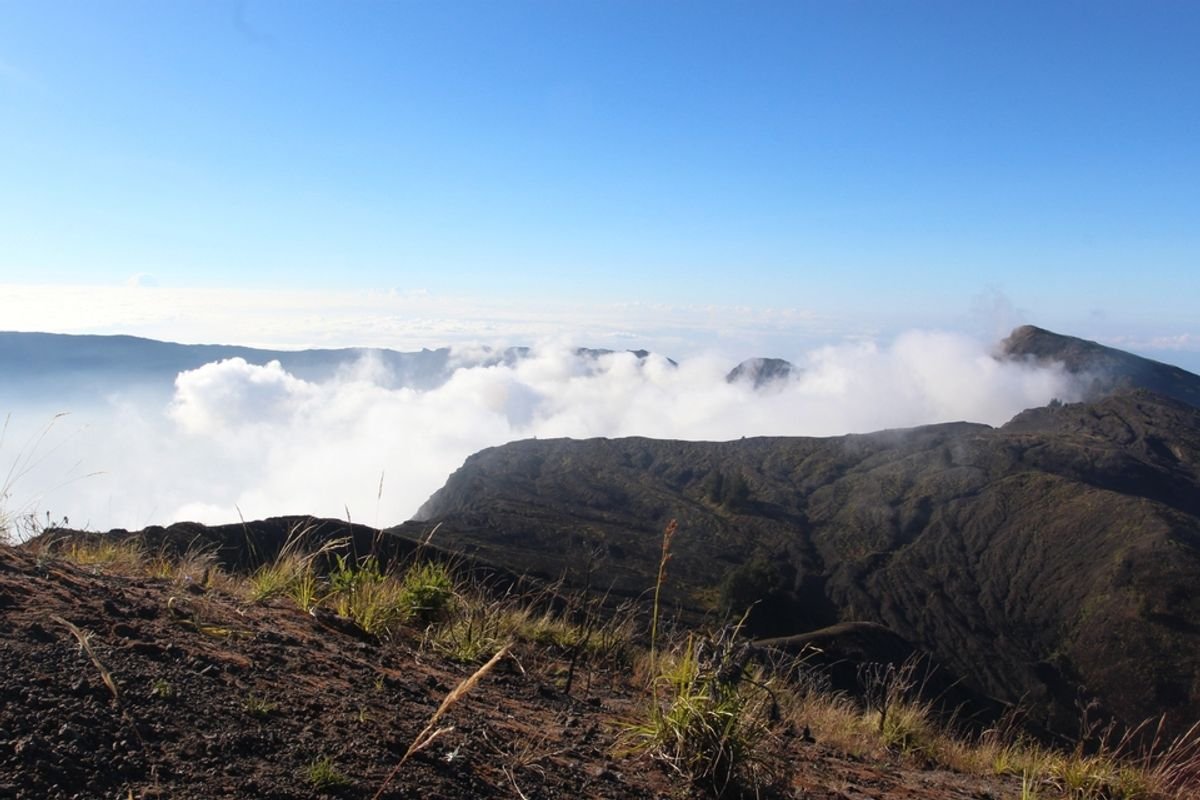
Mount Tambora Is Still Active, but It’s Not Likely to Have a Devastating Eruption Again

Imagine a volcanic eruption so large it spewed 24 cubic miles of ash, rock, and gases into the air, produced smoke that could be seen from 300 miles away, and completely altered the planet’s climate so that regions thousands of miles away experienced snow during summer, killing crops and eventually thousands of people.
For those living in 1815, they didn’t have to imagine it, they lived it. When Mount Tambora erupted, it was the largest volcanic eruption in recorded history. It caused untold damage and loss of life. While this eruption may now seem like a historical event, the volcano remains active. Is it possible that an event of this size could happen again?
Where Is Mount Tamboara?
Mount Tambora is located on the island of Sumbawa in Indonesia, along the Sunda Arc, a chain of active volcanic islands. Notable islands along the Sunda Arc include Sumatra, Java, and Flores, home of the Flores Man, also known as Homo floresiensis. It’s also home to Krakatoa, a site of another past massive volcanic eruption.
Volcanoes along the Sunda Arc are highly active, with the most recent eruptions occurring in August 2025. While these eruptions may not be as explosive as the 1815 Mount Tambora eruption or the 1883 Krakatoa eruption, it is possible that an eruption of this size could occur again. However, it’s unclear if it will come from Mount Tambora itself.
Read More: What Causes Volcanic Eruptions: Can We Predict Them?
Will Mount Tambora Erupt Again?
Mount Tambora remains active to this day. The last time it erupted was 1967, although it barely registered on the Volcanic Explosivity Index (VEI). Could it reach a VEI-7 like it did in the past? That remains to be seen.
According to the USGS, the likelihood of a VEI-7 eruption from Mount Tambora in the near future is relatively small. An eruption of that scale is rare, and if it were to occur, it would likely come from a different active volcano along the Sunda Arc.
In the event of another eruption from Mount Tambora, experts from the Center for Volcanology and Geological Disaster Mitigation have created a plan to help minimize casualties to the best of their ability. And they are not alone. Organizations like the USGS are developing plans in the event of massive volcanic eruptions. However, more resources and funding are needed.
For the time being, it does not appear that Mount Tambora is showing any signs of a massive eruption. The last time there was any seismic activity was 2011, but it’s remained fairly quiet since then. However, those monitoring volcanoes will be sure to let us know when those signs appear.
Why Tambora Was So Devastating
On April 10, 1815, Mount Tambora erupted with such force that the volcano nearly disintegrated. At the time, the volcano was 14,000 feet tall. However, after the eruption, only a four-mile caldera remained. And the new height was 9,354 feet tall.
Twenty four cubic miles of ash, rock, and gases flew into the air, including 60 megatons of sulfur. Chunks of pumice stone allegedly rained down around the volcano, and the dark column of smoke could be seen from over 300 miles away.
Pyroclastic flows — fast-moving lava — swept down the sides of the mountain, and tsunamis ensued. Experts believe the initial eruption killed 10,000 people. However, it’s likely that an additional 80,000 people perished in the aftermath as the ash plumes blocked out the sun, preventing crops from growing, causing famine and disease.
Across the world, the volcanic fallout altered weather patterns, causing snow in parts of Europe and North America during their peak growing seasons, which led to crop failures and starvation. This would come to be known as the “year without summer” in 1816. Overall, the eruption lowered the planet’s temperature by about 5 degrees Fahrenheit.
This article is a republished version of this previously published article.
Read More: How Mount Tambora and Other Volcanic Eruptions Inspired Artistic Masterpieces
Article Sources
Our writers at Discovermagazine.com use peer-reviewed studies and high-quality sources for our articles, and our editors review for scientific accuracy and editorial standards. Review the sources used below for this article: