
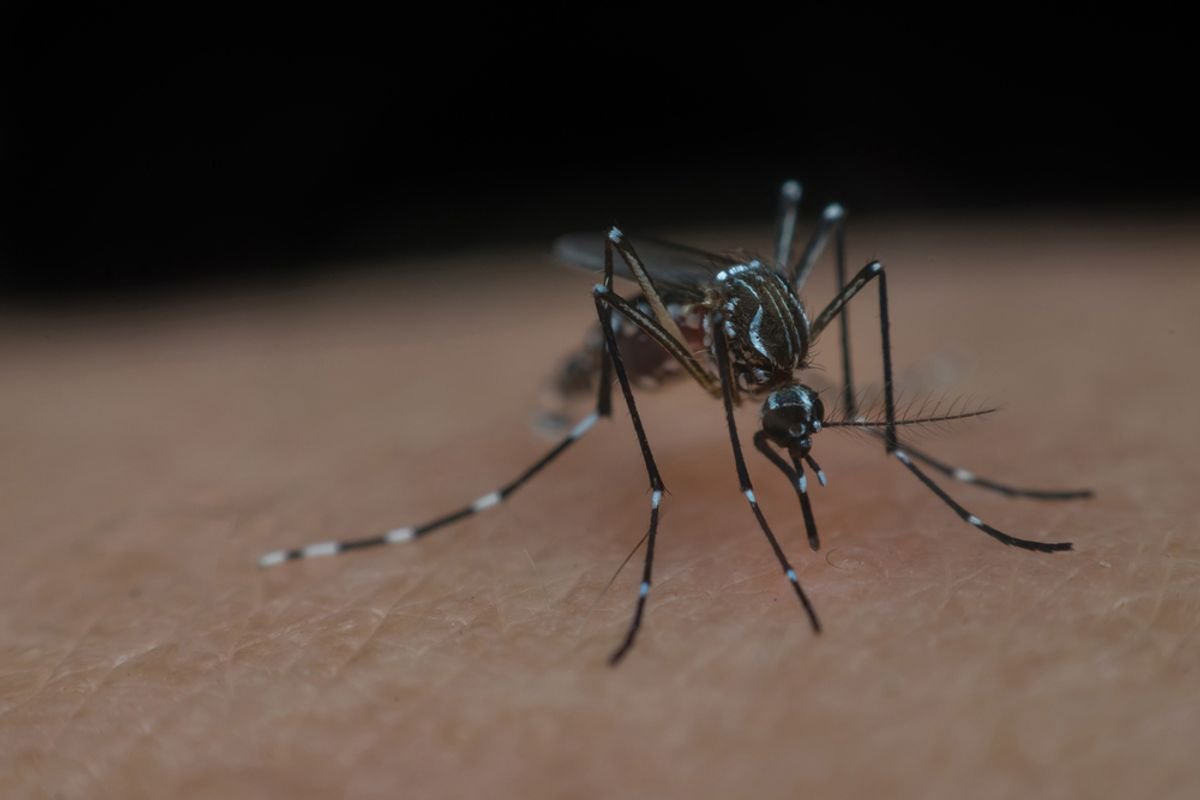
Mosquitoes May Have Been Feeding on Homo erectus 1.8 Million Years Ago

Nearly two million years ago, as early members of the genus Homo expanded into Southeast Asia’s tropical forests, they encountered a landscape teeming with primates, predators, and insects — including mosquitoes that may already have been evolving a preference for their blood.
A new genetic study published in Scientific Reports estimates that this transition to feeding on humans occurred between 2.9 and 1.6 million years ago, overlapping with the arrival of early hominins such as Homo erectus in the region around 1.8 million years ago. That means this mosquito group began targeting humans more than a million years before similar preferences are thought to have evolved in major African malaria carriers.
How Mosquitoes Evolved to Feed on Early Hominins
Out of roughly 3,500 known mosquito species, only a small fraction strongly prefer feeding on humans. But that preference is what makes certain species especially effective at spreading diseases like malaria. Mosquitoes that consistently seek out human hosts are far more likely to transmit pathogens between people.
The species examined in the new study belong to the Anopheles leucosphyrus group, a cluster of Southeast Asian mosquitoes that includes known malaria spreaders. To understand how their host preference evolved, researchers sequenced DNA from 38 mosquitoes representing 11 species. These samples were collected across Southeast Asia between 1992 and 2020.
Using genetic data, mutation-rate estimates, and computer modeling, the team reconstructed the group’s evolutionary history. Their analysis suggests that the shift toward feeding on humans happened once within this group in Sundaland — a prehistoric landmass that once connected parts of today’s Malay Peninsula, Borneo, Sumatra, and Java during periods of lower sea levels.
Before that transition, the mosquitoes’ ancestors primarily fed on non-human primates, which were abundant across the region’s tropical forests.
Read More: Mosquito-Borne Chikungunya Virus Cases Rise Due to Travelers and Climate Change
When Mosquitoes Began Targeting Early Humans
The timing of this aligns closely with estimates for the arrival of Homo erectus in Southeast Asia. It also predates the arrival of modern humans in the region, 76,000 to 63,000 years ago.
Together, the findings indicate that the adaptation to human hosts coincided with early hominin populations rather than with modern human societies.
Previous research has shown that changes in mosquito host preference involve alterations in genes that control odor detection. Mosquitoes rely heavily on scent to locate hosts, distinguishing between species based on chemical cues. Shifting from tracking primate odor to specializing in humans likely required multiple genetic changes — a process that may have unfolded gradually as early hominin populations became established and more predictable food sources.
The researchers propose that Homo erectus would have needed to be present in substantial numbers to create consistent evolutionary pressure favoring mosquitoes that were better at detecting and feeding on humans.
What Mosquito DNA Reveals About Early Humans
The implications extend beyond mosquito biology. The researchers say their findings provide independent, non-archaeological evidence supporting the limited fossil record of early hominin arrival in Southeast Asia.
The study also underscores how early this adaptation occurred. In Africa, mosquito lineages that gave rise to major malaria carriers such as Anopheles gambiae and Anopheles coluzzii are thought to have developed a strong preference for humans between about 509,000 and 61,000 years ago, much later than the Southeast Asian shift estimated here.
Because fossils from the earliest phases of hominin expansion in Southeast Asia remain scarce, evolutionary changes in other species may offer additional clues about when ancient humans first established themselves in the region. In this case, mosquito DNA preserves evidence that humans became a reliable host for malaria-carrying insects far earlier than once assumed.
Read More: Mosquitoes Can Smell When Someone’s Had a Beer, and Even Prefer Beer-Drinkers’ Blood
Article Sources
Our writers at Discovermagazine.com use peer-reviewed studies and high-quality sources for our articles, and our editors review for scientific accuracy and editorial standards. Review the sources used below for this article: