
Meet the Newly Discovered Cousin of the World’s Most Popular Magic Mushroom

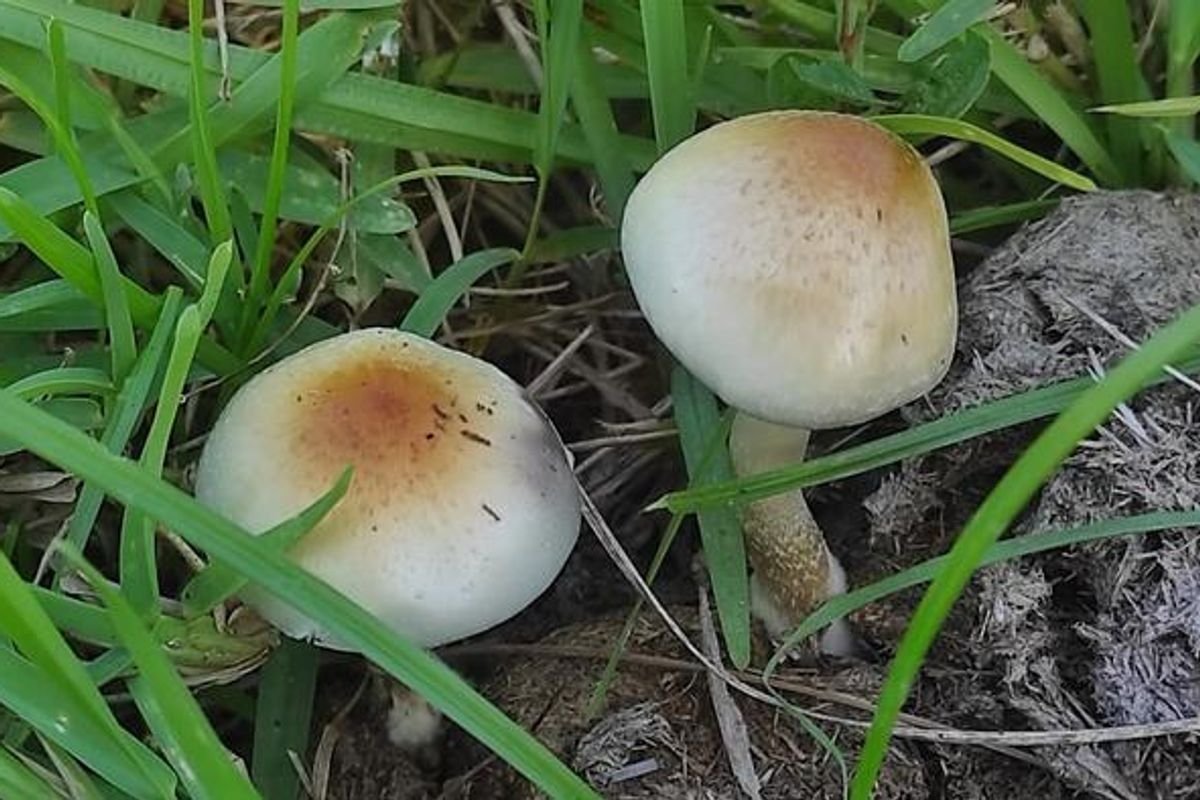
The world’s most widely cultivated magic mushroom may not be alone after all. Researchers have discovered a previously unknown species of psychedelic mushroom in southern Africa that appears to be the closest known relative of Psilocybe cubensis — the species grown around the world for its psilocybin-producing properties.
Researchers identified the mushroom, named Psilocybe ochraceocentrata, from specimens collected in grasslands across South Africa and Zimbabwe. Genetic analysis shows that it diverged from P. cubensis roughly 1.5 million years ago, according to a study published in Proceedings of the Royal Society B.
That timeline challenges a long-standing theory that P. cubensis spread to the Americas only a few centuries ago when cattle were transported there during European colonization.
“It’s one of the most popular strains of magic mushrooms, because it is quite potent and easy to grow. But until this study, nobody realised it was a totally separate species from the classic magic mushroom,” Breyten van der Merwe, one of the paper’s coauthors, said in a press release.
Read More: Psilocybin Use Increases in the U.S. for Those with Chronic and Mental Health Conditions
The Magic Mushroom’s Origins
Despite its global popularity, the evolutionary history of Psilocybe cubensis has remained surprisingly unclear. The species was first described from Cuba in the early 1900s and is now commonly found in tropical and subtropical regions around the world. It frequently grows in cattle pastures.
Because of that association, many researchers assumed the mushroom spread globally alongside domesticated cattle. For decades, one discussed idea suggested that P. cubensis originated in Africa and only reached the Americas after livestock were introduced there in the 1500s.
The new discovery challenges that timeline. By analyzing DNA from mushroom specimens collected across southern Africa — including samples gathered over nearly a decade — researchers found that the African mushrooms represent an entirely separate species, even though they look remarkably similar to P. cubensis.
A Magic Mushroom Growers Already Know
Ironically, the newly described species has been quietly circulating among mushroom cultivators for years. Growers around the world have long cultivated strains known as “Natal Super Strength” (NSS) or “Transkei,” assuming they were simply varieties of Psilocybe cubensis.
The new research reveals those strains actually belong to Psilocybe ochraceocentrata. The mushroom’s name refers to a distinctive feature of its appearance — the ochre-yellow coloring at the center of its cap.
Like P. cubensis, the species typically grows on or near herbivore dung. Because the two species share similar habitats and outward appearances, they were easily mistaken for one another.
A Split Shaped by Grasslands and Grazing Animals
Genetic analysis suggests the two mushrooms diverged during a period when grassland ecosystems were expanding across parts of the world.
As grasslands spread, large grazing animals also expanded into new territories. Their dung created a growing network of habitats for fungi that specialize in decomposing it.
Researchers suggest these ecological shifts may have opened the door for the ancestors of P. cubensis and P. ochraceocentrata to evolve along separate paths.
The discovery also highlights how much fungal diversity remains undocumented, particularly in Africa.
Although more than 150 species of Psilocybe mushrooms have been described globally, relatively few have been formally identified on the African continent.
That gap suggests many species may still be waiting to be discovered. And as psychedelic mushrooms draw increasing attention for their potential medical applications, understanding their evolutionary history could become even more important.
Read More: Magic Mushroom Compound Psilocybin May Have Anti-Aging Properties
Article Sources
Our writers at Discovermagazine.com use peer-reviewed studies and high-quality sources for our articles, and our editors review for scientific accuracy and editorial standards. Review the sources used below for this article: