
Magma Formed in Deep “Gold Kitchens” Delivers Traces of Gold to Volcanic Islands
Gold’s rarity on the surface of Earth makes it a treasured resource, but the precious metal is not nearly as sparse in the planet’s deeper layers. The Earth’s mantle contains gold, especially in spots beneath island arcs where magma rises to form volcanoes. Geologists, though, have questioned why this type of setting is often enriched in gold, becoming Earth’s “gold kitchen.”
A new study published in Communications Earth & Environment has found out how magma spewed from subduction zones, where one oceanic plate slips under another, becomes packed with gold. The process of gold enrichment is achieved by repeated mantle melting, which allows gold to be transferred to magma. This explains how island arcs gain their gold deposits, highlighting the metal’s submarine origins.
“When we analysed these samples, we found that their gold concentrations are often several times higher than those of comparable magmas from mid-ocean ridges,” said study author Christian Timm, a marine geologist at the GEOMAR Helmholtz Center for Ocean Research Kiel, in a statement. “This raised the key question: which processes are responsible for this enrichment?”
Gold in Earth’s Core
Gold is one of the four major precious metals (the other three being silver, platinum, and palladium), and as such, it has consistently been in high demand throughout the ages. Gold has always been so valuable because of its relative scarcity, as its abundance in Earth’s crust is estimated at about 0.004 parts per million, according to the American National Standards Institute.
Back when Earth was entirely molten, some 4.5 billion years ago, iron began to sink toward the center of the planet, where it would form the bulk of Earth’s core, according to the London Bullion Market Association. Other iron-loving (or “siderophilic”) heavy elements like gold followed suit, and now, more than 99.999 percent of Earth’s stores of gold and other precious metals are embedded in the core.
Gold isn’t necessarily stuck in the core, though. A 2025 Nature study uncovered proof that material from the core (including gold) leaks to the Earth’s mantle above, based on traces of the precious metal ruthenium found in volcanic rocks on the Hawaiian islands.
Read More: Gigantic Hot Rock Blobs Have Impacted Earth’s Magnetic Field For Over 200 Million Years
Melting at the Mantle
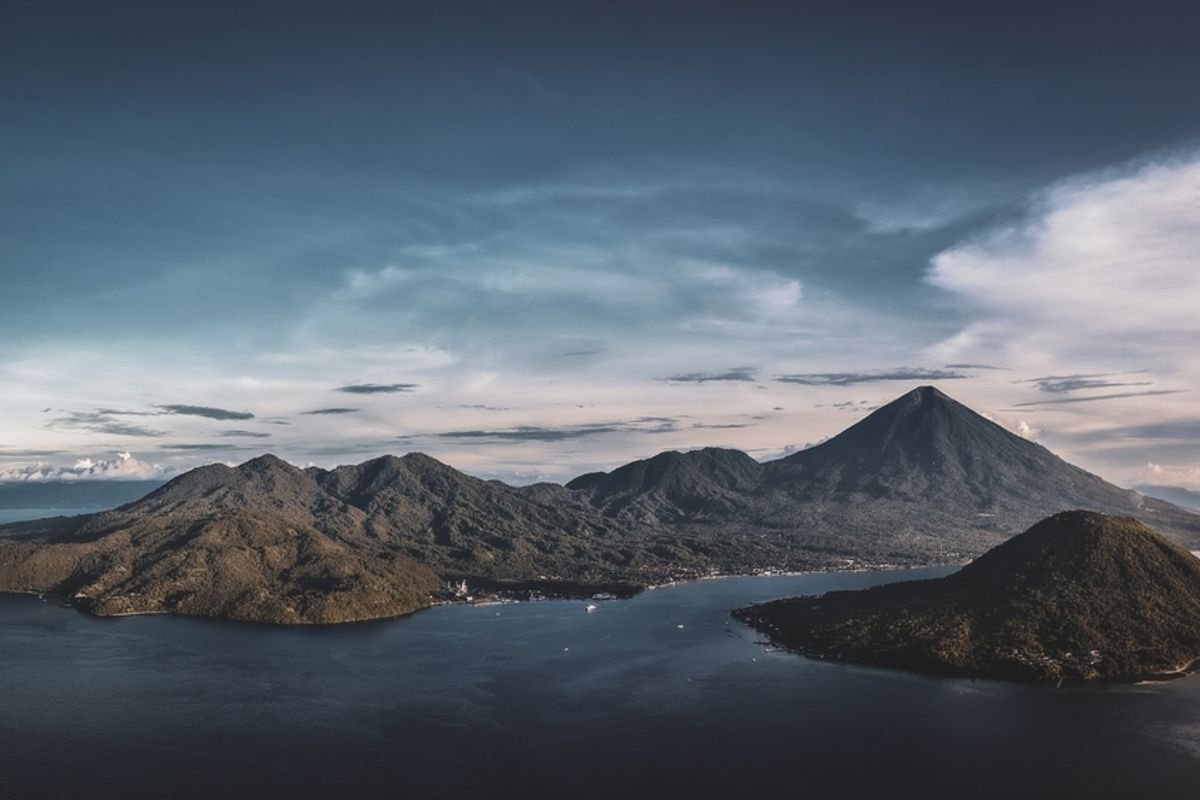
The researchers behind the new study wanted to know what happens in the “gold kitchens” where the mantle meets subduction zones. They found that multi-stage melting plays a major role in how gold is moved in these spots.

SONNE Seafloor Sampling.
(Image Credit: Christian Timm, GEOMAR)
“We initially assumed that water released from the subduction zone directly controlled gold enrichment,” said Timm in the release. “However, our data show that water mainly facilitates mantle melting. The key factor for high gold concentrations is the high – and in part repeated – degree of melting.”
The researchers found clues by looking at 66 glass samples from the seafloor along the oceanic Kermadec island arc and the adjacent Havre Trough north of New Zealand. These glasses, formed when lava cools rapidly underwater, were found to have particularly high gold concentrations, reflecting the original composition of the magma released below the island arc.
Carrying Gold to the Surface
Examining the volcanic glasses, the researchers determined that high gold concentrations indicate remelting of the mantle that was previously depleted.
Multiple stages of mantle melting, they say, are required for gold to be released. This has to do with gold in the mantle being bound to sulfide minerals, which break down at high degrees of melting. The gold is then transferred to ascending magma, where it becomes strongly concentrated.
The researchers say that while the gold concentrations in magma are high from a geological perspective, there’s not enough gold in these sources to be considered economically viable for mining.
Regardless, these findings show how interactions under subduction zones — not just near-surface processes — influence the formation of gold deposits.
“We are effectively looking at the first step in the life cycle of gold,” said Timm. “It begins with the transfer of gold from the mantle into a melt that eventually forms volcanoes. The alchemy starts long before the metal reaches the surface.”
Read More: BLOBS 1,500 Miles into Earth’s Mantle May Cause Massive Volcanic Eruptions on the Surface
Article Sources
Our writers at Discovermagazine.com use peer-reviewed studies and high-quality sources for our articles, and our editors review for scientific accuracy and editorial standards. Review the sources used below for this article: