
Los Angeles Beaches Could Join the National Park System — With Endangered Species in Mind
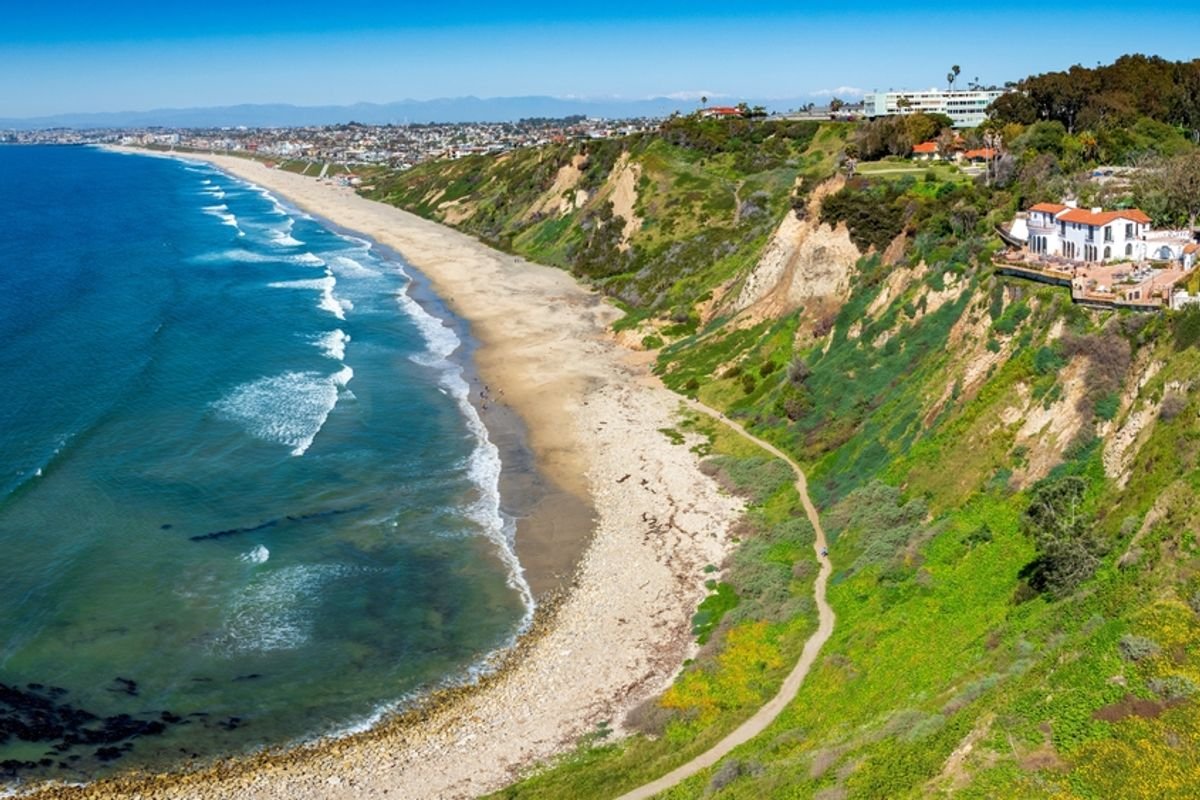
A federally mandated study is evaluating whether a new national park is needed in California, but it isn’t in a pristine natural area. It’s along the crowded beaches of Los Angeles.
“The purpose of this bill is to evaluate, with public input, whether any further boundary changes would help our community preserve and enhance natural and scenic resources with federal support,” Rep. Ted Lieu (D-Los Angeles) said to Discover. “It’s the first step to get more federal resources.”
Areas under consideration for management by the National Park Service (NPS) would include Will Rogers State Park to the north, extending all the way down to Torrance Beach. It wouldn’t include the Palos Verdes Peninsula, but it would include the San Pedro Beach area on the other side of that peninsula. It would also include the area inland along Ballona Creek, all the way to the Baldwin Hills.
These areas encompass many of Los Angeles’ iconic coastal areas, such as Venice and Manhattan Beach. The areas included are currently administered by a mishmash of regulatory agencies, including Los Angeles County and state parks.
The study committee is currently seeking public comment, but some ecologists are skeptical about the need for this designation at all.
“I don’t see a compelling rationale, and I do see some concerns, especially for access and clarity for local control,” Karen Martin, cofounder of the Beach Ecology Coalition and a retired professor at Pepperdine University in California, told Discover.
Read More: Your Guide to Staying Safe While Visiting National Parks
A Possible National Park on Los Angeles Beaches
The impetus to protect parts of Los Angeles began with the Ballona Wetlands Ecological Reserve, a state-owned parcel of land at the mouth of Ballona Creek, sandwiched between Venice and the Los Angeles International Airport.
Marcia Hanscom, director of Los Angeles Coast Forever! — a coalition of conservation activists — and others were concerned that the state wasn’t doing enough to protect this parcel of land, which plays home to several sensitive species like the federally threatened western snowy plover and the El Segundo blue butterfly, an endangered species only found in a few areas of the southern California coast.
“It’s a very different coastal wetland than anything else we have in Southern California,” Hanscom told Discover.
She and her colleagues believed that the state park, which was adjacent to a gas storage area, would receive better protection and funding through NPS involvement. They initially wanted to just extend the Santa Monica Mountains National Recreation Area, an NPS area that includes Malibu beaches, down the coastline to include the Ballona wetlands.
She connected with Lieu, and the idea grew to extend down the beach to Torrance. Lieu first introduced the bill in 2016. Section 634 of the Consolidated Appropriations Act, 2023, was approved at the very end of 2022, and it eventually ordered a resource study to initiate the process for the potential designation of Los Angeles beaches as a national park.
What Is Unique About Los Angeles Beaches?
These beach areas, which include Pacific Palisades and Venice Beach, support important ecosystems and are important for human well-being and cultural value. They also help provide a safety buffer for the city from waves and storm surge.
“They help to mitigate the waves, protect the town, filter the water coming from land,” Martin said.
On the ecological side, species such as western snowy plovers and federally endangered California least terns nest on these beaches. Unique fish species, the California grunion, even come onto the sand to spawn during their breeding season, and seals and sea lions sometimes come up on these beaches.

Snowy plover.
(Image Credit: Nick Pecker/Shutterstock)
But these areas see heavy human use — much more than adjacent areas such as the coast of the Palos Verdes Peninsula that aren’t being considered and are arguably more naturally preserved.
“It’s kind of almost gerrymandering,” Martin said. “It’s just interesting that it went that way.”
Hanscom agrees that the Palos Verdes Peninsula should have been included, connecting the whole Los Angeles coast as a potential national park or recreation area down to San Pedro Beach.
Will Federal Protection Help Los Angeles Beaches?
The areas under consideration already have a degree of management and ecological protection. Some receive protection as state parks, while others are protected by municipal regulations. Martin told Discover that the Bay Foundation has already been restoring sand dunes in places like Manhattan Beach and Dockweiler Beach, for example, by planting native plants to create wildlife habitat and prevent sand erosion. Plus, the Beach Ecology Coalition she’s part of has been collaborating with the Bay Foundation as well as other regulatory entities to improve ecological beach management.
“This is not something that is being mismanaged or neglected,” Martin said.
Overall, Martin and others are mainly concerned about the complicated regulatory framework that making these beaches a national park might entail. She’s concerned about what it might mean for beach access — will beachgoers be charged, as they are when entering national parks, for example? And how will national park designation impact fishing off the beaches, piers, or coast? Will concerts and surf tournaments held on Los Angeles beaches be affected? How will such a park be managed, given the Trump administration’s cuts to the NPS?
“It is kind of a new thing, and it has not been widely publicized,” Martin said. “There’s a lot of unknowns about how it would affect access and management.”
Hanscom said it’s more about creating a similar situation to the Santa Monica Mountains National Recreation Area. “[The NPS] would be coming to enhance the coastal experience here, not to limit it,” she added.
She and Lieu stress that the Santa Monica Mountains National Recreation Area is jointly managed with other state and local governments, and that the federal government doesn’t control it.
“This bill does not change ownership, management, or authority over local or state lands,” Lieu said.
The public comment period for the proposal is open through April 6, 2026. Even then, the decision to designate these areas as a national park is far from finalized. If the study recommends Los Angeles Beach to the national park system, Congress will still need to vote on the designation.
Hanscom is skeptical that anything will get done under the current federal administration — she doubts Lieu and other House Representatives would even introduce the bill to designate the area a national park until the House at least had a majority. But there isn’t any specific deadline for these actions to happen once a recommendation has been made.
If it is made into a national park, Hanscom hopes it will bring more attention from tourists to this beautiful part of Los Angeles’ urban landscape, and more education about the unique ecosystems of its beaches and wetlands.
“We have a gem here that could be more discovered,” Hanscom said.
Read More: 5 U.S. National Parks with Fascinating Features
Article Sources
Our writers at Discovermagazine.com use peer-reviewed studies and high-quality sources for our articles, and our editors review for scientific accuracy and editorial standards. Review the sources used below for this article: