
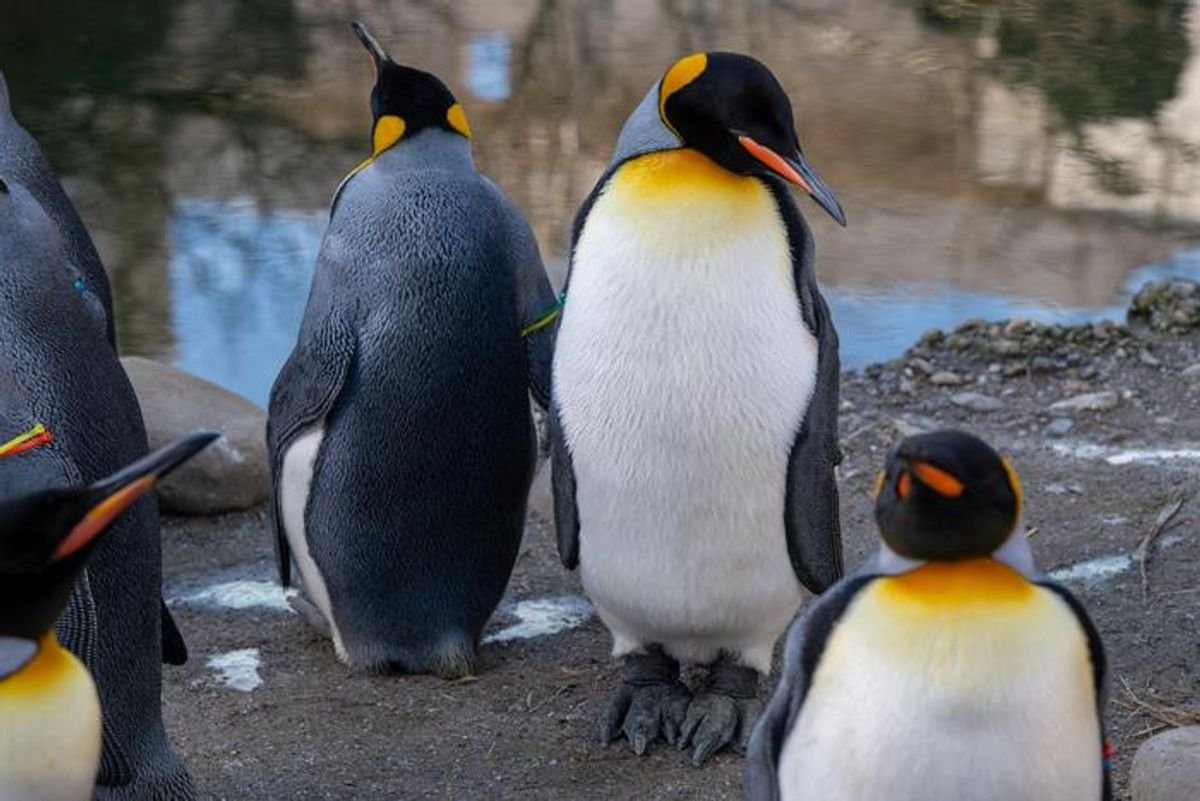
Like Modern Humans, Penguins in Captivity Are Living Longer — but Show Signs of Aging Faster

While it may not seem like humans and penguins have much in common, penguins can be a valuable model for understanding human aging, and are a key reason why researchers chose to analyze them for a new study published in Nature Communications. But during their research, the study authors found something they didn’t quite expect.
A well-fed penguin in captivity may live longer, but biologically, they’re aging faster.
Researchers dove into what may be causing this difference in aging and how it compares to the aging process in humans as well.
“We wanted to investigate whether turning these penguins into nonchalant, well-fed, and well-cared-for individuals would alter their aging trajectory. Since this lifestyle already occurs in zoos, the setup was ideal,” said Robin Cristofari from the University of Helsinki and first author of the study, in a press release.
How Humans and Penguins Compare
Studying human aging can be difficult for several reasons. While medicine and technologies have advanced, that doesn’t mean that other factors, such as poverty, food security, civil violence, and alcohol use, have not impacted aging.
Penguins, according to the press release, can live 20 to 40 years, which provides a suitable timescale for human-relevant research. They have also not been as exposed to the profound socio-economic changes humanity has seen over the past few centuries.
Read More: Your Brain Has Five Ages — And They Shape How You Think for Life
Studying Penguins in Captivity
For their research, the team analyzed king penguins housed at Zoo Zurich in Switzerland and at Loro Parque on the island of Tenerife, Spain, as their living conditions and lifestyle closely model those of humans, according to the study.
The results from their analysis were surprising.
“A 15-year-old penguin in the zoo has the body of a 20-year-old penguin in the wild,” said co-researcher Céline Le Bohec, from the French CNRS, in the press release. “However, the interesting part is that zoo penguins also live longer, overall. They may be less physically fit, but with no natural predators or Antarctic storms to contend with and with access to veterinary care, they can survive long past the age at which they would typically die in the Southern Ocean.”
The research team thinks these results could be because of metabolism, cellular growth, and maintenance. Because the penguins were housed in a smaller space than they would have in the wild, and the regular feeding and care limited their physical activity, this may have led to accelerated biological aging.
A Less Active Lifestyle
Overall, the study authors found that humans and penguins alike live longer within modern environments. This is likely due to advances in medical care and access to other resources. However, just because humans and penguins are living longer does not mean their longer lives are the healthiest.
According to Johns Hopkins Medicine, low physical activity in humans can lead to adverse health issues, such as high blood pressure, type 2 diabetes, cardiovascular disease, and could increase the risks of certain cancers — all of which can contribute to early death.
For their next study, the team is curious about which lifestyle leads to both a longer and healthier life.
“We are currently conducting a study in which we induce penguins to eat less and exercise more. It is important to find a moderate lifestyle in a world of abundance — for us humans as well,” said research curator Leyla Davis from Zoo Zurich in the press release.
Read More: Why Pumas Slaughtered Thousands of Penguins in Argentine Patagonia
Article Sources
Our writers at Discovermagazine.com use peer-reviewed studies and high-quality sources for our articles, and our editors review for scientific accuracy and editorial standards. Review the sources used below for this article: