
Jamestown Colonists Strangely Picked up Donkeys En Route to the New World, and Likely Ate Them
When the Jamestown colonists first arrived in Virginia, they brought with them supplies and tools they believed they’d need to start a new colony. While historical records indicate that these supplies included horses, new archaeological evidence reveals that another livestock staple was also present in the colony.
Through a new zooarchaeological analysis published in Science Advances, the research team found that the colonists likely brought donkeys along with them, as well as horses. However, the historical records don’t list the donkeys on the manifest, and DNA analysis reveals that these donkeys didn’t originate in England.
Digging further into the colony’s past, the research team has uncovered the likely origin of the donkeys and what happened to them during that first tragic winter.
Read More: Before Horses, Hybrid Donkeys Were Once Used For Battle
Donkeys in Jamestown But Not on the Manifest
At the historic Jamestown colony site, which was first occupied by European colonists in the early 1600s, archaeologists have uncovered a plethora of bones and artifacts, including those of horses and donkeys.

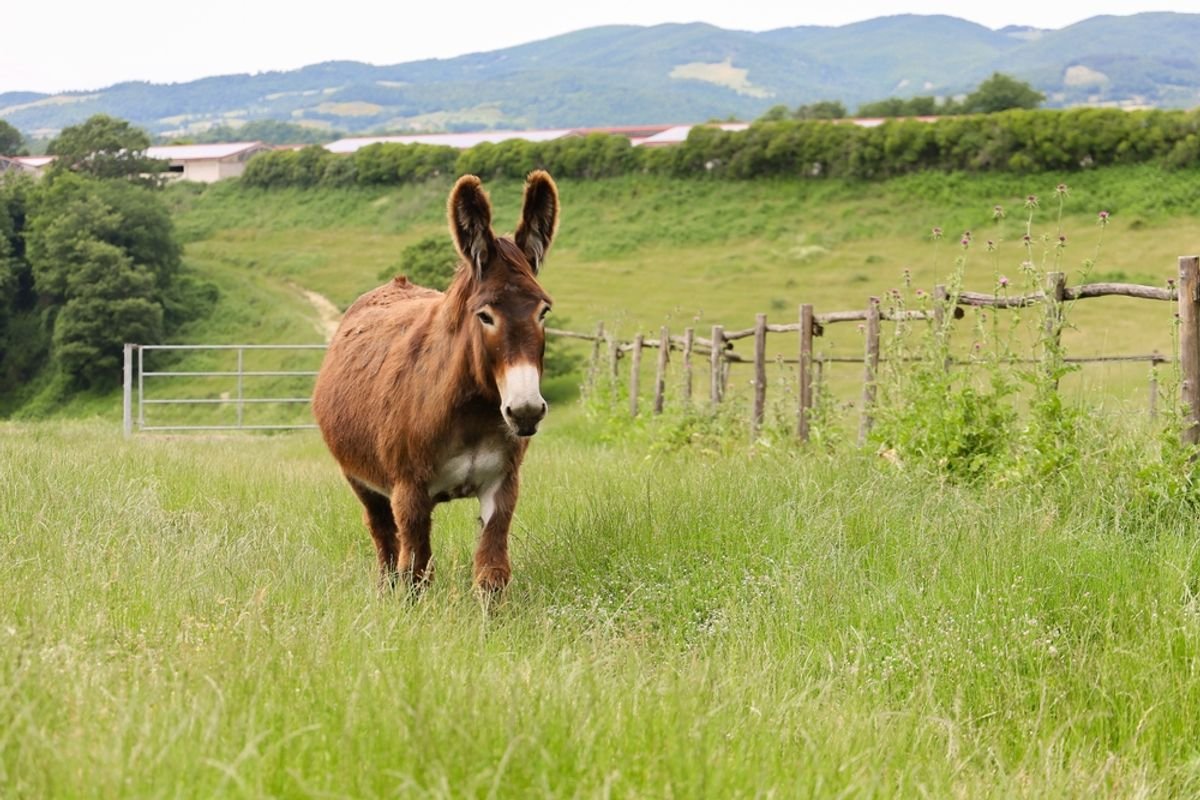
An illustration of a donkey in colonial Jamestown.
(Image Credit: Paula Calle Lopez, Courtesy of Jamestown Rediscovery (Preservation Virginia))
What is puzzling about this is that the original ship’s manifest doesn’t indicate that donkeys were on board when they arrived in Jamestown, suggesting they may have come from somewhere else. After closely examining the donkey bones, the team also noted that there was evidence of wear and tear, such as with bridling, suggesting the colonists used these animals for work.
“There are no written records of donkeys on ship manifests and reports, yet evidence suggests they were valued as dependable work animals,” said John Krigbaum, a professor and chair of anthropology at the University of Florida, in a press release.
What Happened to the Donkeys at Jamestown?
For this study, the research team analyzed bones, including teeth, from specimens identified as horses or donkeys from the site.
Using radiocarbon dating, the research team examined five teeth from the site and accurately dated the specimen as having been born before the colony was founded in 1607, and likely died during the winter of 1609 to 1610, known as the “starving time.”
“They show that adult horses were eaten, butchered, and cooked or boiled, with most elements split open to extract even the minutest nutritional resources, including dental pulp,” the team wrote in their study.
While there are records of the colonists consuming horses and other animals in the colony at that time, this new evidence can confirm that the donkeys were also most likely eaten during the “starving time.”
Revealing Donkey Origins
While radiocarbon dating of teeth can accurately place the time these donkeys were in Jamestown, these donkey teeth can also answer another pressing question — where did they come from if not England?
Using bone chemistry and ancient DNA analysis, the research team found that some of the donkeys likely originated in Africa as well as the Caribbean Islands.
“Ancient DNA points to Iberia or West Africa, which is consistent with its isotope signature, but the isotopic evidence is also consistent with Trinidad and Tobago, which is not far off the route sailed,” said Krigbaum in a press release.
The results of this study help paint a better picture of how equids such as horses and donkeys were first transported to the Americas. The team hopes to use these methods on other early European settlements in North America in the future.
Read More: Donkey Skin May Be a Secret Weapon in the Fight Against Ticks and Lyme Disease
Article Sources
Our writers at Discovermagazine.com use peer-reviewed studies and high-quality sources for our articles, and our editors review for scientific accuracy and editorial standards. Review the sources used below for this article: