
Is Asteroid Mining the Next Gold Rush or Just Science Fiction? — Here’s What We Know

In the realm of science fiction, the concept of mining asteroids is a classic trope. The idea of humans prospecting for precious metals and other resources on low-gravity rocks floating in the solar system is compelling, inspiring a sense of excitement and adventure. You’ll find it in cult-TV shows like The Expanse or For All Mankind, and in sci-fi tales dating back more than a century.
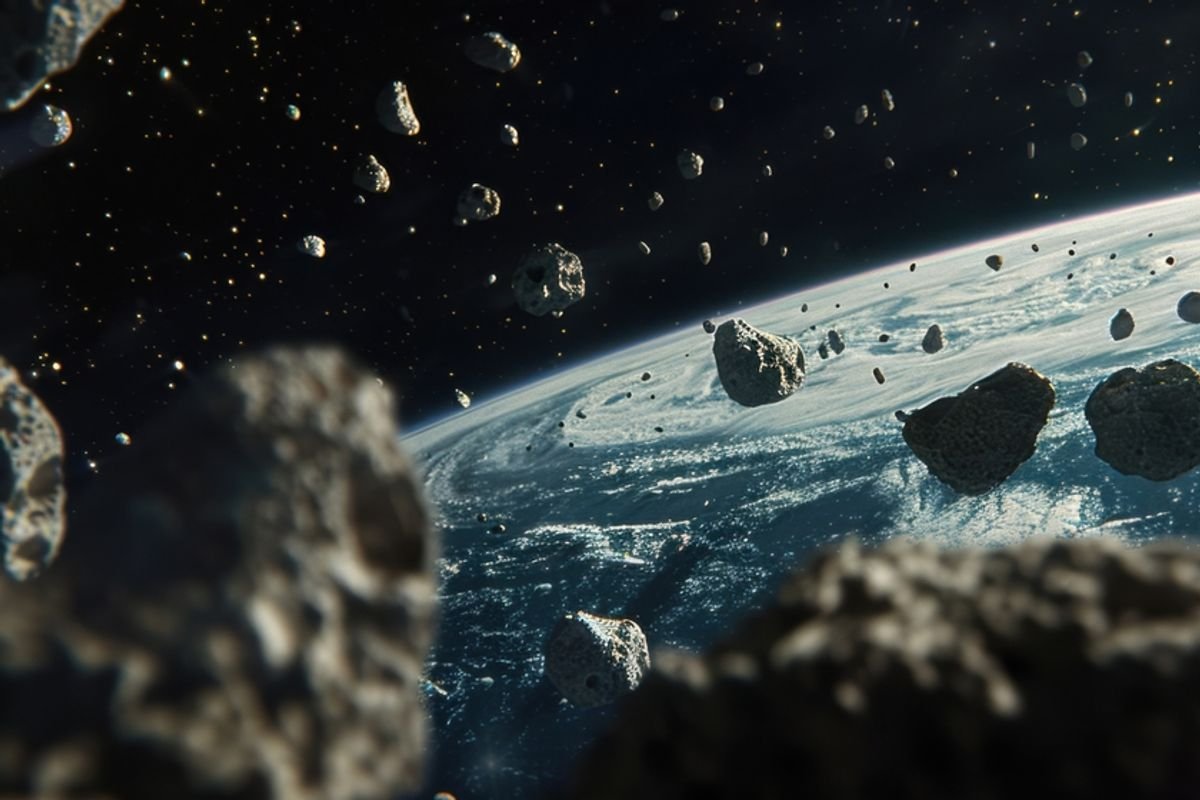
And those stories have inspired real-life efforts to explore the possibility of mining in space. In the past decade or so, several start-up companies have staked claims in what they hope will be the next gold rush. After all, we’ve determined that there are tens of thousands of asteroids whose orbits pass near Earth, and millions more estimated to populate the asteroid belt between Mars and Jupiter, all untouched and ready to be explored for the wealth of resources they could provide humanity.
But Josep Trigo-Rodriguez, group leader of the Asteroids, Comets, and Meteorites Division at ICE-CSIC and the Catalan Institute for Space Studies (IEEC), is unwilling to set a specific date for when we might realistically harvest the bounty of the many asteroids, comets, and other natural satellites in our Solar System.
“It might be economically realistic in a few decades or centuries from now,” Trigo-Rodriguez told Discover. “That timescale depends on humans realizing that the future lies in promoting international cooperation, and common goals for peace and prosperity.”
Read More: Asteroid Bennu Samples Carry Mysterious Space Gum, Sugars, and a Ton of Stardust
Is Asteroid Mining A New Gold Rush?
Thanks to careful and ongoing analysis of these objects, as well as the study of space debris that has conveniently landed on Earth as meteorites, we know that many asteroids could contain not just gold but also other precious substances, including what we call rare-earth elements.
These materials are important for everything from industrial processes to the making of smartphones, computers, and medical devices that keep modern society functioning. They’re called “rare” because they are seldom found in easily extractable quantities here at home. But the idea behind mining in space is that these highly valuable materials could one day be harvested in abundance from asteroids and would be rare no longer.
Like the original gold rush of the 1800s, some of the companies seeking to mine asteroids or other satellites in our Solar System have gone bust before ever starting the search for a motherlode. But some persist, and new players are entering the market, fueled by the promise of untold riches if they could just develop the technology (and funding) to begin operations and pick targets that would be most beneficial to exploit for their resources.
To date, proposed mining enterprises have focused mainly on what are known as differentiated asteroids, most of which have melted and formed distinct layers, including cores that may contain abundant metals. But a new study offers fresh insight into another type of asteroid as being a more feasible target for future mining, even as its authors highlight some serious obstacles that need to be overcome before asteroid miners can strike it rich.
In a paper published in January 2026 in the Monthly Notices of the Royal Astronomical Society, researchers at Spain’s Institute of Space Sciences (ICE-CSIC) analyzed various meteorites from undifferentiated asteroids. These meteorites can provide valuable information about the chemical composition and history of the asteroids from which they originated, Trigo-Rodriguez, lead author of the study, told Discover.
One-Stop Asteroid Shopping
Undifferentiated asteroids, specifically C-type asteroids, are the most common in the Solar System. While they haven’t undergone melting or forming layers and cores as differentiated asteroids have, they also contain various metals and materials that could be attractive for mining.
What’s more, these asteroids are abundant in carbon and water, which could prove valuable as potential resources to support a base of operations on the moon or space-based mining platforms. Water could also be used to make fuel on-site, thus expanding further mining and general space exploration without relying on resources from Earth. In short, the study suggests that these asteroids could be much more compelling targets of opportunity, offering a one-stop shop for miners.
Trigo-Rodriguez, who is also the author of the book Asteroid Impact Risk, believes that commercial mining operations will take a closer look at undifferentiated asteroids in the future, but much more study and research are needed before humans get anywhere close to actually mounting a mining operation in space.
“As we envision in our paper, we really need first to develop the technology to mine under challenging low-gravity conditions and to continue promoting sample return missions,” Trigo-Rodriguez told Discover.
The Future of Asteroid Mining
So far, humans have only managed a small number of missions in which we have collected samples from a satellite in space and returned them to Earth for analysis. And most of those missions have been to the moon.
To date, we can only report three successful sample return missions to and from asteroids — the Hayabusa missions conducted by the Japanese space agency JAXA, and NASA’s historic OSIRIS-REx mission to asteroid Bennu. Other missions are underway, including the next phase of NASA’s OSIRIS mission — now known as OSIRIS-APEX, which will reach its next asteroid target in 2029.
While every sample return mission will add more insight to the composition of asteroids that could become valuable mining targets in the future, the fact that humans have been able to land a few probes on asteroids and return small samples is hardly proof of concept that asteroid mining is viable, as Trigo-Rodriguez and his coauthors have noted.
“Alongside the progress represented by sample return missions, companies capable of taking decisive steps in the technological development necessary to extract and collect these materials under low-gravity conditions are truly needed. The processing of these materials and the waste generated would also have a significant impact that should be quantified and properly mitigated,” Trigo-Rodríguez emphasized in a news release at the time his team’s study was published.
So for now, the possibility of intrepid explorers becoming space miners belongs in the future, but not just because of a need for advanced mining technology and processing.
Read More: Asteroid Mining Gives Companies Hope in the Search for Rare Metals
Article Sources
Our writers at Discovermagazine.com use peer-reviewed studies and high-quality sources for our articles, and our editors review for scientific accuracy and editorial standards. Review the sources used below for this article: