
Ice Age Neanderthals May Have Used Birch Tar as Early Medicine

A sticky, black substance once used to glue tools together may have also helped Neanderthals treat their wounds. New research published in PLOS One shows that birch tar — a material frequently found at Neanderthal sites — can inhibit the growth of harmful bacteria, highlighting its potential role in wound care. The findings add to growing evidence that Neanderthals practiced more complex forms of health management than previously recognized.
To test its effects, researchers exposed birch tar to a bacterium commonly linked to infections. Across multiple samples, the substance slowed bacterial growth, demonstrating clear antibacterial properties.
“We found that the birch tar produced by Neanderthals and early humans had antibacterial properties. This has important implications for how Neanderthals may have mitigated disease burden during the last Ice Ages,” the authors said in a press release.
Recreating How Neanderthals Made Birch Tar
Birch tar turns up again and again at Neanderthal sites, often stuck to stone tools where it helped bind blades to wooden handles. But its persistence across different locations hints at something more than a single use.
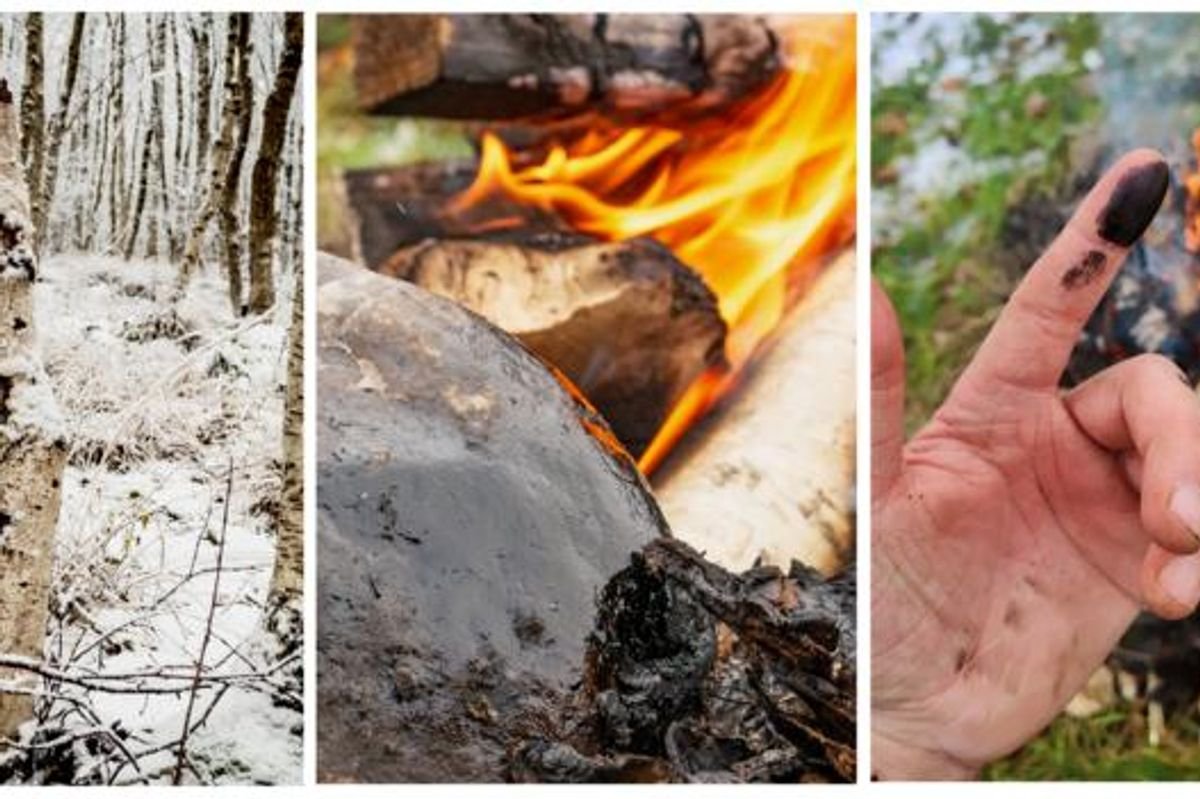
To understand how it was made, researchers recreated the substance using methods available tens of thousands of years ago. In one approach, birch bark was heated in a pit to draw out the tar. In another, vapors condensed onto nearby stone surfaces, leaving behind a usable residue. Both techniques rely on simple materials and controlled heat.
The process is far from straightforward. Producing even small amounts requires time, attention, and tolerance for the material itself — a dense, syrupy liquid that clings stubbornly to skin and tools.
“The messiness of birch tar production deserves a special mention,” the authors added. “Every step of the production is a sensory experience in itself, and getting the tar off our hands after spending hours at the fire has been a challenge every time.”
Read More: Is There a Benefit to Having Neanderthal DNA in the Human Genome?
Birch Tar Slows Harmful Bacteria
Once produced, the tar was tested against Staphylococcus, a group of bacteria commonly responsible for skin and wound infections. Across multiple samples, it slowed bacterial growth.
That effect lines up with uses documented in some Indigenous communities in northern Europe and Canada, where birch tar has long been applied to cuts and skin conditions. The material’s properties extend beyond adhesion, offering protection in contexts where infection would have been a constant risk.
Direct evidence of how Neanderthals applied birch tar to wounds remains limited. Still, its antibacterial activity, combined with archaeological signs of healed injuries and plant use, points to practical knowledge of how natural materials could be used to manage damage to the body.
A Versatile Substance in Neanderthal Life
Birch tar may have also repelled insects or protected exposed skin, adding to its range of uses in daily life.
These overlapping applications contribute to a broader shift in how Neanderthals are understood. Rather than relying on simple, one-purpose materials, they appear to have worked with substances that served multiple roles depending on need.
“By bringing together research on indigenous pharmacology and experimental archaeology, we begin to understand the medicinal practices of our distant human ancestors and their closest cousins,” the authors wrote. “Additionally, this study of ‘palaeopharmacology’ can contribute to the rediscovery of antibiotic remedies whilst we face an ever more pressing antimicrobial resistance crisis.”
As more studies recreate and test ancient materials, substances once treated as purely functional are being reconsidered for their wider uses, including their role in early approaches to hygiene, protection, and care.
Read More: Bizarre Origins of Kissing Trace Back 21 Million Years to Apes — And Possibly Neanderthals
Article Sources
Our writers at Discovermagazine.com use peer-reviewed studies and high-quality sources for our articles, and our editors review for scientific accuracy and editorial standards. Review the sources used below for this article: