
Humans Abandoned a Bison-Hunting Site Around 1,100 Years Ago — Turns Out, Climate Change Was to Blame
Bison hunters had frequented the site of Bergstrom for hundreds of years. But around 1,100 years ago, they left the area, and all of its bison, behind.
Now, a new study in Frontiers in Conservation Science has solved the mystery of the site’s strange abandonment. According to the study authors, the area — right in the middle of Montana — was deserted when severe droughts dried up its water supply, suggesting that climate change, combined with shifting social and economic dynamics, caused bison hunters to change when, where, and how they hunted.
“We found that bison hunters ceased using a kill site in central Montana around 1,100 years ago,” said paleoecologist John Wendt, a study author and an assistant professor at New Mexico State University, in a press release. “It appears that hunters stopped using it because severe, recurring droughts reduced the water available for processing animals at a small nearby creek. Site abandonment was a response to environmental stressors and changing social and economic pressures.”
Read More: Humans May Have Settled in North America 16,000 Years Ago, Ready to Hunt
Hunting Herds at Bergstrom
In the late 1800s, hunting brought the bison to the brink of extinction in Montana and beyond. But around 2,000 years ago, bison hunters had traveled throughout the area, employing a host of hunting strategies and sites to hunt herds sustainably.

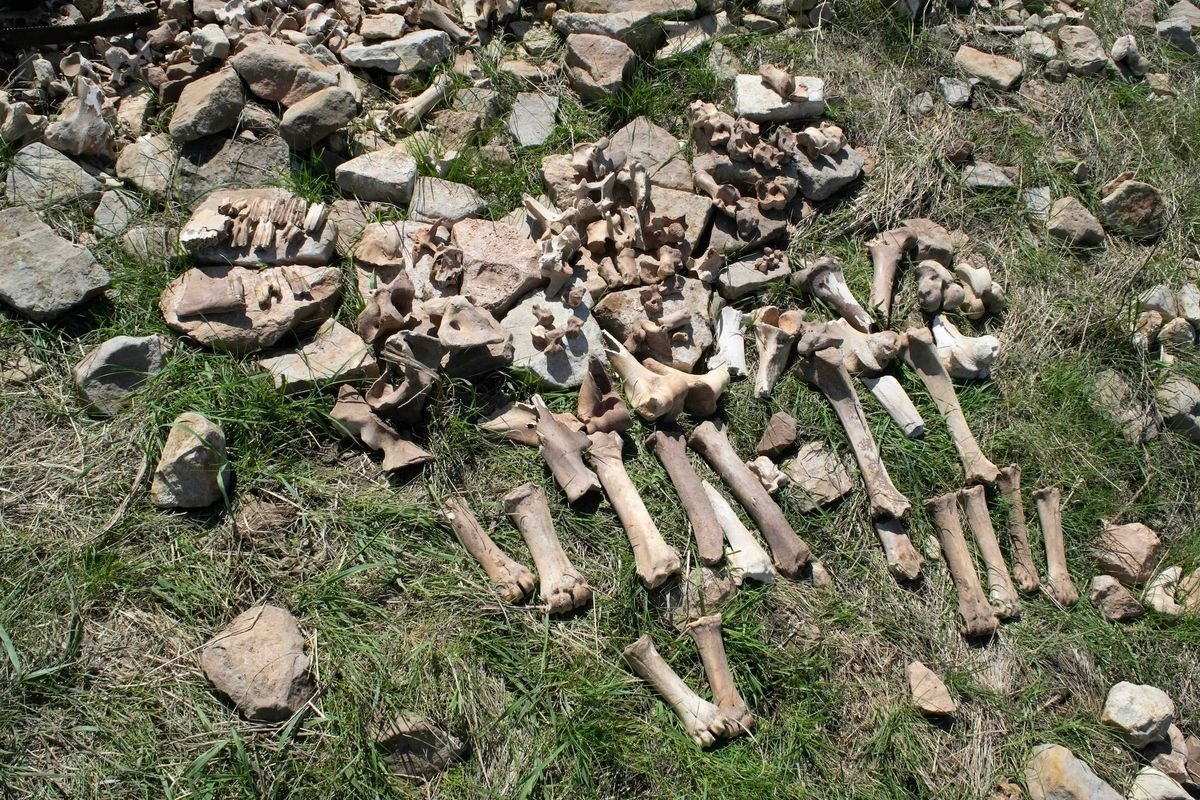
The team excavated artifacts throughout the site and analyzed them alongside the contents of two sediment cores.
(Image Credit: Michael Neeley)
How these hunters made their decisions, however, including their decision to desert the Bergstrom site, where bison thrived well after human hunting had stopped, remained unresolved. “The Bergstrom site presented a puzzle because it was used intermittently and abandoned when bison were common throughout the region, and hunting was intense,” Wendt said in the release. “Why would hunters stop using a site that had worked for so long?”
To solve this mystery, the study authors analyzed artifacts from Bergstrom, alongside fragments of charcoal and pollen pulled from a pair of sediment cores taken from the site. Combining those results with reconstructions of bison populations and climate conditions around Bergstrom, the team determined which changes contributed to the site’s decline.
“Abandonment wasn’t because the site became ecologically unsuitable in any absolute sense. Bison were still around, vegetation hadn’t changed, and there was no substantive shift in fire activities,” Wendt said in the release. “Bison hunting activity was not simply following prey populations.”
Read More: A 13,000-Year-Old Camp Site Reveals Hunting Patterns from Ancient Humans
Swapping Sites, From Small to Large
The study authors say that the drop in activity at the site instead coincided with a series of severe droughts, which reduced water availability and the site’s utility to hunters, who used water to process bison. Meanwhile, the team says, simultaneous increases in the demands for food and food surpluses led the hunters to gather in larger, less mobile groups, which stayed at larger sites than Bergstrom, and stuck around for longer stretches of time.

Excavated artifacts were recorded and analyzed, and charcoal fragments were assessed with radiocarbon dating.
(Image Credit: Michael Neeley)
“These larger operations were based on large kills and could produce surplus for trade and winter storage,” Wendt said in the release. “But they also meant more dependence on specific resources like water, forage for larger herds, and fuel for processing fires.”
While the severe droughts rendered Bergstrom less useful to hunters, larger, resource-rich sites saw increases in utility after the smaller site’s abandonment. In fact, while the study authors say that hunters might have stopped at Bergstrom after its initial desertion, occupying the area for short stints that left little trace of human hunting, the site saw less activity than those that were equipped with the resources to support larger hunting operations.
Despite its decline, however, Bergstrom was important. The site was frequented for around 700 years before falling into disuse, and though the study authors were unable to determine the frequency and duration of its individual occupations, the site still demonstrates that hunters used an adaptive approach to hunting bison around 1,100 years ago.
“While people have been adapting to the climate for much longer,” Wendt said in the release, “Bergstrom’s abandonment shows that people reorganized in response to recurring droughts in the last 2,000 years.”
Article Sources
Our writers at Discovermagazine.com use peer-reviewed studies and high-quality sources for our articles, and our editors review for scientific accuracy and editorial standards. Review the sources used below for this article: