
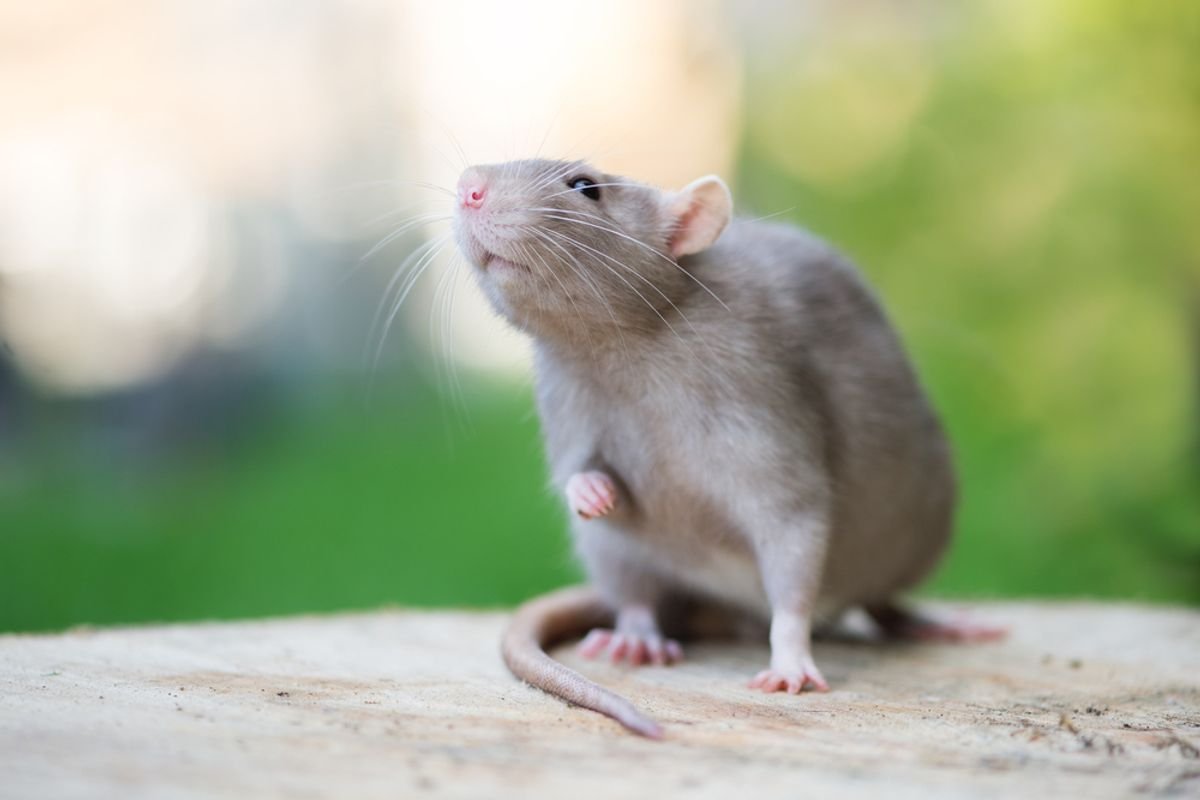
Highly-Stressed Rats Sought Puffs of Cannabis to Relax

Some rodents are naturally calm. Others turn to cannabis to cope. That’s what a new study in Neuropsychopharmacology seems to suggest, anyway, after revealing that higher rates of stress hormones are tied to higher rates of cannabis consumption in rats.
“We ran rats through this extensive battery of behavioral and biological tests, and what we found was that when we look at all of these different factors and all the variables that we measured, stress levels seem to matter the most when it comes to cannabis use,” said Ryan McLaughlin, a study author and a psychology professor at Washington State University, according to a press release.
Read More: Marijuana Could Help Reduce Depression and Anxiety
Cannabis Use in Rats?
More and more states are lifting their regulations against recreational cannabis in the U.S., though the factors that influence individual cannabis consumption in any form are still less than clear. In fact, while some recreational cannabis users develop cannabis use disorder, or a pattern of problematic or addictive cannabis consumption that ranges in severity from mild to moderate to severe, others develop no such condition after repeated or regular use, raising questions about the traits that contribute to the individual impact of the drug.
To learn more about these traits, McLaughlin and a team of researchers turned to a relevant animal model: rats. Assessing a range of behavioral and biological characteristics in these animals, including their stress and stress hormone levels, the researchers compiled behavioral and biological profiles for a total of 48 individuals. Then they provided the individuals with daily chances to consume the drug, allowing the rats to poke their noses into an air-tight vapor port for three-second puffs of cannabis vapor.
Observing the rats as they self-administered these puffs over a period of three weeks, the researchers determined that rodents with high levels of stress hormones were much more likely to choose to consume cannabis, taking the option to nose into the port more regularly.
“If you want to really boil it down, there are baseline levels of stress hormones that can predict rates of cannabis self-administration, and I think that only makes sense given that the most common reason that people habitually use cannabis is to cope with stress,” McLaughlin said in the press release.
Read More: Why Does Marijuana Cause Panic Attacks in Some People?
Stress Hormone Highs
Of course, humans have a baseline level of the stress hormone cortisol in their bodies, and rats have something similar — a baseline level of the stress hormone corticosterone that differs, as cortisol does in humans, from individual to individual. According to the researchers, it is this baseline level that is tied to cannabis consumption in rats, as the increased hormone levels seen after exercise, cognitive exhaustion, and exposure to stressors had no strong connection to their nose-poking numbers.
Also relevant to the rats’ self-administration were their measures of endocannabinoids, or compounds that manage mood, metabolism, and other internal processes to maintain a healthy balance in the body, as well as their measures of cognition, with rats with lower levels of endocannabinoids and lower levels of cognitive flexibility showing a higher motivation to seek out sniffs of cannabis.
According to the researchers, the results could contribute to a stronger understanding of the predictors of cannabis use and misuse — an understanding that should continue to advance as the legal status of cannabis changes.
“Our findings highlight potential early or pre-use markers that could one day support screening and prevention strategies,” McLaughlin added in the press release. “I could certainly envision a scenario where having an assessment of baseline cortisol might provide some level of insight into whether there’s an increased propensity for you to develop problematic drug use patterns later in life.”
Article Sources
Our writers at Discovermagazine.com use peer-reviewed studies and high-quality sources for our articles, and our editors review for scientific accuracy and editorial standards. Review the sources used below for this article: