
Hidden Bacteria in Marine Snow May Be Dissolving Ocean Shells — and Disrupting Carbon Storage

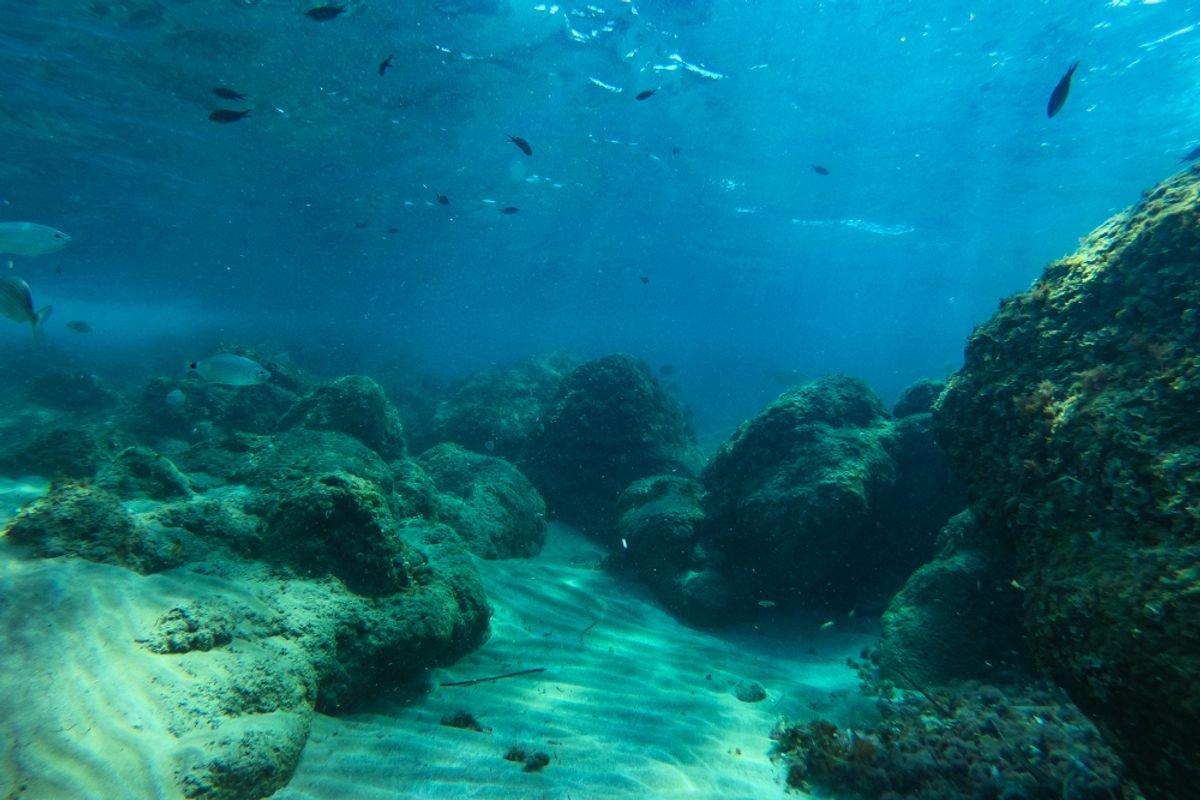
Anyone who has ever dived into the ocean has seen the tiny white flecks drifting through the water like snow. This so-called marine snow is made of sinking debris, fragments of dead plankton, bits of organic matter, and tiny mineral particles drifting through the water column. Marine snow also carries calcium carbonate, the mineral that forms the shells of many marine organisms.
In theory, that mineral should dissolve mainly in the deep ocean, where colder and more acidic waters break it down. But ocean measurements have shown calcium carbonate disappearing much closer to the surface.
A new study published in Proceedings of the National Academy of Sciences suggests bacteria living inside marine snow may be responsible.
The discovery could reshape how researchers understand the biological carbon pump, one of the ocean’s most important climate-regulating processes.
“Think of marine particles as the megacities of the ocean,” said Benedict Borer, lead author of the study, in a press release. “Within these tiny spaces, there are huge amounts of microbial activity. It’s here where calcium carbonate dissolves.”
Read More: 99.999 Percent of the Deep Ocean Is Unexplored — Its Secrets Are Key to Understanding Our Planet
Marine Snow’s Role in Ocean Carbon Storage
At the ocean’s surface, microscopic algae called phytoplankton absorb carbon dioxide from the atmosphere during photosynthesis.
When these organisms die, their remains sink through the water column as marine snow, carrying carbon downward. Billions of tons of organic and mineral carbon move through the ocean this way every year.
The deeper these particles sink before dissolving or breaking down, the longer that carbon remains stored away from the atmosphere.
Eventually, calcium carbonate dissolves in deeper waters, releasing carbon dioxide back into the ocean and continuing the cycle.
But observations have shown that a surprising amount of this mineral disappears much earlier than expected, prompting researchers to search for an explanation.
Inside Marine Snow Particles
To investigate the mystery, Borer and colleagues created an experiment designed to mimic what happens inside sinking marine particles.
Using a specially designed microfluidic chip, the team recreated miniature ocean conditions in the lab. The device allowed them to study marine particles containing calcite — a crystalline form of calcium carbonate — along with bacteria that naturally grow on these particles.
Artificial seawater flowed through the system while researchers controlled temperature, oxygen levels, and bacterial abundance.
As bacteria grew, they respired carbon dioxide. That process made the tiny environment around the particles more acidic, which accelerated the dissolution of calcite.
In other words, microbes were helping dissolve shell minerals inside the marine snow itself.
Bacteria May Slow Carbon Sinking in the Ocean
The discovery could have implications beyond these microscopic particles.
Calcium carbonate helps weigh down sinking debris, acting like tiny weights that pull marine snow toward the deep ocean. If bacteria dissolve that mineral earlier in the journey, the particles may sink more slowly.
Slower sinking means more time for carbon to be recycled near the surface instead of being stored in deep water.
Because bacterial respiration also releases carbon dioxide, the process could potentially return some of that carbon back toward the atmosphere.
“Oceanographers often think about the macro-scale, but in this instance, what’s happening in microscopic particles is controlling the entire ocean,” Borer said in the press release.
Researchers say more work will be needed to confirm how widespread this mechanism is in the ocean. But the study highlights how processes unfolding inside tiny drifting particles could influence how the ocean stores carbon, and how much eventually returns to the atmosphere.
Read More: The Atlantic Ocean May Have Its Own Grand Canyon — and It Might Be Even Bigger
Article Sources
Our writers at Discovermagazine.com use peer-reviewed studies and high-quality sources for our articles, and our editors review for scientific accuracy and editorial standards. Review the sources used below for this article: