
Have Blue Whales Stopped Singing? Paying Attention to Their Songs Could Benefit Humans, Too

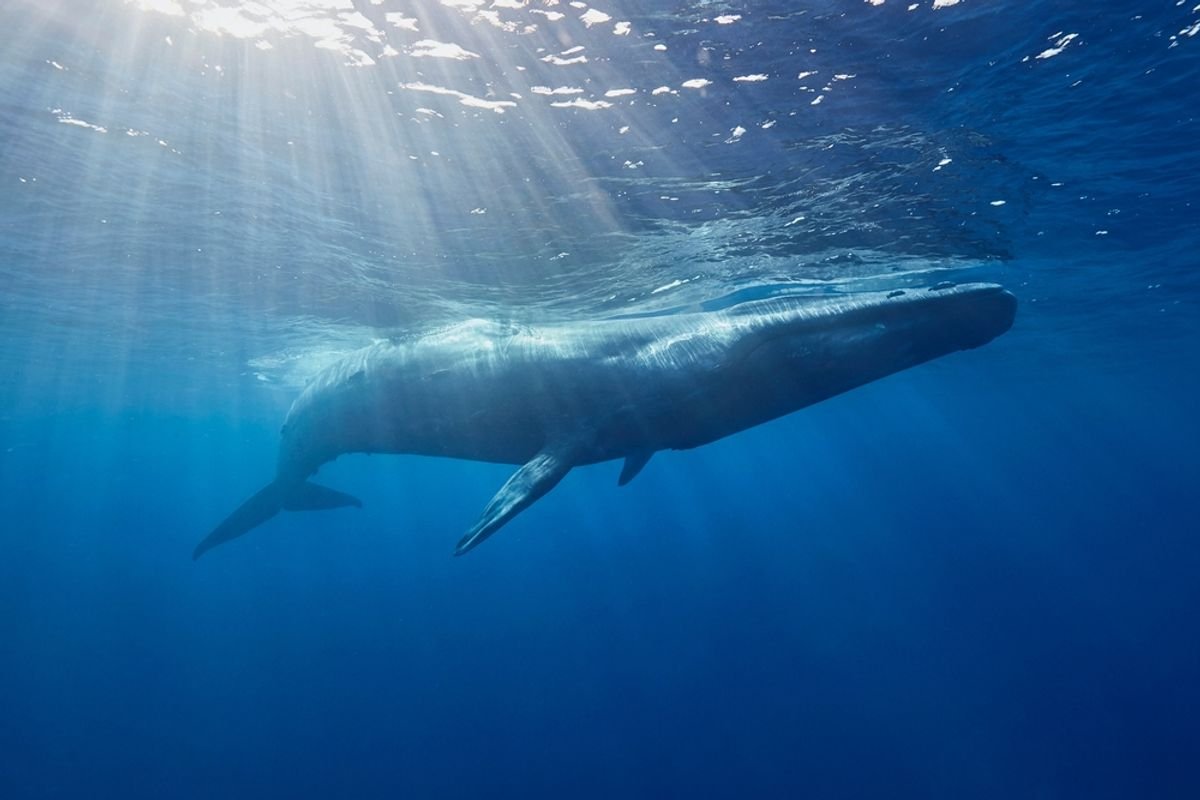
Research published earlier in 2025 found that whales sing less when food is scarce. Using underwater microphones, or hydrophones, an interdisciplinary team of researchers recorded the songs of blue whales and humpback whales as they spent time in the Monterey Bay National Marine Sanctuary on their usual migration routes. The study began in 2015 during an intense marine heatwave, which greatly reduced the whales’ food sources.
Over the course of the study, the singing of both blue and humpback whales was at its lowest point during the peak of that heat wave.
When the heat wave ended and food supplies rebounded, the songs of both species increased — until later in the study, when something interesting happened. Humpback whale song continued to rise, while the songs of blue whales began to drop again.
Are Blue Whales Going Silent?
The explanation for that difference might be found on the whales’ dinner menus. Blue whales eat krill exclusively, while humpbacks also eat small fish, such as sardines and anchovies.
Using data from NOAA fisheries, the researchers found that the availability of krill and fish varied quite a lot over the period of the study. In the third year of the study, krill were still relatively abundant. But fish were not so plentiful. Both species could find enough krill to eat.
By the fifth year, however, krill levels had dropped again, but there was an excellent supply of fish. This meant that humpbacks could make up for the loss of krill by eating more fish, while the blue whales were out of luck. And indeed, the patterns of song reflected these ups and downs in food availability.
“When krill became quite low in abundance late in this six-year period, blue whales had only one option. They had to search farther and wider to find krill because they don’t eat anything else,” explains John Ryan, a senior research specialist at the Monterey Bay Aquarium Research Institute and lead author of the study. “Humpback whales were in a much more favorable situation. When the krill became low in abundance, fish skyrocketed in abundance, and humpbacks switched to eating fish,” Ryan adds.
While the amount of whale song correlated with changes in the food supply, the researchers didn’t depend on this to determine what the whales were eating. The change in diet was tracked by analyzing the isotopic composition of the whales’ skin, explains Ryan. These studies confirmed that blue whales continued to feed on krill, even when they had to forage over a larger area to find enough to eat, while humpbacks switched to eating mostly fish.
Though the food supply — and therefore the level of whale song — varied throughout the six-year period, by the end of the study, songs from both species had increased from the 2015 level.
Read More: At Almost 500 Feet Below the Water, Experts Heard the Sounds of the Elusive Beaked Whale
Studying Whales and Their Ecosystem
Blue whales are already at risk because of their small population size, says Ryan. And this research shows that their less flexible eating habits make the situation even more difficult for them.
“I think their challenges, honestly, are greater,” says Ryan.
This information, along with other data gathered from acoustic monitoring and other new technologies, provides insights beyond the feeding habits of whales.
“When we study whales, we’re actually studying the entire ecosystem,” says Ryan. “Because whales are so closely connected with the changes in their ecosystem. We get a window into a very complex ecosystem that changes dramatically, not just from year to year, but really from week to week.”
Conservationists and resource managers, such as those who manage marine sanctuaries, can use this information to help protect these imperiled animals.
“If we know when whales are here and we know what processes in the ecosystem shape where they live, then we know whether they’re spending more or less time in harm’s way,” says Ryan.
We can’t change the ocean’s food sources, but we can change our habits to protect whales. If whales are moving further out to sea — out of the sanctuary — in search of food, we can slow ships and move shipping lanes so there’s less chance of hitting whales.
Future Needs of Whales
That may sound like a pipe dream, but genuine progress has been made in the last decade. An organization called Blue Whales and Blue Skies has worked with shipping companies to slow their ships when they’re in the marine sanctuary.
In 2024, shipping lines that volunteered to participate in the program and reduce their speed to 10 knots or less when in designated zones reduced the risk of fatal ship strikes to endangered whales by approximately 50 percent. These actions also reduced greenhouse gas emissions by 49,000 metric tons in 2024.
However, to do this kind of thing, says Ryan, “We need the solid scientific research that tells us what’s going to be the most effective strategy for us to balance the economic needs of commerce and the survival needs of whales.”
Read More: Blue Whales Chase the Wind to Hunt Tiny Prey
Article Sources
Our writers at Discovermagazine.com use peer-reviewed studies and high-quality sources for our articles, and our editors review for scientific accuracy and editorial standards. Review the sources used below for this article: