
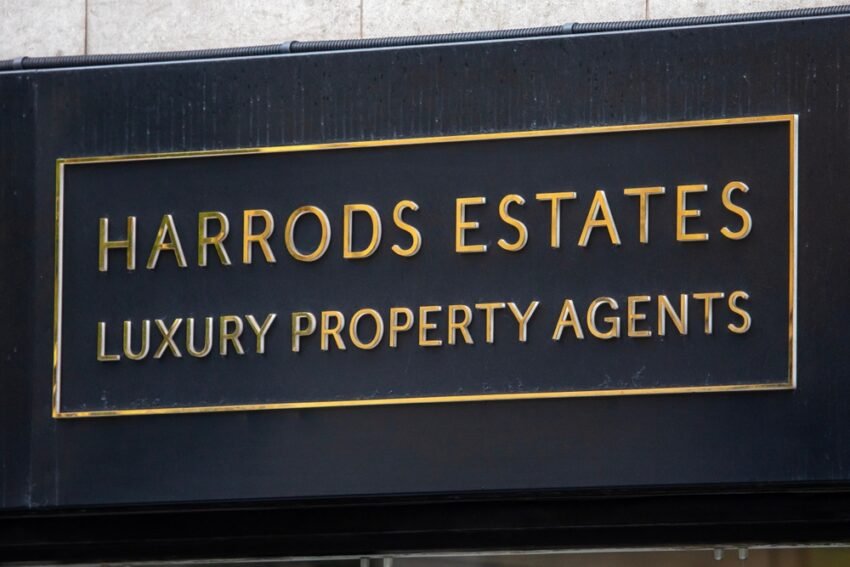
Harrods Estates closes after 130 years as non-dom tax changes and stamp duty hit London luxury property market
The iconic property arm of the Knightsbridge department store has closed its last remaining office after a perfect storm of stamp duty hikes, the scrapping of non-dom tax status and a shift in tastes among ultra-wealthy buyers left it fatally exposed.
For the best part of 130 years, Harrods Estates occupied a rarefied corner of the London property market. Founded in 1897 on the ground floor of the famous Knightsbridge department store, it spent decades connecting British aristocrats and wealthy international buyers with some of the capital’s most desirable addresses. Princess Diana’s stepmother, Countess Raine Spencer, served as a director for a decade, lending the brand a touch of genuine celebrity cachet.
Now, however, the final chapter has been written. The agency has confirmed what it called a “very difficult” decision to close its last remaining office on Brompton Road, bringing an end to operations that once stretched from the Home Counties to Monte Carlo.
Shaun Drummond, Harrods Estates’ residential director, said the closure was part of a broader group strategy to refocus on luxury retail. Service will continue for existing tenants, landlords and those with sales already under way, but even these arrangements will wind down in phases, ceasing entirely by March next year.
The demise of such a storied name is being attributed to a confluence of forces that have battered the top end of the London market. Chief among them is the government’s decision to abolish non-dom tax status, a move that has proved a significant disincentive for wealthy overseas buyers considering a move to the capital. Coupled with stamp duty surcharges of up to 19 per cent for foreign purchasers, the effect has been stark: Savills calculates that average prices for homes valued at £4.5 million and above fell by 4.8 per cent last year.
The geographical dynamics of prime central London have shifted, too. Knightsbridge, once the undisputed pinnacle of luxury living in the capital, has been overtaken in the affections of wealthy buyers by Mayfair, Belgravia and Notting Hill. According to Rosy Khalastchy, a director at Beauchamp Estates, a younger generation of Middle Eastern purchasers no longer shares the desire of their parents and grandparents to live within walking distance of the Harrods store.
Then there is the shadow cast by the late Mohamed Al Fayed, who owned Harrods until selling it to the Qatar Investment Authority for £1.5 billion in 2010. Allegations of historical sexual abuse against Al Fayed, who died in 2023, have caused reputational damage that some industry figures believe drove clients towards rival agencies.
Others point to strategic confusion under Qatari ownership. The property arm is said to have become overly dependent on a narrow pool of international buyers and sellers whose preferences can shift rapidly. One telling anecdote emerged in the summer of 2024, when a visiting lawyer found a large section of the Knightsbridge store given over to a pop-up exhibition advertising luxury homes in Saudi Arabia — a curious choice given the well-documented rivalry between Qatar and Saudi Arabia.
For those who remember the agency’s heyday under managing director Mark Collins, who built an enviable client roster of high-net-worth individuals and opened four London offices, the closure will feel like the end of an era. As Khalastchy recalled, there was a time when every serious seller in prime central London wanted to list with Harrods Estates, and Countess Spencer’s presence at property launches added genuine star power.
The brand’s website now carries a stark banner in capital letters confirming it is no longer accepting new enquiries. A Harrods spokesman said the wind-down followed the natural end of the office lease and that plans were in place to ensure no disruption for remaining clients.
For the wider London luxury property sector, the closure of Harrods Estates serves as a cautionary tale. A brand name alone, however illustrious, offers little protection when the tax environment turns hostile, buyer demographics shift and the competition is hungry. The era of wealthy foreigners beating a path to Knightsbridge simply because the Harrods name was above the door appears to be well and truly over.