
Greenland’s Prudhoe Dome Melted 7,000 Years Ago — And Could Again by 2100
A high point of the Greenland ice sheet may be more sensitive to rising temperatures than previously thought, suggests a new study.
The research, published in Nature Geosciences, took samples from hundreds of feet below the surface of the Prudhoe Dome ice cap to determine when the ice sheet last melted. The icy cores suggest that the Dome entirely melted 7,000 years ago, much more recently than scientists had suspected. Now that human-made climate change is heating our planet, the ice cap is at risk of melting once again.
Read More: These Ancient Dogs Have Pulled Sleds in Greenland for Nearly 1,000 Years
Measuring A Glow From Below

Sediment and bedrock from the ice core of Greenland’s Prudhoe Dome.
(Image Credit: Jason Briner/University at Buffalo)
Researchers behind the study, called GreenDrill, dug 1,669 feet into the ice cap over a weeks-long encampment in 2023. They collected core samples of frozen sediment and bedrock for analysis. The team analyzed the sediment using luminescence dating. This technique analyzes electrons trapped in the material since it first became buried by snow and ice. When the sediment is re-exposed to light, these electrons produce a quantifiable glow. The glow’s intensity suggested that the sediment last saw daylight between 6,000 and 8,200 years ago.
“This means Prudhoe Dome melted sometime before this period, likely during the early Holocene, when temperatures were around 3 to 5 degrees Celsius warmer than they are today. Some projections indicate we could reach those levels of warming at Prudhoe Dome by the year 2100,” said Caleb Walcott-George, Ph.D., study co-author and a geologist at the University of Kentucky, in a press release.
By determining which areas of the ice sheet will melt first, scientists can issue early warnings to communities living near the at-risk areas.
“This is a time known for climate stability, when humans first began developing farming practices and taking steps toward civilization. So for natural, mild climate change of that era to have melted Prudhoe Dome and kept it retreated for potentially thousands of years, it may only be a matter of time before it begins peeling back again from today’s human-induced climate change,” said Jason Briner, study co-author and geologist at the University at Buffalo, in a press release.
Future Drilling Could Reveal More About Ancient Greenland
The team also drilled into another region of the ice sheet during the same research trip. This site, at the edge of the ice sheet, is thought to be even more vulnerable. The researchers hope this second site will also reveal details about the environment of ancient Greenland. The team hopes to conduct further drills in the near future.
“GreenDrill really demonstrated that, if you can logistically pull it off, there is the technology available to drill down to the bedrock and there’s an analytical toolkit to then analyze it,” Briner said. “We have very reliable, numerical models that can predict the rate of melting, but we also want real, observational data points that can tell us indisputably that X amount of warming in the past led to X amount of ice being gone.”
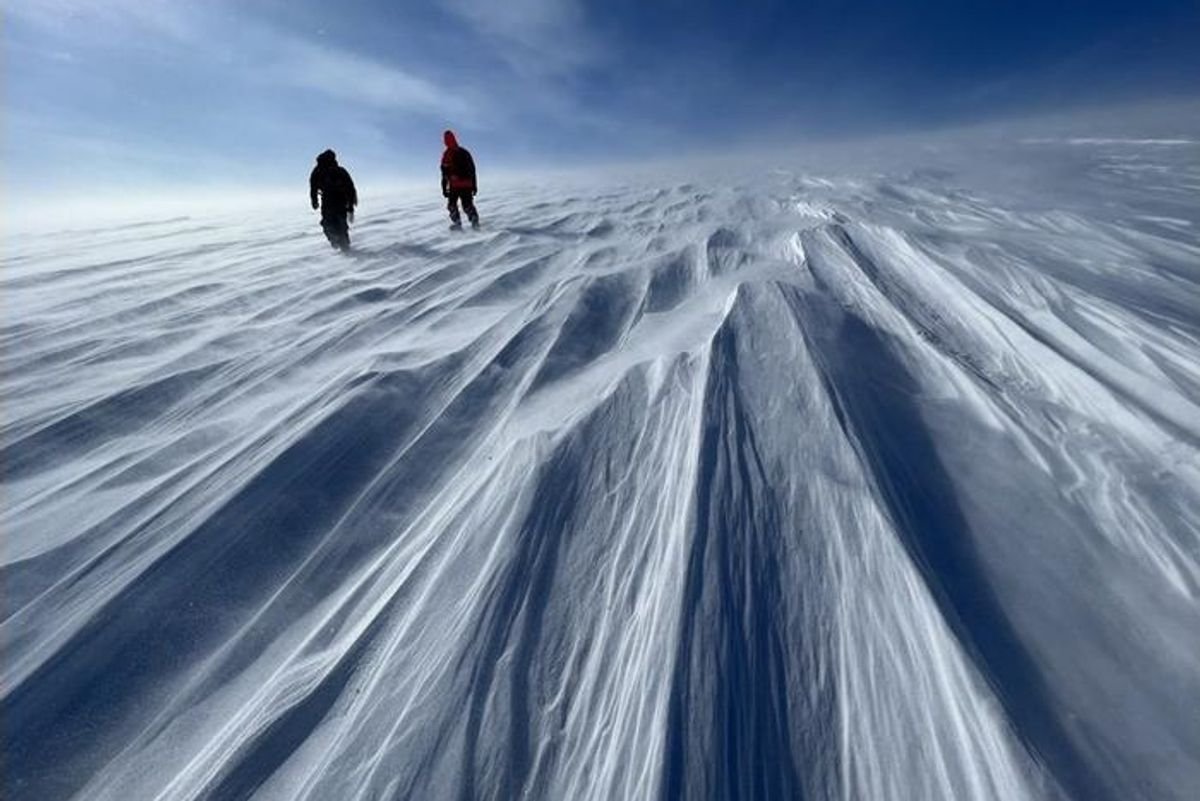
Walcott-George reflected on the landscape around the drill site, which presents a frozen façade but is more vulnerable than it appears. “When all you see is ice in all directions, to think of that ice being gone in the recent geological past and again in the future is just really humbling,” he said.
Read More: The Freya Hydrate Mounds Lie Over 11,940 Feet Below the Surface — and They’re Teeming With Life
Article Sources
Our writers at Discovermagazine.com use peer-reviewed studies and high-quality sources for our articles, and our editors review for scientific accuracy and editorial standards. Review the sources used below for this article: