
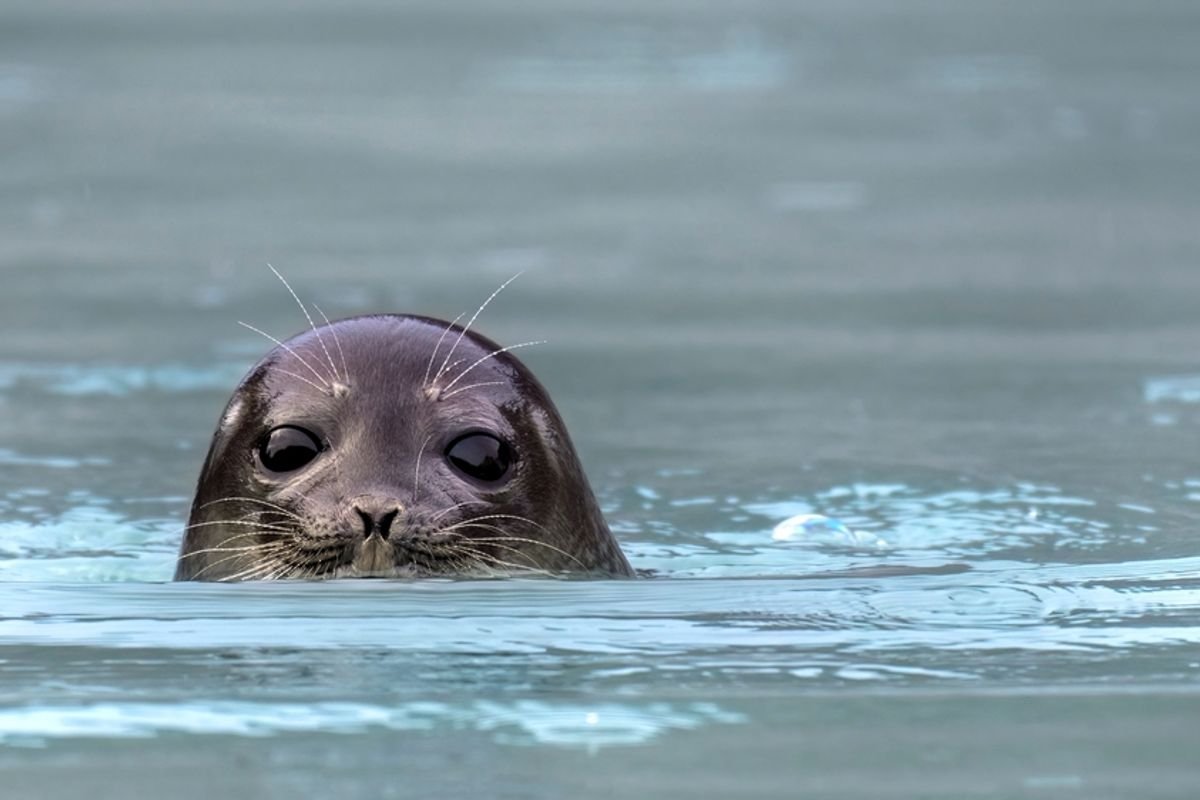
Greenland’s Glacier Fronts Are Ideal Feeding Spots for Ringed Seals

In summer, the fjords of northwest Greenland develop milky swirls where glaciers meet the sea. From above, those cloudy patches look almost like spills of paint. In the water, they often mark pockets of concentrated food that attract predators.
A new study in Communications Earth & Environment offers some of the clearest evidence yet that tidewater glacier fronts are not just scenic backdrops but important feeding grounds for ringed seals. By working with Inuit hunters in Inglefield Bredning, researchers were able to match what seals had eaten with exactly where they were caught, sometimes only hours after feeding.
“We turned this limitation into an advantage by comparing what seals had eaten with where they were captured, allowing us to investigate recent feeding activity in specific locations. This approach offers a new way to understand the feeding behavior of marine mammals,” said research lead Monica Ogawa in a press release.
Read More: One of the World’s Longest Living Icebergs Isn’t Just Melting – It’s Turning Blue
Tracking Seal Diets Near Greenland’s Glacier Fronts
Studying the diets of marine mammals is difficult because they eat underwater, often far from shore. Many diet studies rely on stranded animals, which means researchers can learn what they ate, but not where or when they fed.
In northern Greenland, subsistence hunting creates a rare opportunity. Hunters record capture locations, allowing researchers to examine stomach contents from animals taken at known places and times. In this study, the team collected 42 ringed seal stomachs over two summers, each tied to a specific site.
Ringed seals digest quickly. Their stomachs can empty within about four hours of feeding. That speed is usually considered a drawback, but here it became useful. It meant the contents reflected very recent feeding in a precise part of the fjord.
When the researchers compared stomach contents with distance to the nearest glacier front, it became clear that seals caught closer to glaciers were more likely to have food in their stomachs, and much more of it.
Where Polar Cod Gather, Seals Follow
The difference was not just in how much seals were eating, but in what they were eating. Near glacier fronts, seals were far more likely to have consumed polar cod, a small Arctic fish that forms dense schools. The closer a seal was to a glacier, the stronger the link to polar cod in its stomach. Farther from glaciers, diets became more varied, with a broader mix of prey.
Using acoustic data to scan the water below the surface, the team detected dense schools of fish only near glacier fronts, suggesting these areas offer concentrated feeding opportunities. When meltwater rises from beneath tidewater glaciers, it can pull nutrients and small organisms upward, helping concentrate plankton and fish near the surface.
For a seal rebuilding fat reserves after the demands of spring breeding and molting, a dense fish school offers a more efficient meal than chasing scattered prey.
As Glacier Fronts Retreat, So May the Feeding Grounds
The findings come at a time when many tidewater glaciers are retreating. When a glacier no longer meets the sea, the water movement at its front changes, and the conditions that help concentrate prey can weaken or disappear.
If glacier-front feeding areas shrink, ringed seals may need to shift where and what they hunt. That shift could ripple through the Arctic ecosystem. Ringed seals are a primary prey species for polar bears and remain central to Inuit food systems in parts of Greenland.
The study does not suggest glacier fronts are the only feeding grounds seals use, nor does it capture every layer of underwater behavior. But it provides evidence that these glacier edges function as important foraging sites.
It also underscores what made this research possible: collaboration. Without Inuit hunters documenting capture locations and sharing samples, linking diet to place with this level of precision would have been nearly impossible.
Read More: Humans, Not Glaciers, Brought Rocks to Stonehenge — But Why and How Remain a Mystery
Article Sources
Our writers at Discovermagazine.com use peer-reviewed studies and high-quality sources for our articles, and our editors review for scientific accuracy and editorial standards. Review the sources used below for this article: