
Giant Rats Grew 14 Times Larger Than Their Mainland Relatives 650,000 Years Ago, but Their Brains Did Not

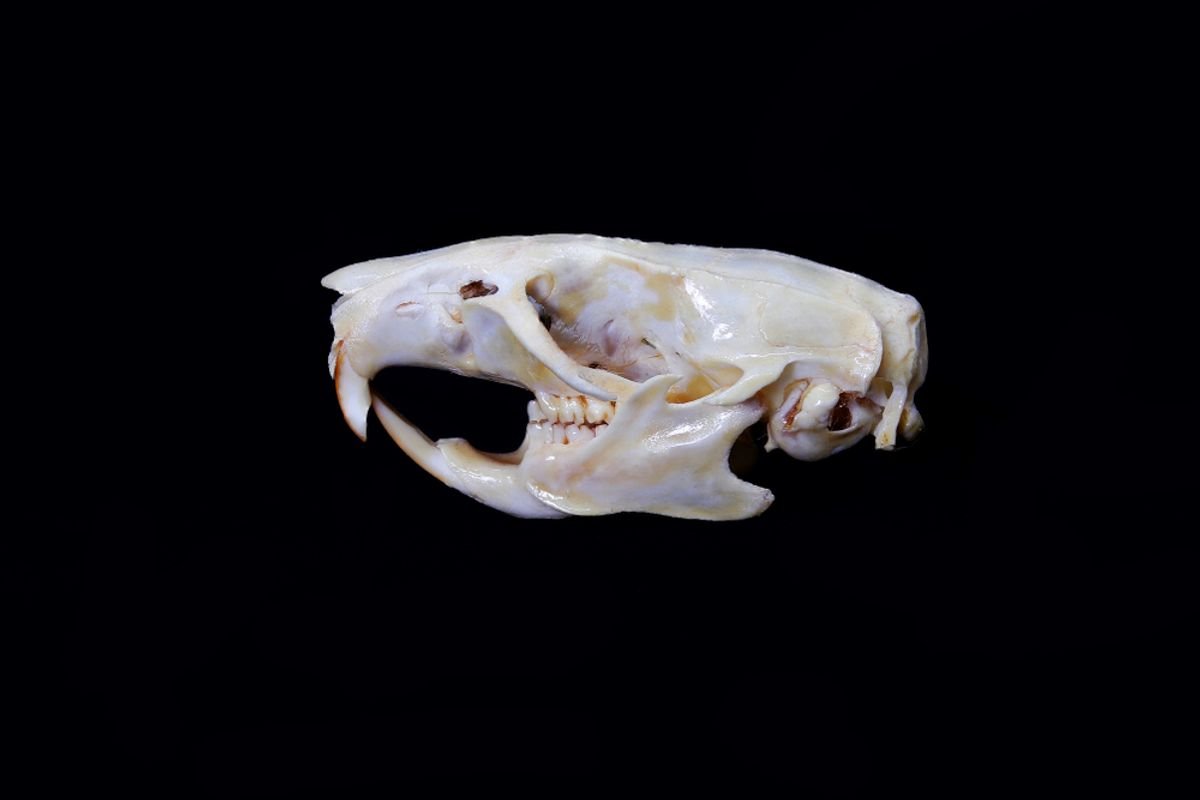
The Canary Islands once had rats that were hard to miss. Members of the extinct genus Canariomys grew far larger than mainland grass rats, reaching the size of a small dog, and were shaped by isolation and a lack of predators. Fossils show that they lived on the islands from the Pleistocene until the 4th century B.C.E., overlapping with the earliest human settlers.
Their size has long drawn attention. What remained unclear was how their brains changed along with their bodies. A new analysis published in the Journal of Mammalian Evolution suggests that island life reduced investment in several sensory and movement-related brain regions, offering a clearer view of how isolation reshapes nervous systems over evolutionary time.
Read More: 50,000 Years of Island-Hopping Pigs Reveal Ancient Human Migration
How Giant Rats Evolved on the Canary Islands
The growth of Canariomys fits a broader pattern seen in island animals, where small mainland species often become much larger in isolation. On Tenerife, Canariomys bravoi reached an estimated body mass of about 3 pounds (1.4 kilograms), roughly fourteen times heavier than African grass rats. A related species, Canariomys tamarani, lived on Gran Canaria and was slightly smaller but still far larger than most rodents.
Evidence suggests both species descended from small populations of African grass rats that reached the Canary Islands around 650,000 years ago, likely by rafting from the mainland. Over time, the rodents evolved thick skeletons and a mostly ground-based lifestyle, with some ability to dig and climb. Dental wear and isotope evidence point to a largely plant-based diet, though some isotopic data suggest Canariomys also consumed meat.
What Fossil Skulls Reveal About Giant Rat Brains
Because soft tissue does not fossilize, the study relied on CT scans of fossil skulls to reconstruct the space once occupied by the brain. These virtual endocasts preserve the brain’s outer shape and allow comparisons of the relative size of different regions across species.
The team analyzed two skulls of C. bravoi and one of C. tamarani, then compared them with endocasts from ten living rodents from both mainland and island environments. Although overall brain size fell within the range of mainland relatives, both island species showed lower brain-to-body ratios. The study also found greater variation among individuals of C. bravoi, a pattern often associated with island populations founded by small numbers of animals and shaped by relaxed selective pressures.
Senses That Mattered Less
Several brain regions were reduced relative to body size, including areas linked to smell, movement coordination, and sensory integration. Structures involved in processing scent were smaller in both island species, which may reflect the absence of strong predation pressure.
Parts of the cerebellum involved in coordinating eye and head movements were also reduced, suggesting slower, more cautious movement. The neocortex, which integrates sensory information, was smaller relative to body size in C. bravoi. One specimen also showed an exposed midbrain, likely a consequence of neocortex reduction rather than a specialized adaptation.
Similar patterns have been reported in other island mammals, where reduced predation and competition are linked to smaller sensory regions of the brain and lower investment in metabolically costly tissue. In this case, the changes seen in Canariomys suggest that island environments do not simply alter body size. They can also shift which senses and behaviors remain worth the biological cost.
For thousands of years, these traits likely carried little cost. That balance shifted with the arrival of humans. Archaeological remains suggest early settlers hunted Canariomys, and the species disappeared by the 4th century B.C.E. Shaped by long isolation and low predation, the giant rats faced a threat they had never evolved to anticipate.
Read More: The Real Culprit Behind Easter Island’s Lost Forest Isn’t Humans — It’s Millions of Hungry Rats
Article Sources
Our writers at Discovermagazine.com use peer-reviewed studies and high-quality sources for our articles, and our editors review for scientific accuracy and editorial standards. Review the sources used below for this article: