
Giant Otter Gives Birth to Triplets at Chester Zoo — A Rare Success for the Endangered Species
Inside a den at Chester Zoo, three giant otter pups have spent their first weeks of life out of sight — a quiet beginning for a species with fewer than 5,000 individuals left in the wild. Now, they’re starting to emerge.
The three pups, two males and one female, were born on February 9, 2026, to first-time parents Bonita and Manu, marking the first giant otter birth at the zoo in seven years. The arrival is part of a conservation breeding program aimed at supporting a species that is becoming increasingly rare across South America.
“The arrival of these three giant otter pups is a hugely special moment,” said Rachael Boatwright, Assistant Team Manager of carnivores at the zoo, in a press release.
Giant Otter Pups at Chester Zoo Spend First Weeks Hidden in Den
For their first weeks, the pups remained inside the holt, where Bonita fed them as they grew.
By the time keepers were able to examine them at two months old, the pups had already more than tripled in size — a reflection of how quickly they grow during this early stage.
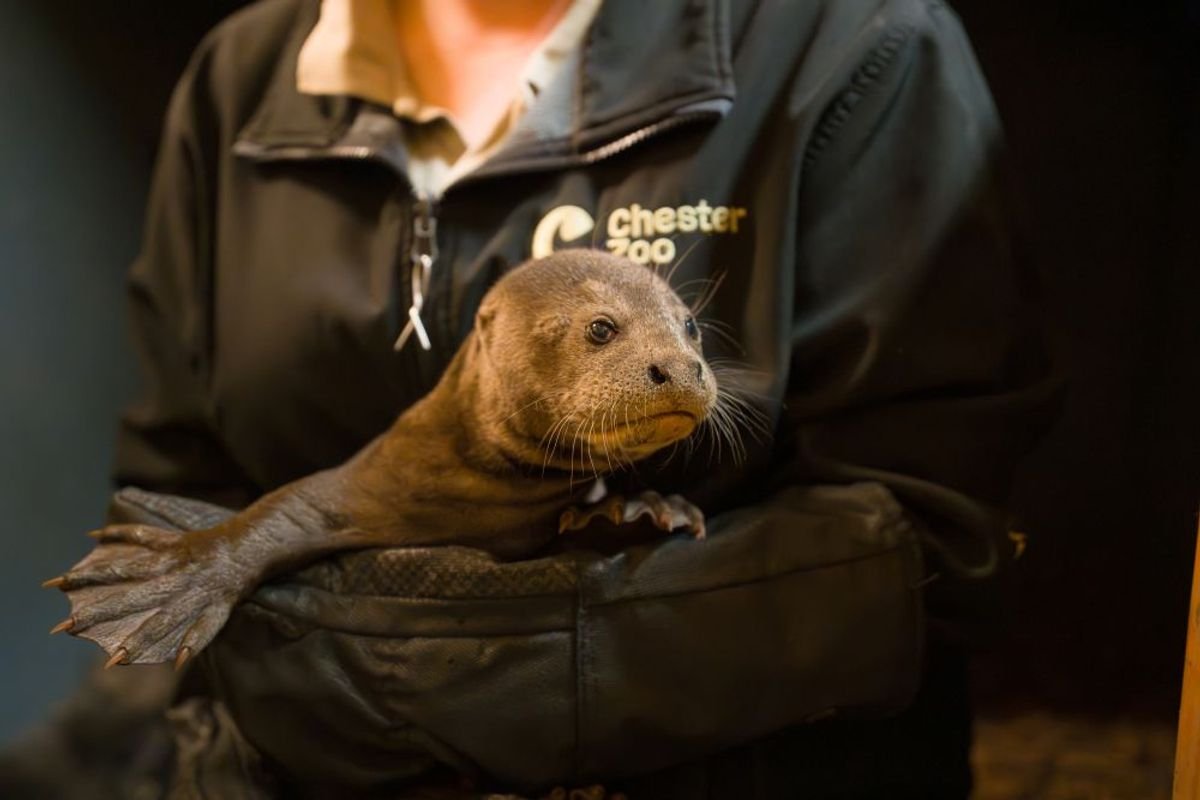
During that first check, each pup was weighed and assessed, with vets examining their heart, teeth, and overall condition. All three were found to be healthy, and the exam confirmed their genders.
“At eight weeks old, the pups will now start to venture outside alongside parents Bonita and Manu, who will start introducing them to the water and all of the essential skills they’ll need as they grow,” said Boatwright.
Read More: Sea Otters Hold Hands While Sleeping and They Even Cuddle
Why Giant Otters Are Called “River Wolves” — And How They Hunt

One of the otter pups at Chester Zoo
(Image courtesy of Chester Zoo)
Giant otters are the largest otter species on Earth, with adults growing to more than 4.9 feet (1.5 meters) in length. In parts of South America, they’re known as lobo de río, or “river wolf,” a name that reflects their powerful build, sharp teeth, and highly social, coordinated behavior.
In the wild, they move through freshwater systems in close-knit family groups, hunting primarily fish but also taking prey such as river crabs, snakes, and even small caimans. As apex predators, they help regulate freshwater ecosystems, and their presence (or absence) can signal how those environments are changing.
What One Birth Means for an Endangered Species
Giant otters have already disappeared from parts of their historic range, and their numbers continue to decline. Across South America, rivers are being reshaped by deforestation and expanding development, while water pollution reduces the availability of clean, healthy habitat. At the same time, illegal hunting has historically driven sharp population losses, and in some areas continues to put pressure on remaining groups.
Those pressures have pushed the species onto the International Union for Conservation of Nature (IUCN) Red List as endangered, a designation given to species facing a high risk of extinction without continued intervention.
Bonita and Manu were brought together from separate European zoos and paired through the endangered species breeding program, where animals are matched based on their genetics to help maintain the population.
“Every birth represents genuine hope for this highly endangered species, and these three giant otter pups are an important reminder of what conservation efforts around the world can achieve,” said Kirsten Pullen, Chief Conservation Officer at the zoo.
Chester Zoo is part of a wider network of conservation programs, contributing to more than 140 international breeding efforts aimed at protecting species at risk of extinction. The work extends beyond the zoo itself, supporting habitat restoration and species recovery projects in the wild — a way of linking what happens in human care to what’s still unfolding in natural ecosystems.
For now, though, the focus is closer to the den itself.
Read More: While Cute and Playful, River Otters Can Attack Humans
Article Sources
Our writers at Discovermagazine.com use peer-reviewed studies and high-quality sources for our articles, and our editors review for scientific accuracy and editorial standards. Review the sources used below for this article:
- This article references information from the Chester Zoo