
Fat Molecules in Deep-Sea Mud Volcanoes Reveal How Microbes Survive Extreme Conditions

In 2022, the research vessel Sonne journeyed to a remote corner of the ocean to retrieve samples from one of the most challenging environments on Earth.
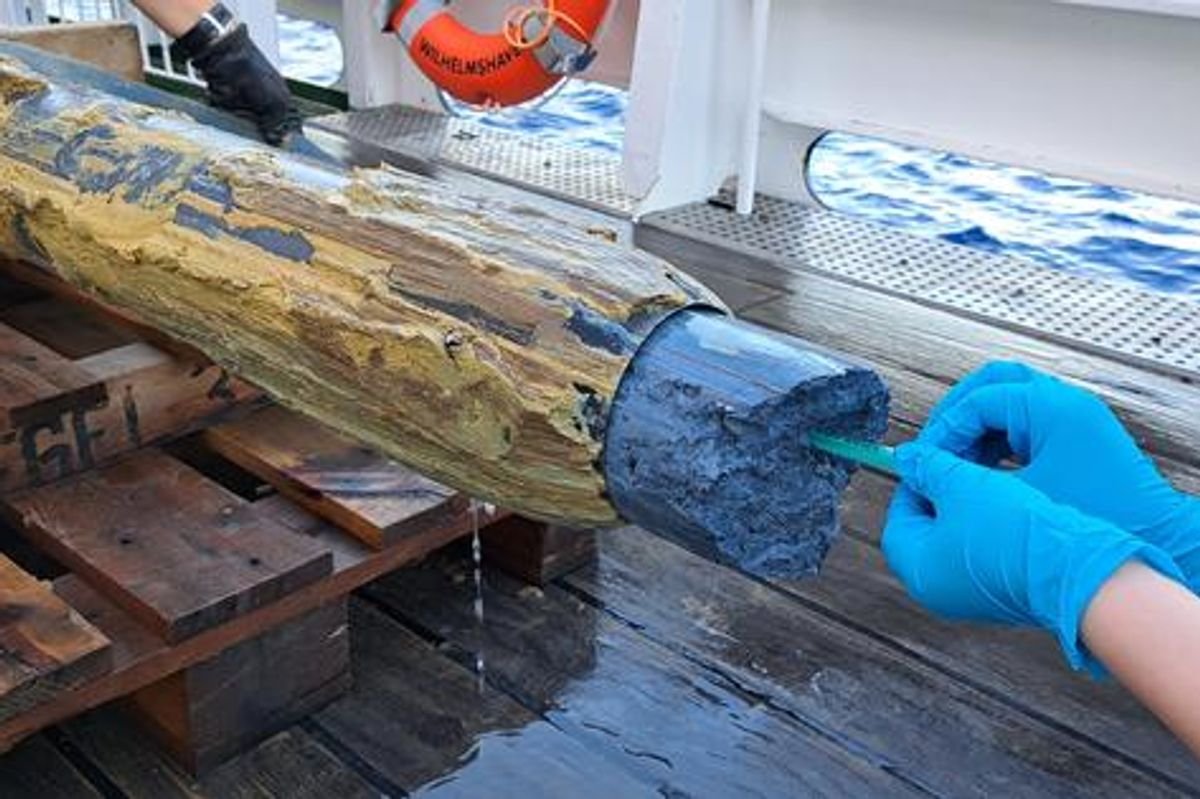
Using a sampling device called a gravity corer, the Sonne sampled sediment and rock from an area of seafloor bordering the Mariana Trench. Dotting this region are towering mud volcanoes hundreds of feet high. Rather than spewing hot magma, when active, these structures belch out slurries, water, and gases.
Now, analysis of the samples has revealed microbial life inside these mud volcanoes. The authors analyzed fat molecules found in the mud samples, data that revealed how microbes adapt to harsh environments by metabolizing surrounding chemicals.
The finding, say the authors, is remarkable given the high pressure and extreme alkalinity found inside the volcanoes, which have interiors with the same pH as bleach. The study, led by researchers at the University of Bremen, was published in Communications Earth & Environment.
Read More: One of the Oldest Organisms on Earth Thrives in Yellowstone’s Scalding Hydrothermal Features
Finding Fats At The Bottom Of The Ocean
The researchers found that the extreme environment of the undersea mud volcanoes meant that locating life wasn’t straightforward. The sparse number of cells identified and the low biomass pulled from the samples made it impossible to identify species by analyzing their DNA.
Instead, the team looked for metabolites using gas chromatography-mass spectrometry (GC-MS) and high-performance liquid chromatography-mass spectrometry (HPLC-MS). This turned up a rich sample of lipid fat molecules. Further analysis of these molecules helped the team understand how microbes inside mud volcanoes thrive.
The team found evidence of microbes called archaea, a domain of life distinct from either eukaryota — a category that includes all animals — and bacteria. The archaea that the team identified appear to draw their energy from gases like hydrogen and carbon dioxide, as well as minerals extracted from rocks.
Microbes That Don’t Know When To Quit
The team was able to examine carbon isotopes from the sample to estimate the likely history of the identified microbes. This analysis suggested that various groups of archaea have existed in the mud volcanoes over time, adapting their metabolisms in response to changing environmental conditions.
Earlier-dated bacteria seemed to combine available resources to produce methane, whereas later-living species switched their metabolisms to rely on sulfates and methane oxidation to survive. The team also saw that the microbes’ membrane lipids were specially adapted to survive in the volcanoes’ challenging environment.
“What is fascinating about these findings is that life under these extreme conditions, such as high pH and low organic carbon concentrations, is even possible. Until now, the presence of methane-producing microorganisms in this system has been presumed, but could not be directly confirmed,” said co-author Florence Schubotz, an organic geochemist at the University of Bremen, in a press release.
“Furthermore, it is simply exciting to obtain insights into such a microbial habitat because we suspect that primordial life could have originated at precisely such sites,” Schubotz concluded.
The team’s next steps are to cultivate microbes under conditions mimicking those in mud volcanoes to study how they survive these inhospitable environments.
Read More: A Methane-Spewing Mud Volcano Gives Sanctuary to Arctic Seafloor Species
Article Sources
Our writers at Discovermagazine.com use peer-reviewed studies and high-quality sources for our articles, and our editors review for scientific accuracy and editorial standards. Review the sources used below for this article: