
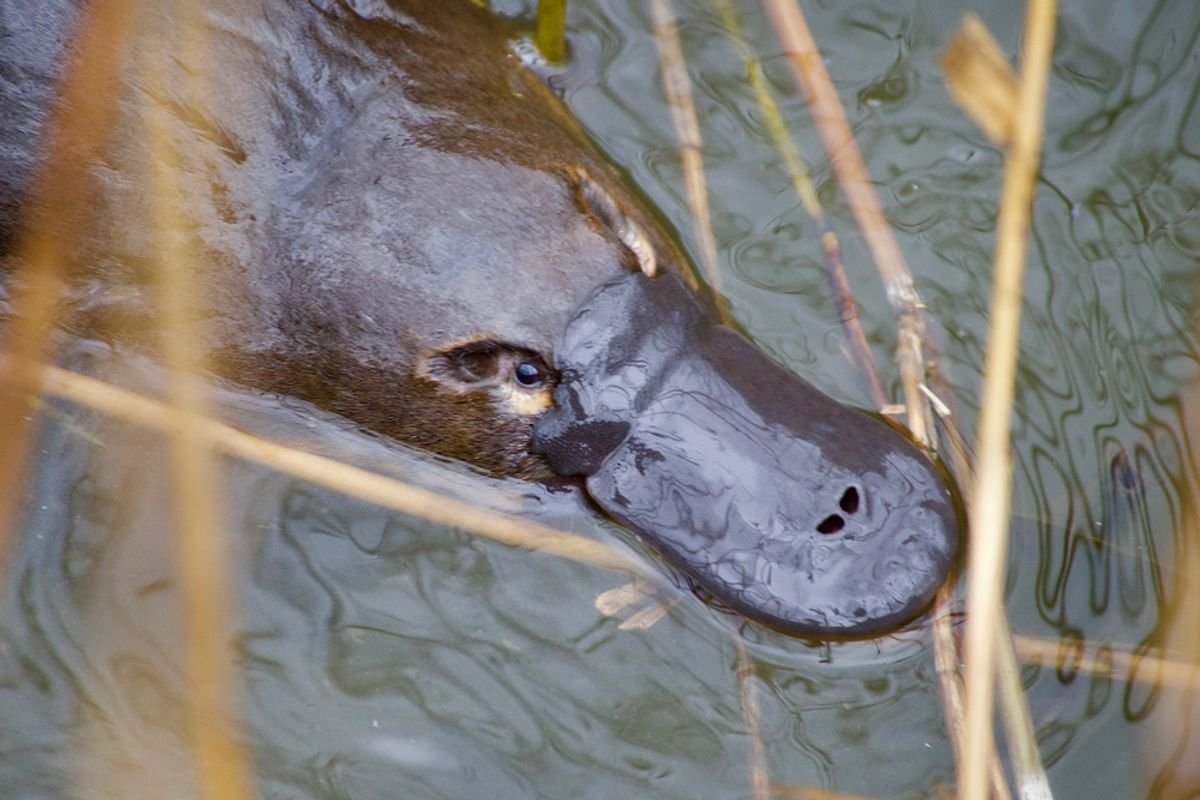
Egg-Laying Monotremes Like the Platypus Are the Evolutionary Oddities of the Mammal World

Key Takeaways About Egg-Laying Monotremes:
- Monotremes are mammals that lay eggs and do not carry their young in a womb. They include species like the platypus and echidnas.
- Egg-laying monotremes may have retained certain traits from their reptilian ancestors, such as egg-laying and even venomous traits.
- Monotremes are found only in Oceania, but may once have lived in South America as well.
When it comes to mammals, the monotremes of Oceania stick out so much that they have confounded evolutionary biologists for decades. The platypus and echidnas lay eggs when every other mammal on the planet gives live birth.
And that isn’t the only thing that sets these creatures apart. Platypuses also carry venom, another nearly unheard-of trait in the world of mammals, and they lack more developed sexual organs.
But why did these creatures evolve to be so completely different from other mammals?
The simple answer is they didn’t evolve. Monotremes are likely relics of an otherwise lost lineage of mammals that was much more common on our planet tens of millions of years ago. The five species of monotremes that survive today are unique in that they didn’t lose their ability to lay eggs; rather, they adapted this trait. Essentially, they retained some traits from their reptilian ancestors.
Read More: Ancient Species Represents Bridge Between Echidna and Platypus
What Are Monotremes?
The term monotreme means “single opening,” which is a euphemistic way of saying that these creatures defecate, urinate, lay eggs, and mate using the same hole. Monotremes have a cloaca similar to that of birds, with no separate digestive and reproductive tracts.
“That’s a primitive characteristic,” says Nicolás Roberto Chimento, a mammal paleontologist at the Bernardino Rivadavia Natural Sciences Argentine Museum in Buenos Aires.
While they were once more common, there are only five species left on the planet, all of them found only in the wild in Oceania: the platypus and four species of echidnas, also known as spiny anteaters.
All five of these species lay eggs rather than giving live birth.
When Did Monotremes Evolve?
The fossil record of monotremes is far from complete. Monotremes themselves date back at least to the time of the dinosaurs — the oldest fossil yet discovered dates to about 125 million years ago during the Early Cretaceous.
While these creatures are only found today in Australia and neighboring islands, recent fossil discoveries in South America by Roberto Chimento and others have revealed that this wasn’t always so. In fact, the oldest platypus-like fossil — Patagorhynchus pascuali — was discovered by his team in Patagonia and described in 2023 in a study in Communications Biology.
P. pascuali is now rewriting what we know about the evolutionary history of these creatures, as one of the oldest platypus-like fossils discovered yet in Australia is the Obdurodon, dating back only about 30 million years. Coupled with the discovery of Monotrematum from Argentina, which dates back 60 million years, it’s possible that platypuses first evolved in the Americas and spread to Australia.
Much less is known about echidna development, as the fossil record is much weaker. But Australia still has monotreme fossils that predate the platypus-like family. These date back to the Early Cretaceous — the oldest, Teinolophos, is about 125 million years old.
When Did Monotremes Start Laying Eggs?
The fossil record of all monotremes is marked by paucity. Most of the oldest specimens are only known from teeth or parts of the skull. As a result, paleontologists have no evidence of ancient monotreme eggs yet.
But most agree that the egg-laying was likely there from the beginning. Mammals today are split into three major groups. The monotremes, which lay eggs; the marsupials, which give birth to relatively undeveloped offspring; and the placentals, which give birth to more developed offspring and form the majority of mammals on the planet today, including humans.
Scientists believe that monotremes likely split off from the common ancestor of all mammals at an earlier stage than marsupials or placentals. This would explain some of their reptile-like characteristics, such as egg-laying and their more primitive reproductive organs.
The venomous spurs that platypuses have may also be a trait they retained from their reptilian ancestors. Spurs haven’t been preserved in the fossil record for ancient monotremes, but that’s mostly because paleontologists haven’t unearthed limbs in general from this group.
But Roberto Chimento says that another Cretaceous mammal, Multituberculata, did have spurs. So, it’s possible that early mammals like Multituberculata, and possibly monotremes, inherited venomous spurs from their small reptilian ancestors as defense against larger dinosaur predators around at the time, he speculates.
Why Did Monotremes Survive?
If monotremes never evolved not to lay eggs like the rest of mammals, the question then becomes, why have they survived in Oceania and not anywhere else? The evidence shows that they once lived in South America as well. Why didn’t they survive there?
Roberto Chimento says that it likely comes down to a question of competition, or lack thereof. The evolution of the placenta gave the largest group of mammals an evolutionary advantage. Growing so long inside their mother’s body means many mammals are born fairly developed — they can walk and see right after birth. These adaptations gave placental mammals a leg-up on the competition — it’s why you only see a couple of marsupials, which are born less developed and must spend time in their mother’s pouches, outside of Oceania.
The same is likely true for monotremes, which are hatched in eggs outside the body after up to 10 days of incubation, according to Britannica. Roberto Chimento says that eggs outside the body have less protection than fetuses growing inside the body — they can be eaten or trampled, and are more susceptible to the cold and elements.
Until more recent species like dingoes and even humans arrived in Australia, there were no placental mammals to compete with marsupials and monotremes other than bats, which don’t occupy the same types of ecological niches, and rodents, which are relative newcomers. This gave the Australian mammals tens of millions of years without much competition from placental mammals. Most placental land mammals also didn’t arrive in New Guinea until relatively recently.
“There wasn’t a competition so marked as there was in other continents,” Roberto Chimento says.
Read More: Evolutionary Origins of the Strange Platypus and Echidna Found at Dinosaur Cove
Article Sources
Our writers at Discovermagazine.com use peer-reviewed studies and high-quality sources for our articles, and our editors review for scientific accuracy and editorial standards. Review the sources used below for this article: