
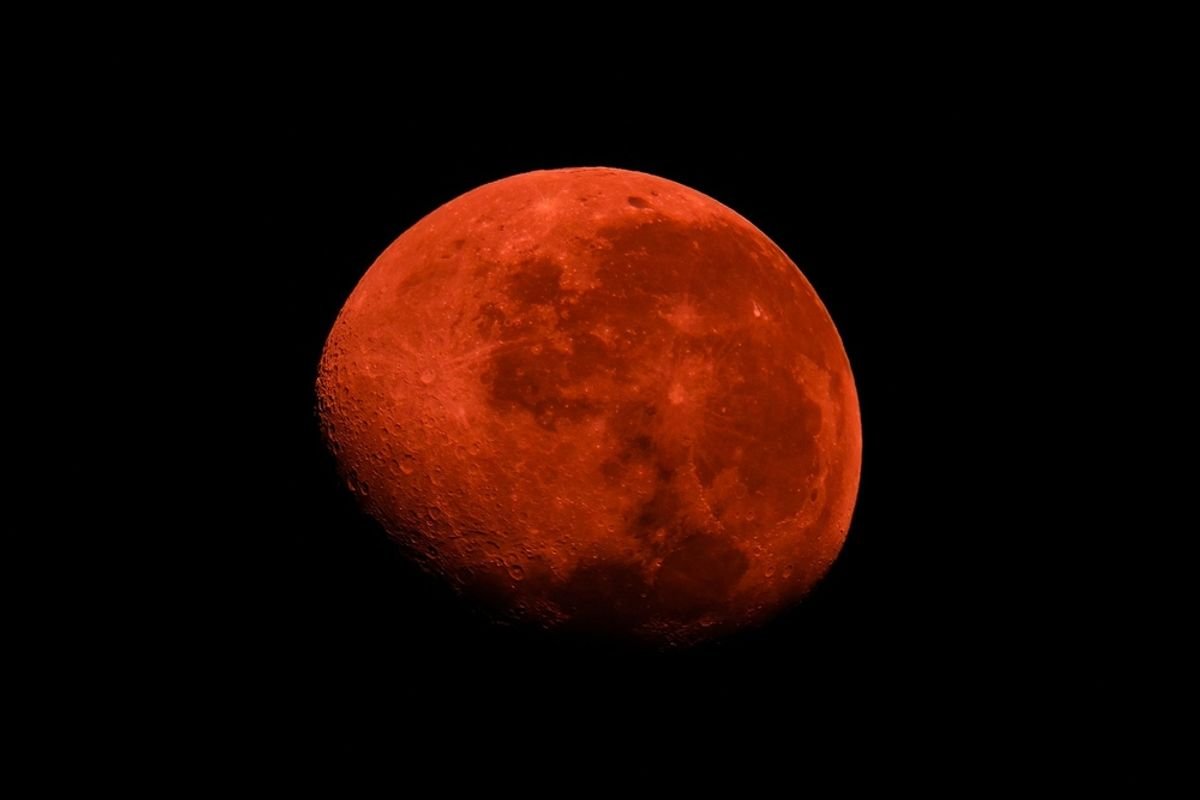
Don’t Miss September’s Blood Moon – A Total Lunar Eclipse That Turns Red Instead of Black

On September 7, 2025, over 5.8 billion people will be able to see the spectacular Blood Moon. Also known as a total lunar eclipse, this fall’s Blood Moon will be the longest on record since 2022.
About 71 percent of the world’s population will get to witness this spectacular cosmic event, including those in Australia, Asia, Africa, and parts of Europe. Unfortunately, those in North America will be missing out and will have to wait until March 2026 for their next Blood Moon.
The total lunar eclipse will last a total of 5 hours and 27 minutes, and will begin around 11:28 a.m. ET on Sept 7, 2025. For those who will miss the show, you can catch a livestream of the event from Time and Date or The Virtual Telescope Project.
What Is a Blood Moon?
A Blood Moon is another name for a total lunar eclipse. These eclipses occur when the Earth creates a reddish-brown shadow between the moon and the sun.
Unlike a total solar eclipse that is only visible for those in the path of totality, anyone living in an area where it will be nighttime during the eclipse can see the total lunar eclipse. September’s Blood Moon will be highly visible and requires no special equipment or preparation to enjoy its show.
Read More: Watch as a Total Lunar Eclipse Will Cause the 2025 Blood Moon This March
Why the Blood Moon Is Red
Many may think that it is strange for a total lunar eclipse to turn red instead of black. The change in color is all thanks to the way light scatters.
A total lunar eclipse occurs when the sun, moon, and Earth line up perfectly. When this happens, Earth prevents the sun’s rays from reaching the moon as they normally would. Instead, the wavelengths of light from the sun must bend around the Earth, passing through Earth’s atmosphere on the way to the moon.
As they travel through Earth’s atmosphere, the wavelengths of light get scattered and only the longest ones can reach the moon. Blue wavelengths are often short and don’t make it, while red and orange wavelengths are longer and are what give the Blood Moon its reddish hue.
Read More: From a Pink Moon to Blue, the Moon’s Colors Aren’t Always Colorful
Article Sources
Our writers at Discovermagazine.com use peer-reviewed studies and high-quality sources for our articles, and our editors review for scientific accuracy and editorial standards. Review the sources used below for this article: