
Deadliest U.S. Avalanche in Decades Raises Alarms About Changing Climate Conditions

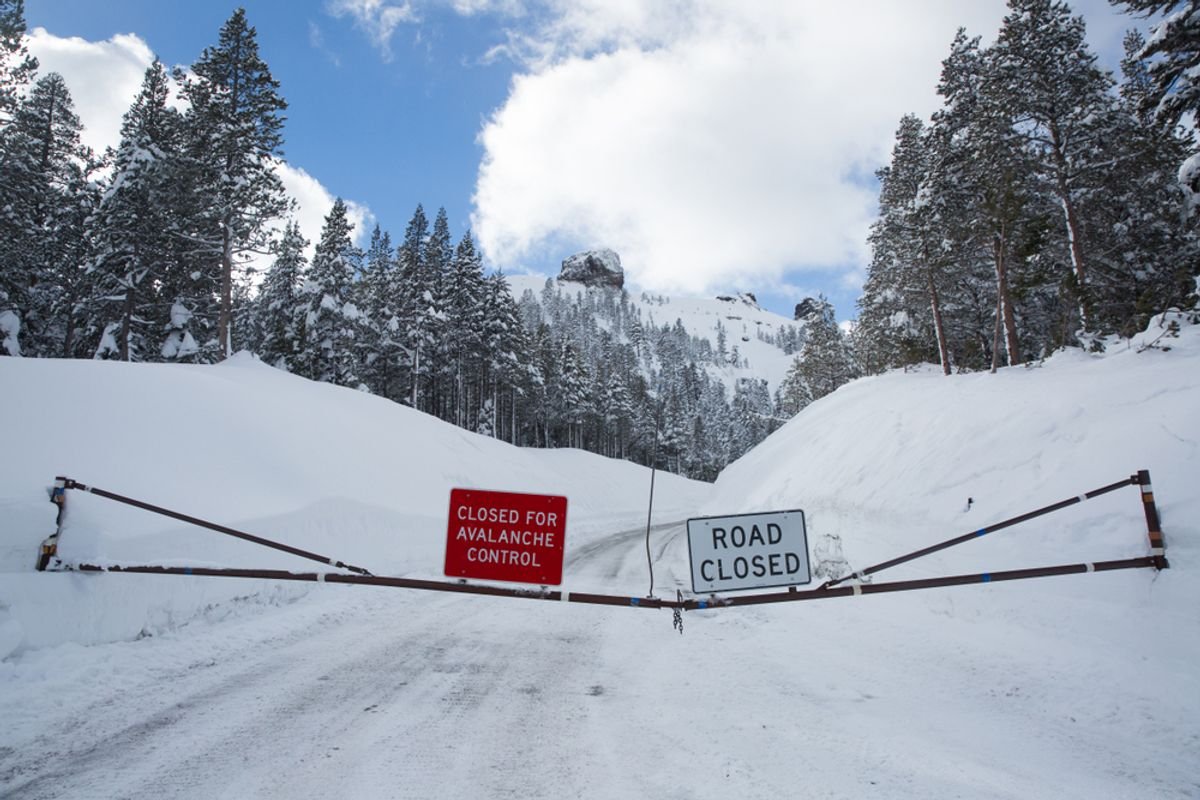
Eight skiers were killed, and one remains missing after a massive avalanche tore through a popular winter tourist area north of Lake Tahoe on Feb. 17, 2026, marking the deadliest single avalanche in the United States in 45 years.
As reported in The Guardian, the avalanche struck around 11:30 a.m., about 10 miles north of the lake, and swallowed a group of backcountry skiers. Six others who were stranded in the aftermath have since been rescued.
While avalanches are a familiar winter hazard in the mountains of the western U.S., this one unfolded after weeks of an unusual snow drought — conditions increasingly linked to climate change. As warming temperatures and erratic precipitation reshape snowpacks, scientists are worried that both the frequency and character of avalanches are likely to shift, with serious consequences for survival and rescue.
Read More: The Earth Mysteriously Pulsed Every 90 Seconds for Nine Days in 2023 — We Now Know Why
Why Dry Slab Avalanches Are the Deadliest in North America
There are several varieties of avalanches, but dry-snow slab avalanches account for the majority of avalanche deaths in North America. These occur when a cohesive slab of snow breaks loose and slides over a weaker underlying layer.
According to Protect Our Winters, the recipe for a dry slab avalanche requires three ingredients: terrain capable of sliding, unstable snow layered over a weak base, and a trigger. That trigger can be natural — wind, sun, or new precipitation — or human, such as a skier or snowboarder traveling across the slope.
A study in Frontiers in Physiology also notes that when victims of a dry-slab avalanche are buried, fewer than half survive. If they are not located and extricated within about 35 minutes, death most often occurs from asphyxia as snow blocks the airway or packs tightly around the face.
How Snow Droughts Create Dangerous Conditions
Mountain snowpacks are built layer by layer and shaped by weather. As explained by Protect Our Winters, wind scours exposed slopes and deposits dense slabs on sheltered ones. Sun and rain create crusts. Clear, cold nights form frost on the snow surface that gradually turns into loose, sugary grains. Each storm buries what came before, producing a vertical stack of layers with different strengths.
Problems arise when strong snow sits atop weak snow. That structure is highly sensitive to stress, meaning a single skier can be enough to cause a catastrophic collapse. Consistency is key to stability, which is why drier mountain climates are notorious for unstable snowpacks.
Prolonged cold, dry periods — known as snow droughts — intensify the problem, notes Protect Our Winters. The longer these dry spells persist, the more reactive weak layers become. When heavy snow finally arrives, the added weight can overwhelm the fragile base, triggering large, deadly avalanches.
These are the conditions putting the Sierra Nevada Mountains on high alert.
“Weak sugary snow (near-surface facets) formed on many NW-W-NE aspects during the recent, extended dry spell in January. This weak layer was buried by new snow starting on Feb 10, and is now under 3 to 7+ feet of recent storm snow […] This weak layer still represents a concern with uncertainty surrounding the ease of triggering large avalanches,” said the Sierra Avalanche Center.
Climate Change and a Risky Future for Winter Recreation
With climate change, researchers writing in Frontiers in Physiology expect thinner snowpacks, more variable temperatures, and more rain-on-snow events, especially at lower elevations where snowfall may become less frequent but denser and wetter. These conditions could increase wet-snow and full-depth avalanches, which are harder to survive and far more difficult to excavate.
At the same time, winter recreation is growing in popularity. Even if overall avalanche hazard decreases in some regions, the number of human-triggered avalanches may not.
Read More: Majestic Mount Everest: What to Know About the World’s Tallest Mountain
Article Sources
Our writers at Discovermagazine.com use peer-reviewed studies and high-quality sources for our articles, and our editors review for scientific accuracy and editorial standards. Review the sources used below for this article: