
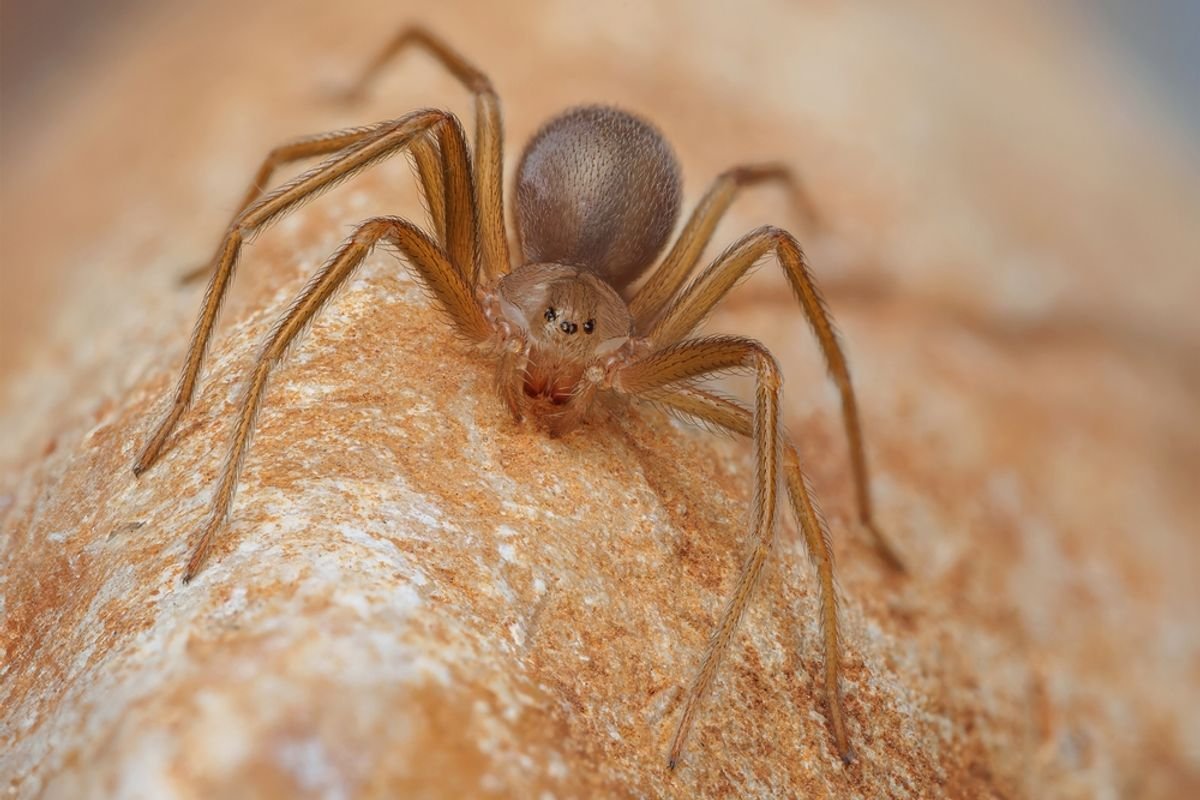
Contrary to Popular Belief, Brown Recluse Spiders Are Rare in Florida — and Severe Bites Are Even Rarer

The brown recluse has a reputation that travels faster than the spider itself. In Florida, it’s often blamed for mysterious wounds, late-night bites, and household infestations.
But a statewide survey published in the Journal of Medical Entomology found breeding populations at just 19 of 220 properties investigated for suspected activity. In controlled lab trials, the spiders bit only under extreme stress — and when bites were verified, extensive tissue damage was uncommon.
“This research shows that brown recluse spiders aren’t the boogeyman that everyone makes them out to be,” said co-author Louis Coticchio in a press release. “They aren’t swarming throughout Florida, infiltrating homes and attacking. Rather, they are misunderstood and want to be left alone while rarely showing signs of aggression, even when provoked.”
Read More: Tiny Tropical Spiders Build Giant Fake Versions of Themselves to Scare Off Predators
Brown Recluse Spiders Remain Highly Localized
The brown recluse (Loxosceles reclusa) is native primarily to the Midwest and parts of the Gulf Coast and is not considered endemic to Florida. Yet reports of infestations regularly circulate online and in local communities, creating the impression that the spider is common statewide.
To evaluate that assumption, researchers investigated properties across Florida where recluse activity had been reported. Confirmed breeding populations — in this case, Mediterranean recluse spiders, a closely related invasive species — were found at only 19 sites, most concentrated in central and northern Florida.
Even within verified properties, population sizes varied, ranging from a single spider to 171 individuals. Researchers found no evidence of widespread dispersal beyond these localized clusters.
Established colonies remain geographically confined rather than broadly distributed across homes and neighborhoods.
Reluctant to Bite, Even When Disturbed
Much of the spider’s reputation centers on its bite. To test defensive behavior under controlled conditions, researchers applied incremental pressure to individual spiders using gel-tipped instruments. This method allowed the team to simulate disturbance in a consistent way.
Wolf spiders were tested under identical conditions for comparison. When provoked, wolf spiders bit in roughly 80 percent of trials. Brown recluses, by contrast, bit primarily when subjected to severe stress, such as being squeezed or turned upside down. Under milder disturbance, bites were infrequent.
The comparison highlights a notable difference in defensive response. Rather than striking quickly, the brown recluse appears more tolerant of low-level disturbance and responds defensively only under intense physical stress.
Severe Reactions Are Rare, and Often Misdiagnosed
The final question involved necrosis, or tissue damage, often described in alarming terms in online accounts and anecdotal reports.
The study found that most verified recluse bites result in mild, self-limiting skin reactions. Typical symptoms include redness, burning, or small blisters that heal over time. When tissue damage occurs, it is generally shallow, about half a centimeter deep, and limited to the upper layers of skin. It does not typically extend into muscle or bone.
Extensive necrosis is uncommon. Severe wounds frequently attributed to recluse bites may instead stem from bacterial infections, including staph. Because many skin lesions are diagnosed without a confirmed spider specimen, misattribution can reinforce the spider’s outsized reputation.
“I’m not saying that they’re completely harmless, but rather they’re reluctant to bite, and there’s an extremely low percentage of encountering them in Florida,” Coticchio stated in the press release.
Overall, the findings challenge the image of the brown recluse as a widespread and aggressive household threat. The species exists in localized pockets of the state, rarely bites under ordinary circumstances, and is often blamed for injuries it did not cause. Its reputation, the evidence shows, has grown larger than its actual footprint.
Read More: Spiders Will Hunt in Groups and Share Meals if They Have Enlarged Brain Structures
Article Sources
Our writers at Discovermagazine.com use peer-reviewed studies and high-quality sources for our articles, and our editors review for scientific accuracy and editorial standards. Review the sources used below for this article: