
Cold-Water Geysers Powered by CO2 Bubbles Could Support the Search for Life on Icy Moons
Here on Earth, cold-water geysers may share a thing or two in common with eruptions on ocean worlds found in the outer Solar System. The search for life beyond Earth has led scientists to icy moons that are thought to harbor subsurface oceans, where plumes of carbon dioxide-rich material may be signals of habitability.
A new study published in Astrobiology has brought the search closer to home, focusing on cold-water geysers in Utah. These types of geysers, also called “soda pop geysers” for their unique way of erupting, could aid scientists as they try to understand the composition of plumes on ocean worlds like Enceladus and Europa.
Read More: A Mysterious Ground Shift Returns to Yellowstone, and Advanced Tech Is Helping to Monitor It
Hidden Oceans on Icy Moon

Kate Craft (APL) and Bella Musto (Europa Clipper ICONS student from Denison University) are collecting samples of an eruption at Crystal Geyser.
(Image Courtesy of Morgan Cable)
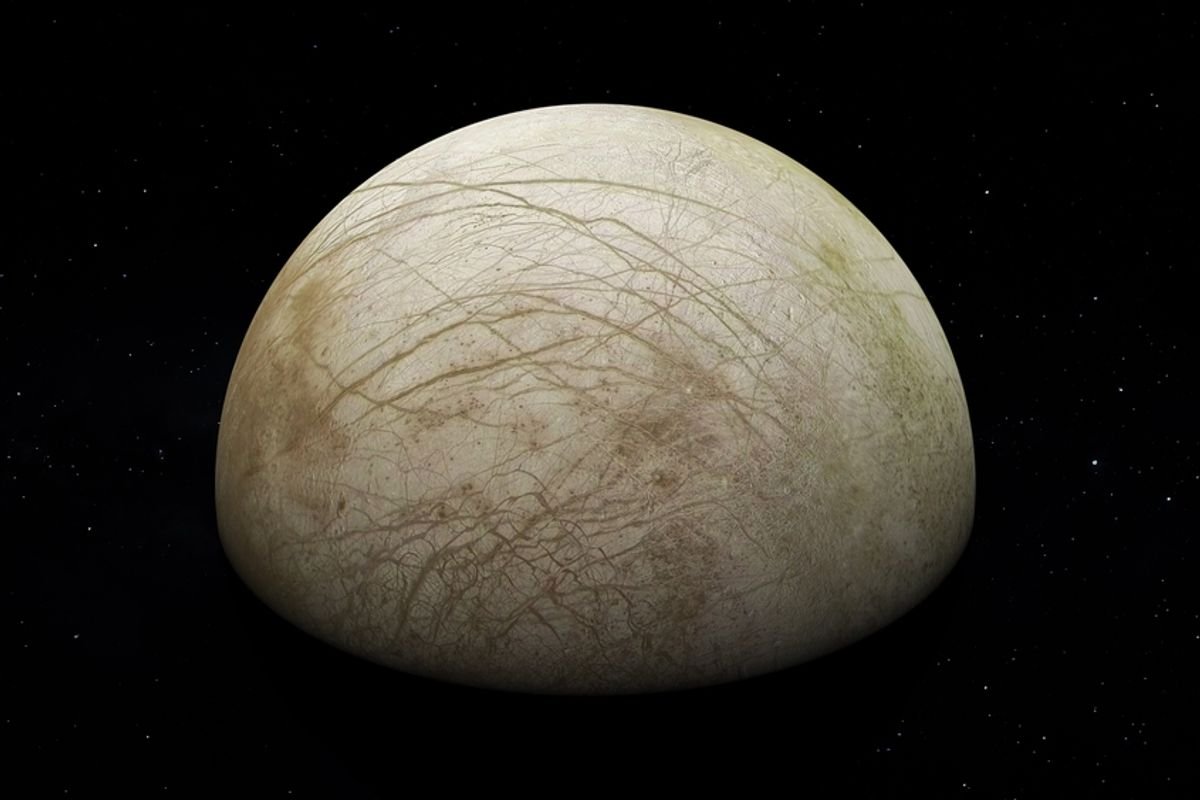
Ocean worlds are among the most promising targets in the search for extraterrestrial life. Much like Earth, they contain vast reservoirs of liquid water that could fulfill the necessary conditions for life; However, the moons that scientists are most interested in — Enceladus (a moon of Saturn) and Europa (a moon of Jupiter) — are surrounded by ice. The ice shells encasing these worlds seal their subsurface oceans, yet plumes of water ice and vapor still find a way to escape into space, according to a study in Geophysical Research Letters.
The best chance for habitability might lie beneath the shell of Enceladus. Plumes that spray from fissures called “tiger stripes” have been observed along the moon’s south polar region. Passing through Enceladus’ plumes, NASA’s Cassini mission detected organic and nitrogen-bearing molecules (acetylene, ammonia, carbon dioxide, and methane).
Europa is also believed to have water-rich plumes, although their presence hasn’t been confirmed yet. Before future missions to Europa search for evidence, scientists might be able to find some helpful tips by investigating cold-water geysers on Earth.
“The same mechanics driving the cold-water geysers in Utah may also be occurring at the south pole of Saturn’s moon Enceladus, and at Jupiter’s moon Europa, where recent carbon dioxide-rich deposits have been identified on its surface,” said study author Morgan Cable, a senior scientist at the Planetary Science Institute, in a statement.
Clues Inside Cold-Water Geysers
Scientists are expecting to learn more about ocean worlds and their plumes when NASA’s Europa Clipper arrives at Europa in 2030, and the European Space Agency’s Jupiter Icy Moons Explorer reaches Jupiter in 2031.
The two missions will measure the gas and grains within plumes on Europa, but it’ll also be important to consider how the plume material might be altered as it rises from the deep subsurface ocean and is launched into space.
By examining the material of cold-water geysers on Earth, scientists can speculate what might happen to plumes on ocean worlds as they move from the ocean to space. The researchers behind the new study looked for answers at two carbon dioxide-driven cold-water geysers in Utah: Crystal Geyser and Champagne Geyser.
Cold-water geysers aren’t the same as the iconic hydrothermal features at Yellowstone, where columns of superheated water erupt due to pressure buildup from steam; they instead spray water that’s forced above ground by expanding carbon dioxide bubbles, according to the Utah Geological Survey.
Rising From Reservoirs
Upon collecting effluent from the two geysers and comparing it with unerupted waters, the researchers identified several factors that could influence the composition of the ejected material, including discharge volume, eruptive energy, and proximity to a subsurface host reservoir.
“While there’s no perfect Earth-based analog for the plumes on other worlds, this study did provide important constraints and lessons learned about the abundance and detectability of habitability indicators,” said Cable.
Erupted material from the geysers comes from a deep underground source, and so researchers suggest that exploration on ocean worlds should take this into consideration. The best places to search, then, would be large vents that emanate material from the depths of the subsurface ocean.
Future missions will also need to pay attention to other measurements, like the pH (acidity or alkalinity) of plumes, to fully consider the differences in composition between ejected plumes and deep reservoirs of underwater material.
Read More: Water Flows Beneath Yellowstone National Park, Sometimes Taking Decades to Reach a Geyser
Article Sources
Our writers at Discovermagazine.com use peer-reviewed studies and high-quality sources for our articles, and our editors review for scientific accuracy and editorial standards. Review the sources used below for this article: