
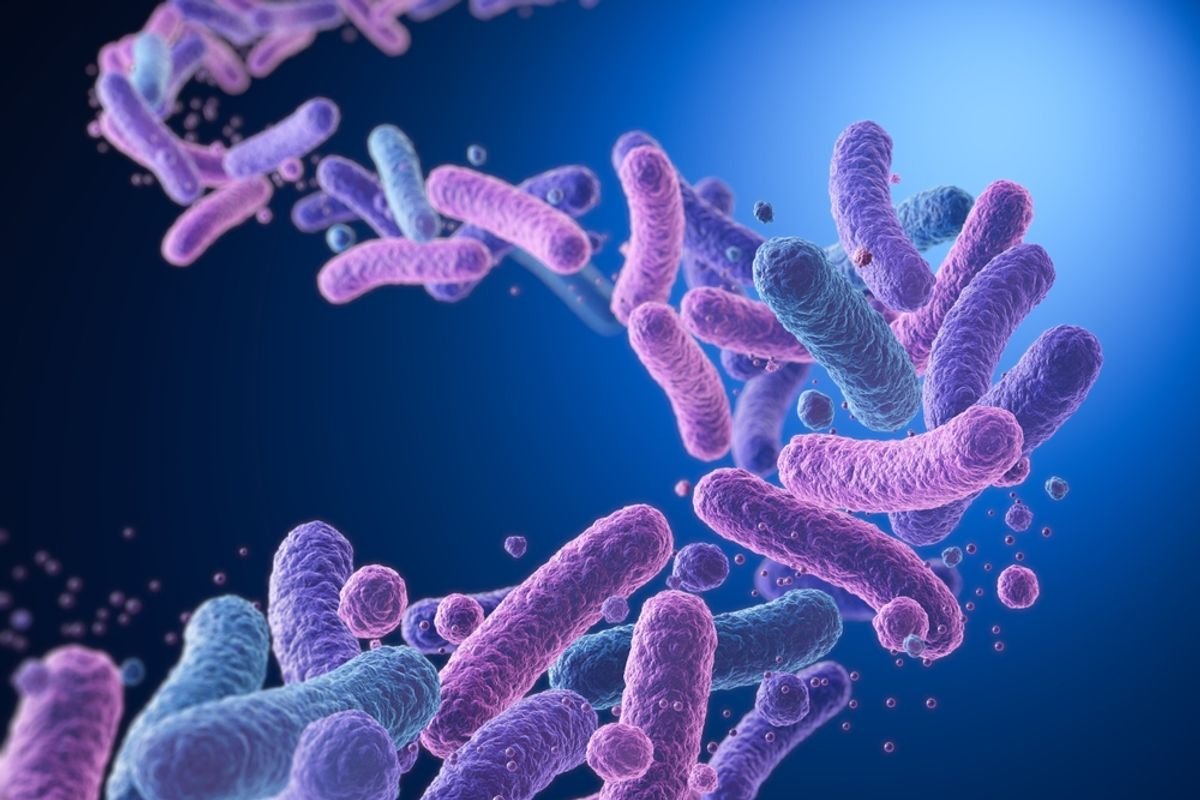
Close, Social Contact Can Shape a Gut Microbiome, Sometimes Making it More Alike

Our gut microbiome plays a major role in our health, and luckily, we’re not short on advice for how to take care of it. Most recommendations focus on diet, like prioritizing fiber and probiotic-rich foods, along with lifestyle tweaks such as getting enough sleep and managing stress.
But we might need to add one more factor to the list: the people we spend time with. It turns out that those closest to us can influence our internal microbial world in subtle but meaningful ways. A new study from the University of East Anglia (UEA) explores this idea by analyzing the gut bacteria of Seychelles warblers, a small songbird living on an isolated island, the perfect natural laboratory.
Previous human studies have hinted at this effect, showing that spouses and housemates tend to share more similar gut microbiomes than strangers. Now, this bird study, published in Molecular Ecology, provides clearer evidence that social closeness beyond shared environments can shape microbiome composition.
“Whether you’re living with a partner, housemate, or family, your daily interactions — from hugging and kissing to sharing food prep spaces — may encourage the exchange of gut microbes,” said study first author Chuen Zhang Lee, a researcher at UEA’s School of Biological Sciences, in a statement.
Social Bonds and Gut Microbes
To investigate, researchers traveled to Cousin Island in the Seychelles, home to Acrocephalus sechellensis, a warbler known for its unusual cooperative breeding behavior. In this system, unrelated birds help breeding pairs raise their young. By collecting fecal samples over several years, the team set out to understand how proximity and social interaction influence the birds’ gut microbiomes.
“We gathered hundreds of samples from birds with known social roles — breeding pairs, helpers, and non-helpers living in the same group and in different groups,” said Lee. “This allowed us to compare the gut bacteria of birds that interacted closely at the nest versus those that did not.”
The researchers focused on anaerobic bacteria, microbes that don’t need oxygen to survive. These bacteria are particularly useful for this kind of study because they typically spread through direct, close contact rather than through the environment, making them an ideal marker to demonstrate “how social bonds can drive the transmission of gut microbes,” according to Lee.
Anaerobes also play an important role in digestion and immunity, forming stable, long-term communities once established in the gut.
Read more: Bird Poop Helped Power One of Ancient Peru’s Wealthiest Kingdoms
An Island That Acts Like a Laboratory
The results showed a clear pattern: the closer the birds were socially, the more anaerobic bacteria they shared. This held true for breeding pairs as well as their unrelated helpers.
“These anaerobic microbes can’t survive in the open air, so they don’t drift around in the environment,” explained Lee. “Instead, they move between individuals through intimate interactions and shared nests.”
Cousin Island makes this kind of research possible in a way few places can. The entire warbler population has been closely monitored for years, with detailed records of behavior, genetics, and health.
“It gives us the best of both worlds,” said study co-author David Richardson in the press release. “We can study animals living natural lives, with natural diets and gut bacteria, while still being able to collect detailed data from known individuals.”
What Birds Can Tell Us About Our Own Microbes
But what do birds on a remote island have to do with us? According to the researchers, quite a lot, especially if we share living space with others. While human and avian microbiomes aren’t identical, the underlying dynamics are similar enough to draw meaningful parallels.
“People you live with might subtly shape the microscopic ecosystem inside you,” Lee added. “Translated into human terms, this means that [cozy] nights in, shared washing-up duties, and even sitting close on the sofa may bring your microbiomes quietly closer together. Sharing beneficial anaerobic bacteria could strengthen immunity and improve digestive health across a household.”
This article is not offering medical advice and should be used for informational purposes only.
Read more: What to Do — and Not Do — to Keep Your Gut Microbiome Healthy
Article Sources
Our writers at Discovermagazine.com use peer-reviewed studies and high-quality sources for our articles, and our editors review for scientific accuracy and editorial standards. Review the sources used below for this article: