
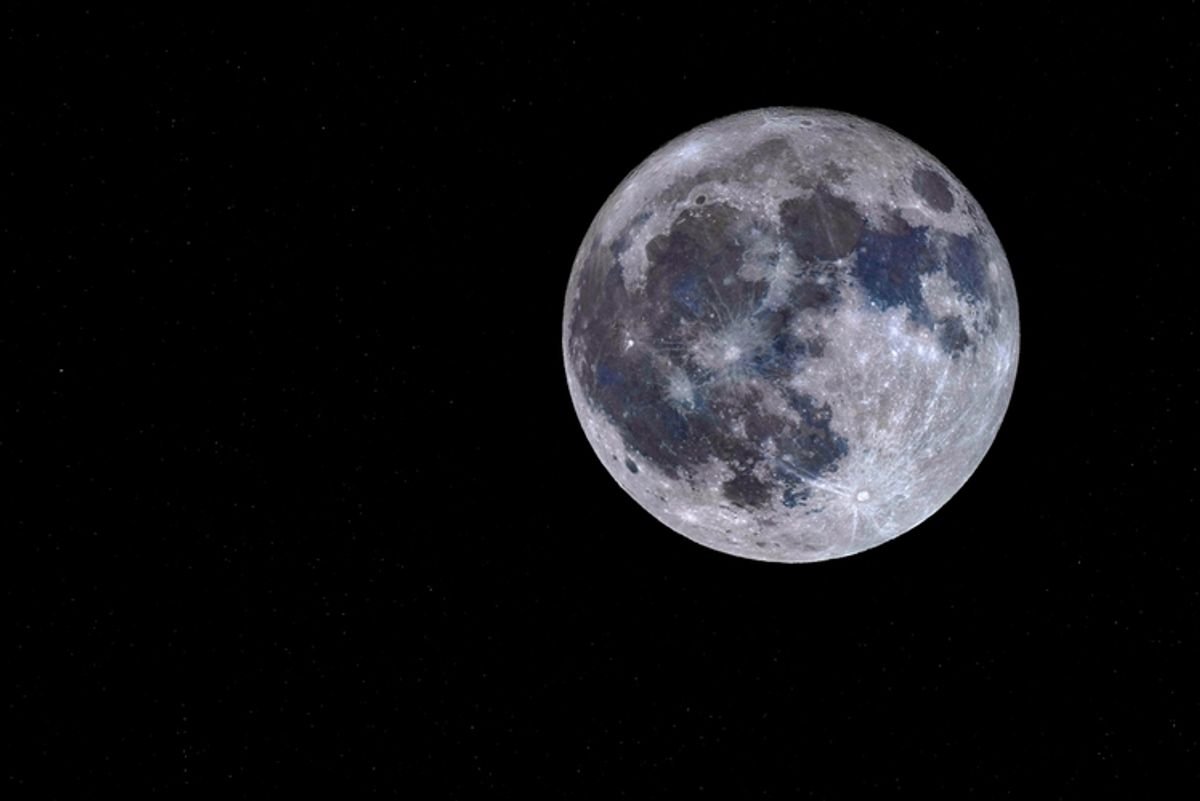
Catch the Final Supermoon of 2025 with December’s Cold Moon

December’s “Cold Moon” is coming, and in 2025, it is anticipated to be a better spectacle than the typical December show. That’s because this full moon, which is also called the “Snow Moon,” the “Winter Maker Moon,” and the “Moon When The Deer Shed Their Antlers,” is set to be a supermoon — the third and final in this year’s series of three straight supermoons.
The Cold Moon will thus conclude the year with a shimmering bang, illuminating the skies as we approach 2026. But when will this shining finale be the biggest and brightest, and why is it called the “Cold Moon” to begin with?
How to Observe the December Supermoon
On December 4, 2025, the Cold Moon will rise in the eastern sky at around sunset. Reaching its peak point at around midnight, it will appear in the neighborhood of some of the brightest constellations and stars, including Orion and Sirius, and it will set in the western sky at around sunrise on December 5, 2025.
According to the Old Farmer’s Almanac — a commonly cited source for the timing of sunrises, sunsets, moon phases, and meteor showers — the moon’s maximum illumination will occur at approximately 6:14 p.m. EST, though the ideal time to spot its radiance may actually coincide with its initial appearance in the sky thanks to the “moon illusion,” an optical illusion that makes the moon stand out most at moonrise, as it moves above the sky’s horizon.
That being said, whether at moonrise or midnight, you may be treated to much more than the typical sighting. As a supermoon, or a full moon that corresponds with the moon’s arrival at its closest position to our planet, or perigee, this Cold Moon may shine stronger than most, following in the footsteps of October’s Harvest Supermoon and November’s Beaver Supermoon. In fact, on December 4, 2025, the moon will be about 222,000 miles from our planet in its orbit, making it seem both bigger and brighter in the darkened sky.
Though these differences can be a bit difficult to detect when comparing supermoons and average moons, they’re much more obvious between a supermoon and a micromoon, or a full moon that occurs as the moon approaches its apogee, or its farthest position from our planet. Indeed, the Old Farmer’s Almanac suggests that supermoons can appear around 7 to 8 percent bigger than an average full moon and around 14 percent bigger than a micromoon, and brighter as well, assuming that the conditions are appropriate. So, cross your fingers for clear conditions this year.
Read More: Why We See Only One Side of the Moon’s Surface
The Origins of the Cold Moon
Like many of the common names for full moons, which are also included in the Old Farmer’s Almanac, the name “Cold Moon” takes its inspiration from centuries of Native American culture. Originating from the traditions of the Mohawk, the Iroquoian-speaking North American tribe, the name stresses the cool temperatures of the season and the importance of the moon in tracking seasonal transitions.
Other names for the December Cold Moon stress the weather conditions that accompany its appearance or its closeness to the winter solstice. Among the Algonquian-speaking Mohican people of North America, for instance, the moon is called the “Long Night Moon” since it appears when the days are at their shortest.
Of course, if you miss the Cold Moon this year, there are other opportunities to see splendid sights in the December sky. According to the Old Farmer’s Almanac, the supermoon arrives around 10 days in advance of the Geminids, a meteor shower that may produce a dramatic display between December 13 and 14, 2025. Thankfully, the moon will be dimmer by that time, shining in the sky as a small sliver — a waning crescent — setting the stage for a brilliant stream of shooting stars.
Read More: From a Pink Moon to Blue, the Moon’s Colors Aren’t Always Colorful
Article Sources
Our writers at Discovermagazine.com use peer-reviewed studies and high-quality sources for our articles, and our editors review for scientific accuracy and editorial standards. Review the sources used below for this article: