
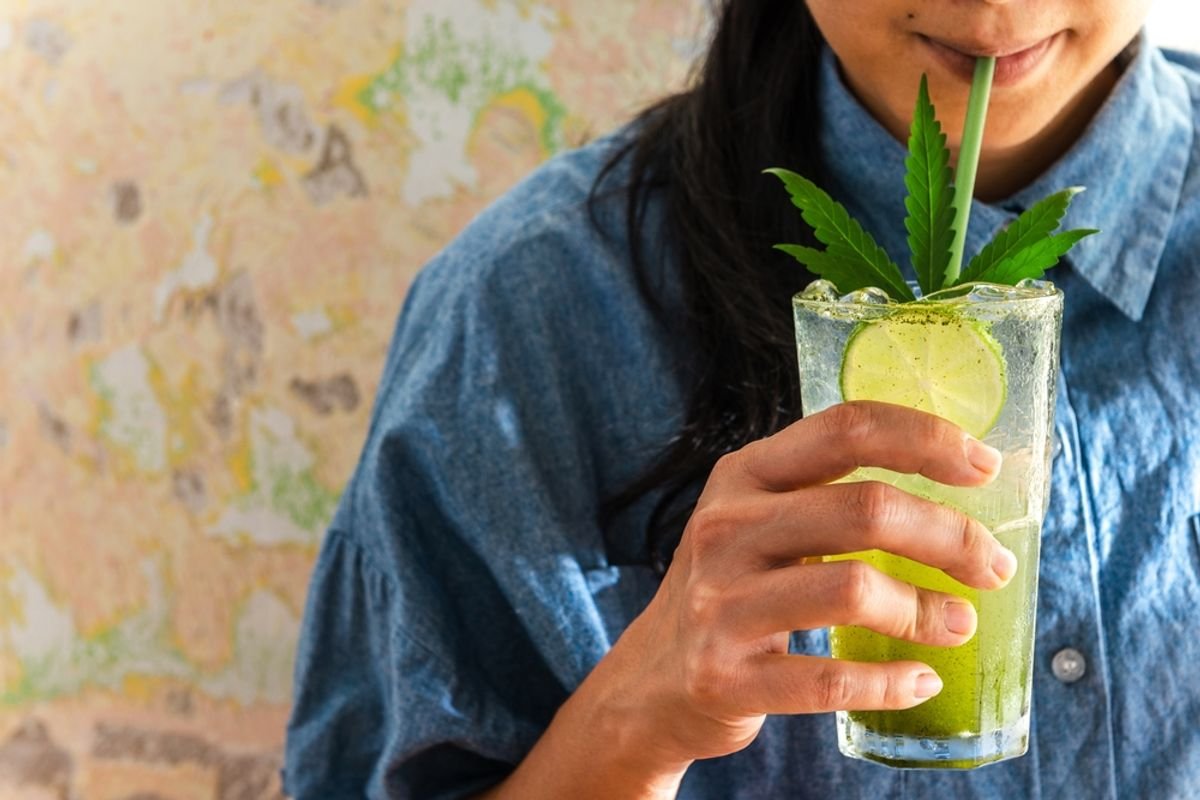
Cannabis Drinks Are Growing in Popularity — and Helping Some People Drink Less Alcohol

Instead of heading straight back to the bottle after the end of Dry January, some people are looking for an alternative that doesn’t require cutting out the “fun” altogether. Alcohol’s risks are well documented, from physical diseases to social harms, and many Americans are trying to drink less, not just during January but year-round.
At the same time, the market for cannabis-infused beverages is booming, with market research pointing to a fast-growing, multi-billion-dollar industry. According to a new study, these drinks may offer more than novelty: they could help some adults reduce their alcohol intake.
The study, led by public health researchers at the University at Buffalo (UB), was published in the Journal of Psychoactive Drugs. The research is the first to specifically look at cannabis drinks and their potential role in alcohol harm reduction.
Read more: The Strange Rise of Scromiting — Most Common Among Young, Heavy Cannabis Users
Cannabis Carries Fewer Health Risks Than Alcohol
Despite its accepted status as a recreational substance, the list of alcohol’s negative health impacts keeps growing, including several types of cancer, liver and heart disease, and neurological disorders. While total abstinence would be ideal from a public health perspective, realistic harm-reduction strategies acknowledge that this is unlikely for many people.
As a result, researchers and public health institutions are increasingly focused on identifying lower-risk alternatives to legally available substances like alcohol and tobacco. Compared to alcohol, cannabis carries fewer documented health and social harms, and with legalization expanding access to cannabis drinks across the U.S., UB researchers set out to explore whether these beverages might change how adults drink.
“In the first study of its kind, we introduce the concept of having cannabis as harm reduction for alcohol,” said study first author Jessica Kruger, clinical associate professor of community health and health behavior at UB, in a press statement. “Cannabis has been proposed as harm reduction for other drugs such as opioids, but not talked about as often for legal substances such as alcohol.”
Consuming More Cannabis Drinks Leads to Less Alcohol Intake
The survey included 438 anonymous adults who had consumed cannabis in the previous year, more than half of whom also reported drinking alcohol. About one-third said they consumed cannabis beverages, and among them, 58 percent reported replacing alcohol with a cannabis drink.
Participants who regularly consumed cannabis drinks also reported cutting their weekly alcohol intake in half, down to an average of three drinks per week. Binge drinking declined as well: before using cannabis beverages, 47 percent said they binge drank less than once a month or never; after introducing cannabis drinks, that figure rose to more than 80 percent.
Overall, 62 percent of participants said they had either reduced or stopped drinking alcohol since incorporating cannabis drinks into their routines. Only 3 percent reported an increase in alcohol consumption.
Similar Administration Method May Be the Key
To build on these early results, the research team hopes to next understand how cannabis beverages affect drinking behavior over time and how outcomes differ across different ways of cannabis consumption. Still, Kruger cautioned that “we have a long way to go before this is seen as mainstream, as cannabis beverages are a new modality of use.”
The findings are still promising that cannabis beverages could be a potential alcohol substitution for people interested in cutting back. According to co-author Daniel Kruger, research associate professor in UB’s School of Public Health and Health Professions, the effect may be stronger with drinks than with other cannabis products.
“We believe this may be because of the similarity in administration method and context of use — people at parties or bars will likely have a drink in their hand, in this case a cannabis beverage rather than an alcoholic one,” he said in the statement. “Several previous studies, including ours, have demonstrated that people have reduced their alcohol consumption by switching to cannabis.”
This article is not offering medical advice and should be used for informational purposes only.
Read more: Want to Do Dry January? One Month Without Alcohol Can Benefit Sleep, Mood, and Health
Article Sources
Our writers at Discovermagazine.com use peer-reviewed studies and high-quality sources for our articles, and our editors review for scientific accuracy and editorial standards. Review the sources used below for this article: