
Brightest Radio Burst on Record Originated in Galaxy 130 Million Light Years Away

In March 2025, astronomers detected the brightest burst of radio light yet – and identified exactly where it came from.
In a world first, researchers pinpointed the site of a non-repeating fast radio burst (FRB) with impressive accuracy, placing it in a region within a far-out galaxy smaller than the average star cluster – a feat akin to “spotting a quarter from 100 kilometers away.” Following this discovery, a second team of astrophysicists detected a source of infrared light that offers clues to its origin.
These two studies shine a light on one of the most mysterious phenomena in astrophysics. An FRB is an ultra-quick flash of energy lasting just milliseconds – and because they occur at timescales faster than the ticking of a clock, they are incredibly hard to study.
“This result marks a turning point: instead of just detecting these mysterious flashes, we can now see exactly where they’re coming from,” Amanda Cook, a McGill-based Postdoctoral Researcher who led one of the two studies, said in a supporting statement. “It opens the door to discovering whether they’re caused by dying stars, exotic magnetic objects, or something we haven’t thought of yet.”
The Brightest Radio Burst to Date
Using the CHIME telescope, astronomers detected the FRB (named FRB 20250316A) on the outskirts of a distant galaxy called NGC 4141, located 130 million light years away.
“The precision of this localization, tens of milliarcseconds, is like spotting a quarter from 100 kilometers away,” said Cook.
While scientists have located repeating FRBs in the past, this appears to be the first time the location of an apparently one-off FRB has been established.
Read More: A Dazzling Burst of Radio Waves Ignited Near a Dead Star
What Do We Know About Radio Bursts?
FRBs were first discovered in 2007. Since then, thousands have been detected, including a handful that repeat on varying timescales.
However, it is not clear what causes an FRB. One leading theory links FRBs to magnetstars – a neutron star with a powerful magnetic field – but there is currently not enough evidence to either confirm or reject this idea.
A Mysterious Source of Infrared Light
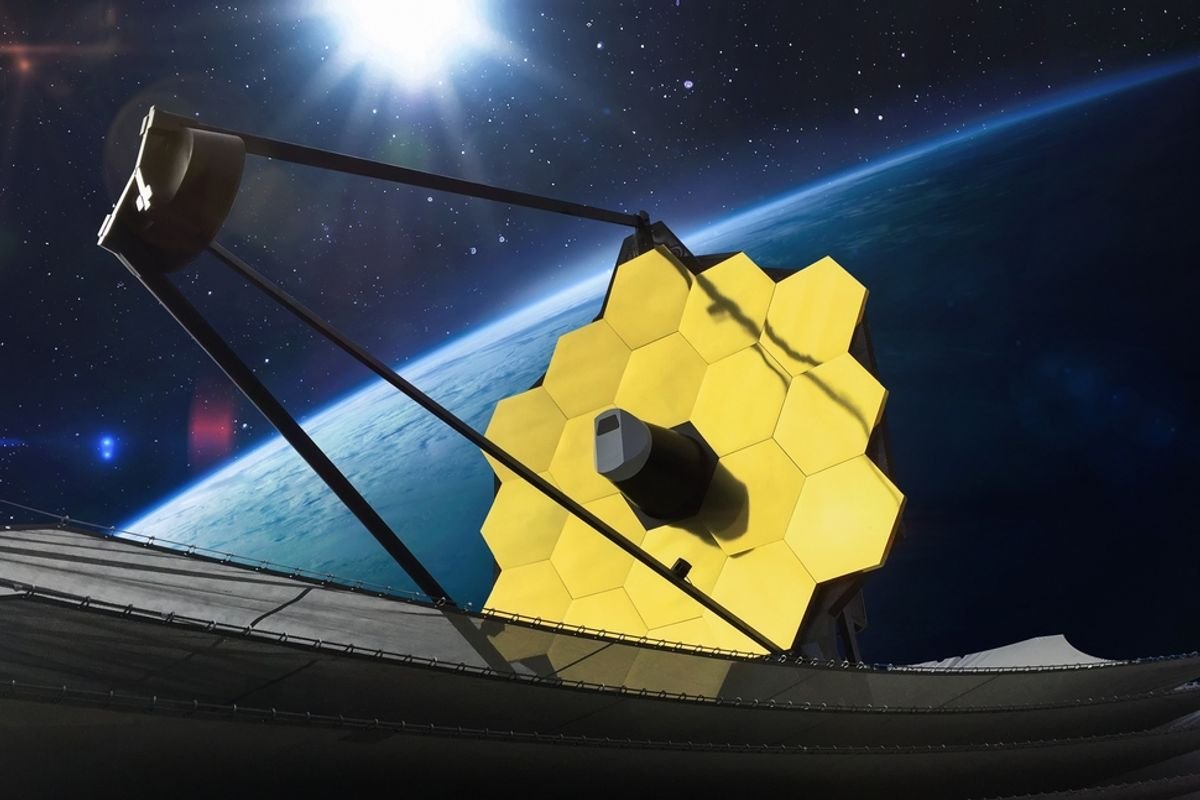
Cook’s team’s discovery offered scientists a rare chance to study the phenomena in more detail. Using the James Webb Space Telescope (JWST), a team at Harvard identified a mysterious source of infrared light.
“This could be the first object linked to a FRB that anyone has found in another galaxy,” Peter Blanchard, a research associate in the Harvard College Observatory at the Center for Astrophysics who led the second study, said in a press release.
Blanchard’s team believe the most likely source of the infrared light is a red giant star or a massive star in the middle of its life. While these may not cause a FRB directly, they may be accompanied by a neutron star or other object that drags mass away from the star and causes an FRB.
Alternatively, the infrared light may be a temporary burst of energy linked to the FRB. If that is the case, future observations are likely to show it fading over time. In contrast, they say, the infrared light is too bright to suggest an isolated magnetstar.
“Being able to isolate individual stars around an FRB is a huge gain over previous searches, and it begins to tell us what sort of stellar systems could produce these powerful bursts,” co-author Edo Berger, a scientist at the Center for Astrology and professor of astronomy at Harvard, said in a press release.
“We can’t predict when and where the next FRB will come from, so we have to be ready to quickly deploy JWST when the time comes,” Berger added.
Read More: A Dead NASA Satellite Has Sent a Strange Radio Signal to Earth — Here’s How
Article Sources
Our writers at Discovermagazine.com use peer-reviewed studies and high-quality sources for our articles, and our editors review for scientific accuracy and editorial standards. Review the sources used below for this article: