
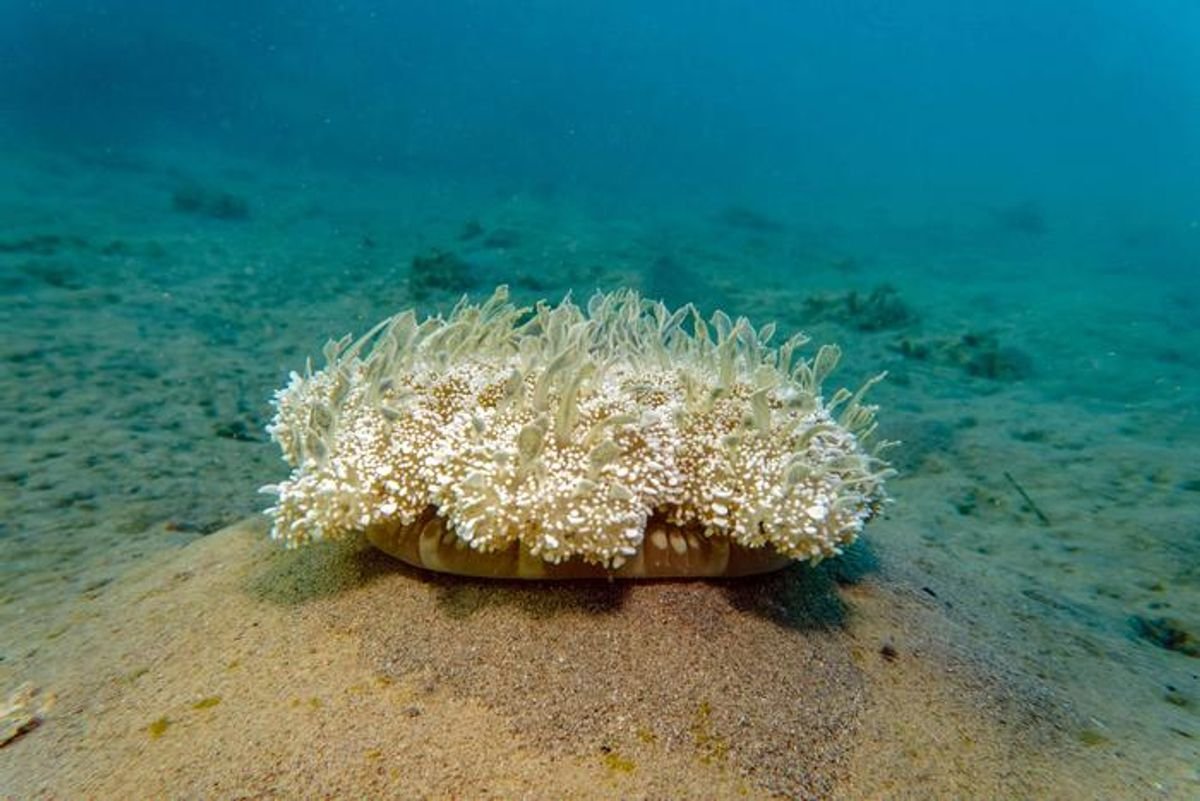
Brainless Jellyfish Need Rest Like Humans, and Reveal Sleep’s Evolutionary Purpose
Sleep can feel like a luxury in the busy, modern world – but new research has found that it is necessary for more than just recharging our brain. The study, published in Nature Communications, traces one of sleep’s most fundamental purposes back hundreds of millions of years using jellyfish and sea anemones: two of the earliest animals with nervous systems.
The findings offer compelling evidence that sleep evolved not for dreams, memory, or even complex brains, but to protect neurons from DNA damage, a biological priority so essential it has endured despite the obvious risks of being unconscious in a dangerous world.
“Our findings suggest that the capacity of sleep to reduce neuronal DNA damage is an ancestral trait already present in one of the simplest animals with nervous systems,” said Lior Appelbaum, principal investigator of the Molecular Neuroscience Lab at the Faculty of Life Sciences and Multidisciplinary Brain Research Center at Bar-Ilan University, in a press release.
Jellyfish Crack Sleep’s Evolutionary Code
Animals that sleep become less aware of their surroundings, miss opportunities to feed or reproduce, and are more vulnerable to predators. And yet, sleep is nearly universal across species with nervous systems. This enduring paradox has long puzzled scientists, but this new research suggests an answer.

Orange marks the nervous system of sea anemone Nematostella vectensis.
(Image Credit: Dr. Raphaël Aguillon)
Previous work on zebrafish showed that neurons accumulate DNA damage during waking hours and rely on sleep to repair them. Building on that finding, researchers in this study examined two animal lineages with remarkable simple nervous systems – symbiotic jellyfish that are active during the day and sleep at night, and non-symbiotic sea anemones that sleep from dawn through the first half of the day.
Despite stark differences in lifestyle and sleep timing, both species slept about eight hours per day, a time period strikingly similar to that of humans. More importantly, both species showed the same underlying biological pattern of DNA damage building up during wakefulness and getting repaired during sleep. When the animals were deprived of sleep and DNA damage increased, they compensated by sleeping longer afterward.
The researchers also found that when DNA damage was increased – either by ultraviolet radiation or a DNA-damaging chemical – both jellyfish and sea anemones responded with rebound sleep. These results point to a bidirectional relationship where DNA damage increases the need for sleep and sleep actively reduces that damage.
Read More: Can You Sleep Too Much? Likely No, but Too Little Can Create Health Consequences
How Scientists Uncovered Sleep’s Deep Origins
To reveal these patterns, researchers used infrared video tracking and detailed behavioral analyses to define what sleep looks like in these two creatures. They identified periods of prolonged inactivity, reduced responsiveness, and sleep rebound after deprivation.
By pairing these observations with molecular markers of DNA damage, the team could show that sleep and neural repair were tightly linked, even in animals that don’t have brains.
“Sleep may have originally evolved to provide a consolidated period for neural maintenance, a function so fundamental that it may have been preserved across the entire animal kingdom,” said Appelbaum.
What Does This Mean For Human Sleep?
The implications extend well beyond marine biology. In humans, disrupted or insufficient sleep is strongly associated with cognitive decline and a higher risk of neurodegenerative diseases such as Alzheimer’s and Parkinson’s – conditions thought to involve the gradual accumulation of neuronal DNA damage.
By grounding sleep’s function in deep evolutionary history, the study strengthens the case that high-quality sleep is essential for long-term brain resilience, not just short-term alertness.
“Sleep is important not just for learning and memory, but also for keeping our neurons healthy. The evolutionary drive to maintain neurons that we see in jellyfish and sea anemones is perhaps one of the reasons why sleep is essential for humans today,” explained Appelbaum.
In other words, when you go to bed, you are participating in one of life’s oldest survival strategies that began long before brains like ours ever existed.
Read More: What Happens to the Brain When We Miss a Night of Sleep?
Article Sources
Our writers at Discovermagazine.com use peer-reviewed studies and high-quality sources for our articles, and our editors review for scientific accuracy and editorial standards. Review the sources used below for this article: