
Bird Poop Helped Power One of Ancient Peru’s Wealthiest Kingdoms
On the desert coast of southern Peru, wealth didn’t glitter. It grew in cornfields. Hundreds of years before the Inca Empire rose to power, the Chincha Kingdom thrived in one of the driest regions on Earth. Their secret wasn’t gold or silver — it was seabird droppings.
New research published in PLOS One suggests that guano — the nitrogen-rich waste produced by seabirds nesting on nearby islands — boosted maize (corn) harvests in the Chincha Valley. That agricultural surplus may have powered Chincha expansion, helping turn the society into one of the most influential coastal polities of its time.
“In ancient Andean cultures, fertiliser was power,” said lead author Jacob Bongers in a press release.
Bird Poop Fueled Farming in the Chincha Kingdom
The Chincha Valley receives little rainfall. Irrigation from Andean rivers made farming possible, but maintaining soil fertility required additional help.

Seabirds and possible maize are seen sprouting on this ceremonial digging stick or paddle from coastal Peru.
(Image Credit: The Met Museum 1979.206.1025.)
Maize was central to daily life. It fed households, played a role in ceremonies, and supported trade. But cultivating it repeatedly in sandy coastal soils would have steadily reduced nutrients.
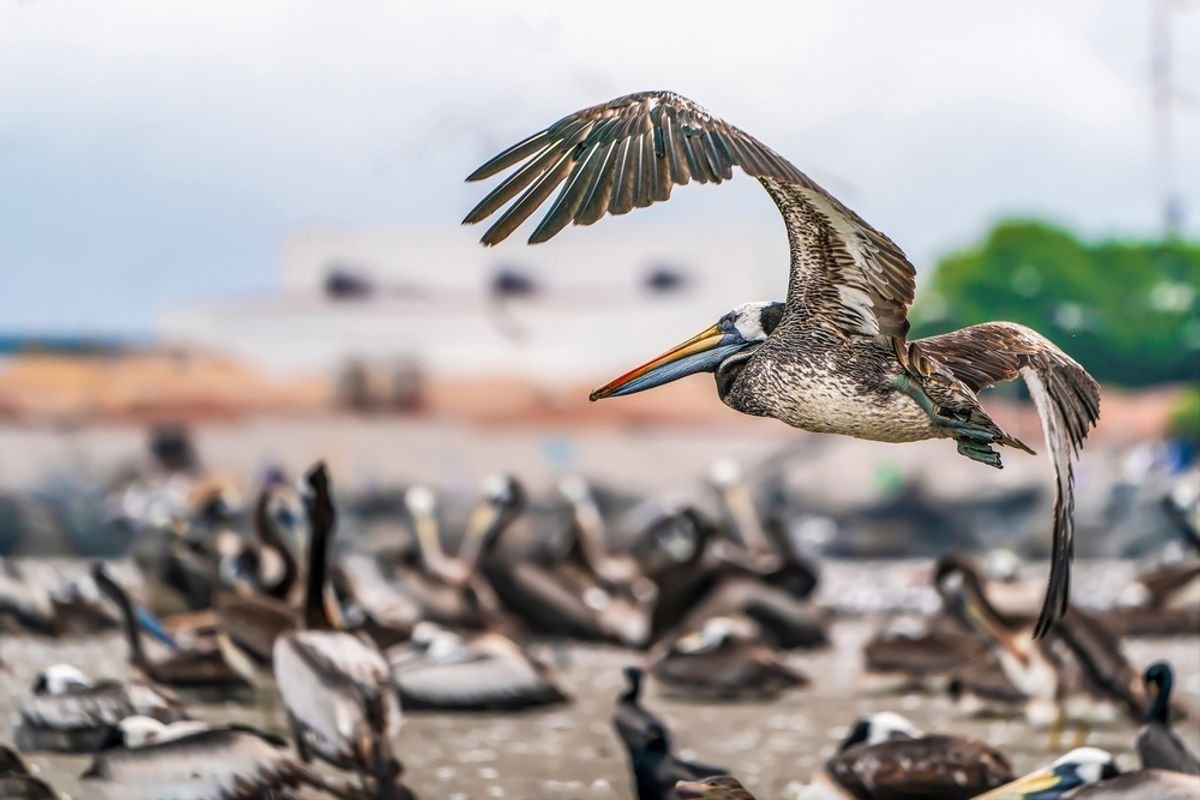
Just offshore, the Chincha Islands offered a solution. Dense colonies of seabirds deposited thick layers of guano rich in nitrogen — a key ingredient for plant growth. Historical accounts describe coastal communities sailing to the islands on rafts to collect the fertilizer and carry it back to their fields.
“The historical records documenting how bird guano was applied to maize fields helped us interpret the chemical data and understand the regional importance of this practice,” coauthor Emily Milton said in the press release.
Guano wasn’t just practical. In Chincha art, seabirds, fish, and sprouting plants often appear together on textiles, ceramics, and carved gourds — visual reminders of the link between marine life and agricultural abundance.
Reading the Corn’s Chemical Clues
The team analyzed 35 maize cobs recovered from burial sites in the Chincha Valley, some dating to around 1200 C.E. Using stable isotope analysis — a technique that measures chemical signatures preserved in plant tissue — they searched for high nitrogen levels.
Many of the samples showed nitrogen values beyond what natural soils would produce. Some closely matched modern crops that are grown with guano. When compared to plants fertilized with other materials, the Chincha maize aligned most strongly with guano-treated fields.
“Seabird guano may seem trivial, yet our study suggests this potent resource could have significantly contributed to sociopolitical and economic change in the Peruvian Andes,” Bongers said.
Read More: An Unexpectedly Large Vulture Soared Over South America 13,000 Years Ago
Rethinking the Source of Chincha Wealth
By the 13th and 14th centuries, the Chincha Kingdom had become one of the wealthiest societies along Peru’s southern coast. The region may have supported tens of thousands of tribute payers, along with merchants who traded goods along the Pacific and into the highlands.
Past scholars credited that prosperity to luxury trade, but the new findings point to a more basic foundation: food security.
“We know the Chincha were extraordinarily wealthy and one of the most powerful coastal societies of their time. But what underpinned that prosperity? Previous research often pointed to spondylus shells, the spiny oyster, as the key driver of merchant wealth,” Bongers said in the release.
If guano increased maize yields, it would have created a steady agricultural surplus — enough to sustain population growth and support specialized traders and artisans. Rather than being a minor agricultural aid, seabird fertilizer may have stabilized the system that allowed long-distance trade to flourish.
“The true power of the Chincha wasn’t just access to a resource; it was their mastery of a complex ecological system,” coauthor Jo Osborn said in the press release. “They possessed the traditional knowledge to see the connection between marine and terrestrial life, and they turned that knowledge into the agricultural surplus that built their kingdom.”
Read More: Ancient Temple Ruins Shed Light on Life of Tiwanaku, a Thriving Pre-Inca Civilization
Article Sources
Our writers at Discovermagazine.com use peer-reviewed studies and high-quality sources for our articles, and our editors review for scientific accuracy and editorial standards. Review the sources used below for this article: