
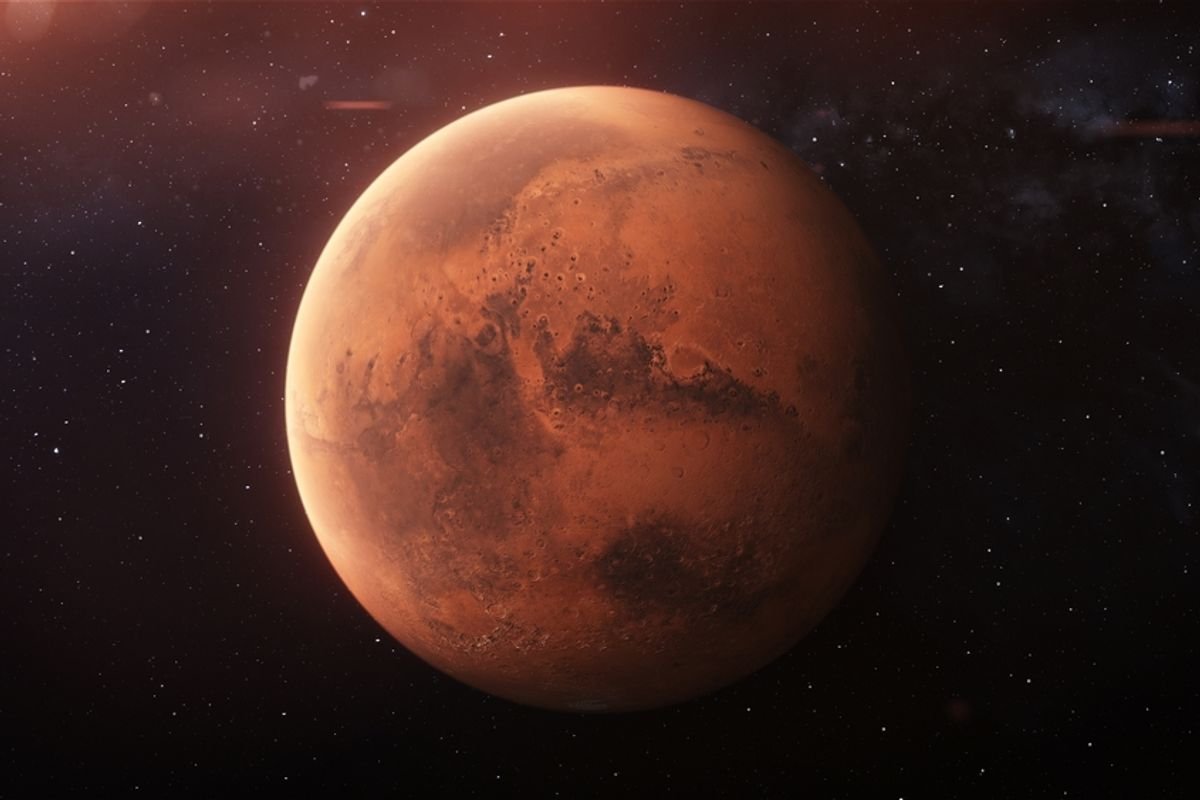
Bacteria Haven’t Been Found On Mars — Could They Be Beneath the Surface?

Key Takeaways for Bacteria On Mars
- Bacteria can lie dormant for long periods of time and eventually be resuscitated. While looking for bacteria on Mars, experts need to keep this notion in mind.
- Dormant bacteria from Earth could be hiding on our spacecrafts and, without precautions, contaminate Mars.
- Though not confirmed, researchers believe that bacteria on Mars could be lying dormant beneath the Red Planet’s surface.
One of the coolest things about bacteria is that some can sleep or enter dormant states. That’s right. When they’re starved of nutrients, and in the right conditions, they go dormant, meaning that while they may appear dead, they can be rehydrated — some like the dried mushrooms and chilis you add to your favorite recipes.
We know that dormant bacteria exist on Earth and potentially on spacecraft sent to Mars, and while we haven’t yet found any dormant bacteria on Mars, that doesn’t mean they don’t exist. According to a study in Astrobiology, we’ve got many reasons to believe that below the surface on Mars may be dormant, martian bacteria.
Read More: Bacteria Like E. coli Swim Upstream in Our Bodies To Infect the Urinary Tract and Gut
The Hunt for Bacteria on Mars
Researchers at Northwestern University have shown that the microbe, Deinococcus radiodurans, can survive extreme radiation. Therefore, if the microbe had been lying dormant underneath the surface of Mars, it could have survived solar protons and galactic cosmic radiation. Though again, researchers have only shown that it’s possible, not that it exists.
We’ve learned about dormant bacteria and how they might survive by studying them on Earth. A recent study published in the journal Microbiology Spectrum showed that heavily sterilized rooms that are prepared for a space mission could potentially carry dormant bacteria to Mars. The study found that dormant bacteria could potentially hitchhike to Mars, having major implications for space travel.
Imagine if, for example, we thought we found bacteria on Mars when it was actually bacteria that had come aboard the space shuttle and then contaminated Mars? It would be quite the galactic disaster.
“We can’t afford to take any microbes from Earth to other planetary bodies,” says Madhan Tirumalai, lead study author and an assistant professor in the Department of Biology and Biochemistry at the University of Houston.
How Do Dormant Bacteria Survive?
To prevent contamination, spacecraft and spacecraft equipment follow strict protocol to keep the environment free of microbes, with engineers dressed more like surgeons than rocket scientists. There are other protocols for decontamination, such as specialized cleaning liquids and specific temperature conditions. Then, the facilities are repeatedly swabbed to identify any microorganisms that may have survived.
“These are bacteria that are basically playing hide and seek from us,” says Tirumalai. “Dormant bacteria can survive by hibernating in the same way as you would expect from a bear.”
Even though bacteria aboard spacecrafts are kept under conditions that kill most microbes, this select group of microbes identified in the study can be starved and go dormant, basically sleeping until the environment is right for them to come back to life.
Tirumalai says it’s still unclear how long dormant microbes, such as the Actinobacteria identified in the study, can remain dormant. But in the case of Mars, it would have to be millions of years.
Could There Be Dormant Bacteria On Mars?
As part of the study, researchers used a family of enzymes called Resuscitation Promoting Factor (RPF) to feed the bacteria and show that they could come back to life and cause the cells to start growing again once they had previously become dormant.
“Once they use up all the food, they stop dividing, but they’re not dead,” says William Widger, study author and a professor in the department of Biology and Biochemistry at the University of Houston.
So while we haven’t found them yet, judging by how long microbes have been known to survive on Earth, it should be no surprise that bacteria may also lie dormant on Mars.
Read More: Bacteria-Killing Viruses Turn into Better Antibiotic Fighters in Space
Article Sources
Our writers at Discovermagazine.com use peer-reviewed studies and high-quality sources for our articles, and our editors review for scientific accuracy and editorial standards. Review the sources used below for this article: