
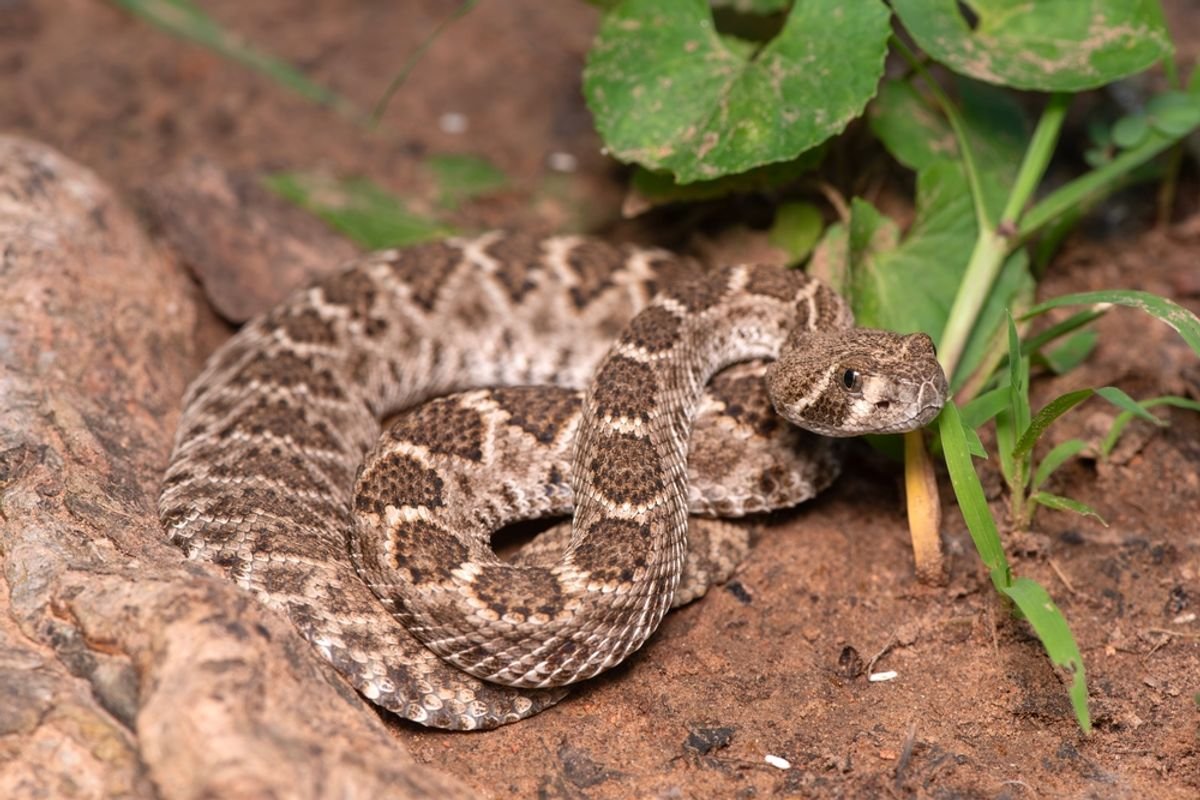
Baby Rattlesnakes Aren’t More Dangerous Than Adults — So Why Did This Myth Spread?

Baby rattlesnakes have a scary reputation: they’re often said to be more dangerous than adults because they supposedly can’t control how much venom they release. But that long-standing belief doesn’t hold up.
A new study finds that baby rattlesnakes are not more dangerous than adults, and in most cases, the opposite is true. Adult snakes carry and deliver more venom, leading to more severe symptoms in bite victims. The findings, published in the journal Toxins, also trace how the myth spread through decades of news coverage, often fueled by misleading quotes from non-experts.
“This is an easily defanged myth that has generated dread, panic, and real-life consequences,” said William Hayes, the study’s lead researcher, in a press release. “Ample evidence demonstrates that baby rattlers, like adults, can control their venom expulsion, the adults possess and deliver far more venom when biting, and the adults cause substantially more severe symptoms.”
Read More: Rattlesnake Venom Evolves and Adapts to Climate Change
Why Baby Rattlesnakes Are Less Dangerous
Rattlesnakes don’t lose control of their venom when they’re young. Like adults, they can regulate how much they inject with each bite. The difference is in quantity: adult snakes have larger venom glands and deliver more venom, leading to more severe symptoms. There’s no evidence juveniles are more likely to “dump” all their venom — a key claim behind the myth.
How the Baby Rattlesnake Myth Spread
Researchers reviewed 130 newspaper stories published between 1900 and 2025 that mentioned whether baby rattlesnakes are more dangerous than adults. Most stories published before 1969 got the science right. But that changed in the late 1960s, when the now-familiar claim that baby snakes “dump” all their venom in one bite began appearing in the media.
From 1970 to 1999, the myth became especially entrenched in California. From 2000 to 2014, inaccurate coverage was common across North America. Only in the past decade has that trend started to reverse, with factually correct stories regaining ground after 2015.
General information stories about rattlesnakes were much more likely to be accurate than local snakebite stories. That difference may come down to sourcing. Broad science or wildlife stories were more likely to quote university professors, while local bite reports often relied on firefighters, police officers, or healthcare workers who repeated misinformation.
University professors provided the most reliable information in the stories researchers analyzed, while fire and police officials were among the least reliable sources.
Why the Misconception Still Matters
The myth’s persistence isn’t just a media problem. It still shapes what people believe. In the study’s surveys, 37.2 percent of students had heard the claim that baby rattlesnakes are more dangerous because they cannot control their venom. Familiarity was highest in the Southwest, where 52.6 percent of students recognized the myth, and lowest in the Northeast, where just 16.4 percent did. Even more concerning, 73.3 percent of surveyed emergency responders and health professionals in Southern California said they believed it.
That misunderstanding can influence real-world behavior. People may panic more after a bite from a juvenile snake, pressure providers for unnecessary care, or kill rattlesnakes out of exaggerated fear. It can also encourage risky assumptions, including the idea that larger snakes are somehow less dangerous.
“We’re hoping to get the word out so that we can get this myth corrected,” Hayes said. “There’s no need for hikers to have unwarranted fear of baby rattlesnakes or to think they need to harm or kill the snakes.”
That message could help people make better decisions, and not just for their own safety. Rattlesnakes play an important ecological role, and their populations have declined in many parts of the U.S. Clearing up one of the most persistent myths about them may be a small but useful step toward safer coexistence.
Read More: A 3D-Printed Rattlesnake Reveals How the Rattle Stirs Fear, Even in Animals Unfamiliar with the Sound
Article Sources
Our writers at Discovermagazine.com use peer-reviewed studies and high-quality sources for our articles, and our editors review for scientific accuracy and editorial standards. Review the sources used below for this article: