
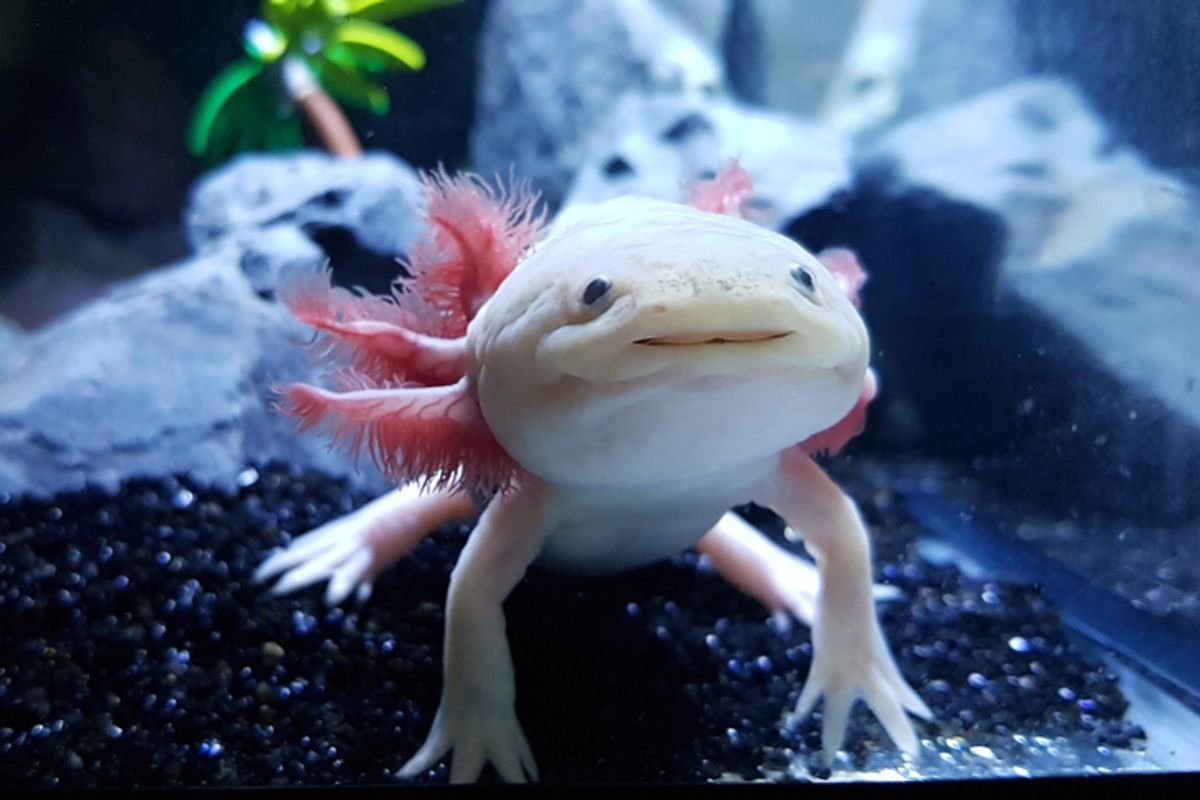
Axolotls Can Regrow a Key Organ From Scratch, Allowing Immune Cells to Fight Infections
The thymus is one of those organs that doesn’t have a lot of name recognition, but it plays a critical role in making sure our immune system stays up to snuff. But just like all organs, the thymus — which is located in the upper chest — gets less effective as we age. It’s difficult to restore the thymus once it’s started to deteriorate, but future therapies may get inspiration from an unexpected source, the axolotl.
A new study published in Science Immunology has found that axolotls, eccentric amphibians that often have a pink hue, can regenerate their thymus after it’s removed from their bodies. Specifically observed in juvenile axolotls, this regenerative power may now serve as a blueprint for treatment options aiming to achieve more effective thymus regrowth.
Read More: These Snails Can Regrow Their Eyes — Could They Help Treat Eye Injuries in Humans?
Teaching Immune Cells to Fight

Tracking the thymus growth in an axolotl.
(Image Credit: Maximina Yun Lab)
The thymus is an integral part of the lymphatic system, which cleans fluid between tissues and sends immune cells to fight infections.
Many may have an easier time recognizing secondary lymphoid organs like lymph nodes — which filter foreign substances from lymph, a watery fluid that runs throughout the body — and the spleen — which filters blood and removes old or damaged red blood cells.
The thymus, on the other hand, is one of the primary lymphoid organs. Its primary function is to train T-cells, which are mature white blood cells (or lymphocytes), to fight disease and infection. In other words, the thymus is like a drill instructor for the immune response, educating T-cells by exposing them to proteins they shouldn’t attack when they go on missions throughout the body.
Starting in just the first year after birth, however, the thymus begins to shrink, a process called involution. Thymus involution then speeds up after puberty as the organ is replaced by fatty tissue, and by 65, the production of new T-cells has essentially almost shut down. This leads to a weaker immune system in old age, raising the risk of infections, immune disorders, and cancers, according to The Walter and Eliza Hall Institute of Medical Research.
Axolotls’ Superpower
Scientists have been looking for ways to restore the thymus through cellular therapy or bioengineering, but these strategies merely delay thymic involution rather than fully regenerate it.
Complete thymus regeneration was previously not known to exist in any vertebrates, although scientists had speculated that salamanders might have the best chance — they’re the only terrestrial vertebrates that can regrow full limbs.
To study the possibility of complete thymus regeneration, the researchers involved in the new study turned to axolotls, salamanders that retain their “tadpole” form and live underwater their entire lives.
The researchers surgically removed the thymus from juvenile axolotls and then observed how the organ could regenerate. They found that within 35 days after surgery, around 60 percent of the axolotls regenerated thymic nodules. The most crucial aspect is that this was de novo regeneration — from scratch rather than getting help from remnants of the missing thymus.
A Step Toward Thymus Regeneration
The regenerated thymuses in the axolotls were eventually able to recruit cells that matured into T-cells, just like the original thymuses would’ve done.
The researchers also wanted to know what facilitated the de novo thymus regeneration on a molecular level. They initially looked at the Foxn1, a regulator gene involved in thymus development. According to a statement on the study, genetic deletion of Foxn1 did not prevent thymus regeneration but led to the development of smaller thymic tissues than those in the naturally occurring version of the gene in axolotls.
The growth factor midkine (MDK), a protein that’s highly expressed during human embryonic development, may instead be a key factor. The researchers found that MDK expression increased in the axolotls after thymus removal, and that inhibiting MDK reduced regeneration.
The researchers say that further research into the molecular pathways underlying thymus regeneration could help identify therapies to improve thymic function in aging or immunocompromised patients.
Read More: What Is Regeneration, and Can Other Organs Regenerate Like the Liver?
Article Sources
Our writers at Discovermagazine.com use peer-reviewed studies and high-quality sources for our articles, and our editors review for scientific accuracy and editorial standards. Review the sources used below for this article: