
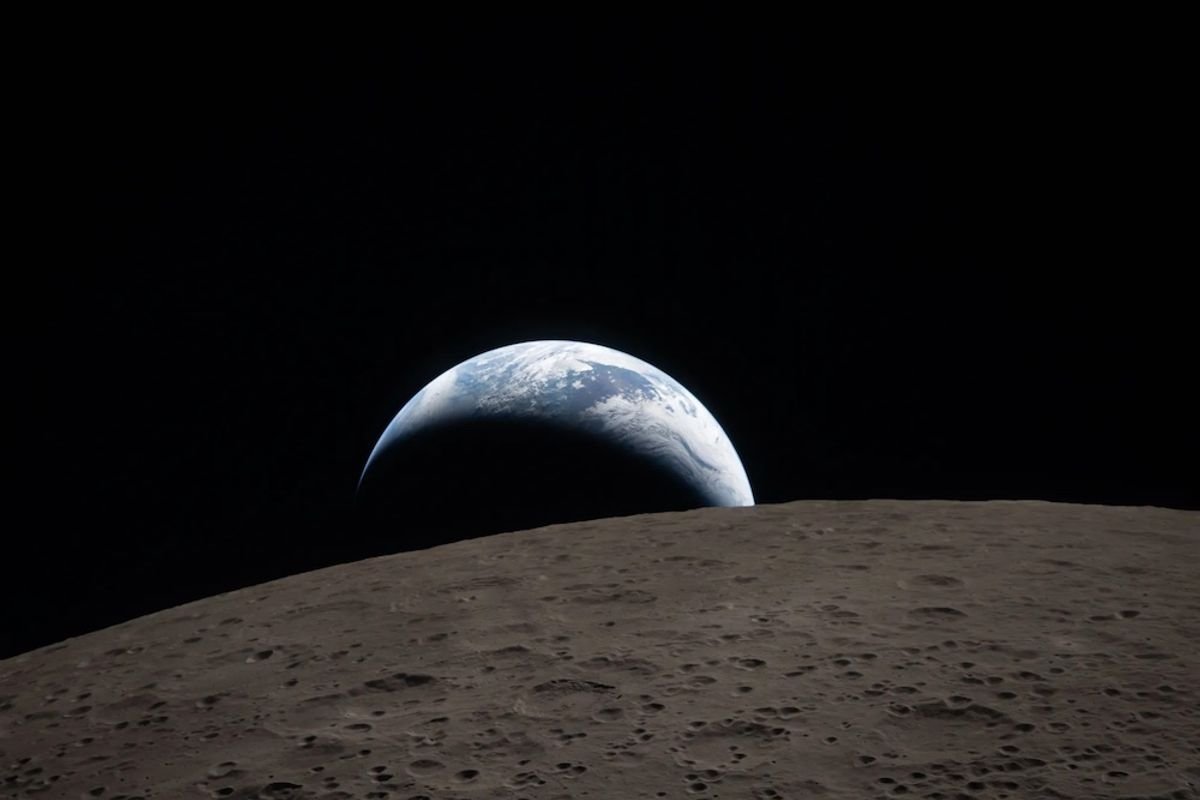
Artemis II Crew Breaks Record for Farthest Human Spaceflight While Gazing Upon the Moon’s Far Side
The Artemis II test flight has already broken a number of records halfway through its trip around the Moon. Perhaps the most remarkable among them is that the four astronauts on this mission have set a new record for the farthest distance achieved by human spaceflight, traveling 252,756 miles from Earth.
Beyond this record, Artemis II has also made critical observations of the Moon’s far side, offering a sneak peek of a region that NASA and other global space agencies hope to investigate through scientific research in the coming years.
After the new record was set, CSA (Canadian Space Agency) astronaut Jeremy Hansen gave a response, which was shared in a statement from NASA, “From the cabin of Integrity here, as we surpass the furthest distance humans have ever traveled from planet Earth, we do so in honoring the extraordinary efforts and feats of our predecessors in human space exploration.”
Hansen continued, “We will continue our journey even further into space before Mother Earth succeeds in pulling us back to everything that we hold dear. But we most importantly choose this moment to challenge this generation and the next to make sure this record is not long-lived.”
Setting a Human Spaceflight Record
Artemis II officially broke the record for the farthest distance traveled by a human spaceflight mission at 1:56 p.m. ET on Flight Day 6 (Monday, April 6, 2026), when the spacecraft reached its maximum distance from Earth at 252,756 miles. At this time, the spacecraft made its closest approach to the Moon, getting as close as about 4,067 miles above its surface.
The new maximum distance achievement surpasses the previous record — a distance of 248,655 miles from Earth — set by the Apollo 13 mission in 1970.
Read More: NASA Unveils Roadmap for Permanent Moon Base and Increased Missions to the Moon
Craters on the Moon, and a Solar Eclipse
The rest of Flight Day 6 was just as eventful for Hansen and NASA astronauts Victor Glover, Reid Wiseman, and Christina Koch.

Moon fully eclipsing the sun, captured by the Artemis II crew.
(Image Credit: NASA)
Shortly after 2 p.m. ET, they described two unnamed craters that they had spotted near Orientale basin, a nearly 600-mile-wide surface feature first observed on Flight Day 5 (Sunday, April 5, 2026), according to NASA.
The crew proposed names for both craters: For the one located just northwest of Orientale basin, they suggested the name “Integrity,” the same name they’ve given their spacecraft. And for the other crater, located northeast of the first one, the crew chose the name “Caroll” in honor of Wiseman’s late wife, Caroll Taylor Wiseman. These crater name proposals will later be submitted to the International Astronomical Union, the organization in charge of naming celestial bodies and their surface features.
Later in the day, at 8:35 p.m. ET, Artemis II witnessed a solar eclipse that lasted for an hour. Donning eclipse just as they would on Earth, the crew saw the Sun disappear behind a mostly darkened Moon and proceeded to study the glow of the solar corona (the Sun’s outermost atmosphere).
Views From the Far Side
As the Artemis II crew looped around the Moon, features of the lunar far side came into view. They took note of Hertzsprung basin, a nearly 400-mile-wide far side crater that’s much older than Orientale basin and has been hit by more impacts over time. Comparing observations of these two basins will help scientists understand how lunar features evolve over geologic timescales, according to NASA.
With its lunar observation period completed, Artemis II is headed back home, having left the lunar sphere of influence at about 1:23 p.m. ET on Flight Day 7 (Tuesday, April 7, 2026). Everyone on Earth now awaits their return on Friday, April 10, when the crew is anticipated to splash down off the coast of San Diego at around 8:07 p.m. ET.
Read More: Major Changes to NASA’s Artemis III and Artemis IV Missions to the Moon
Article Sources
Our writers at Discovermagazine.com use peer-reviewed studies and high-quality sources for our articles, and our editors review for scientific accuracy and editorial standards. Review the sources used below for this article: