
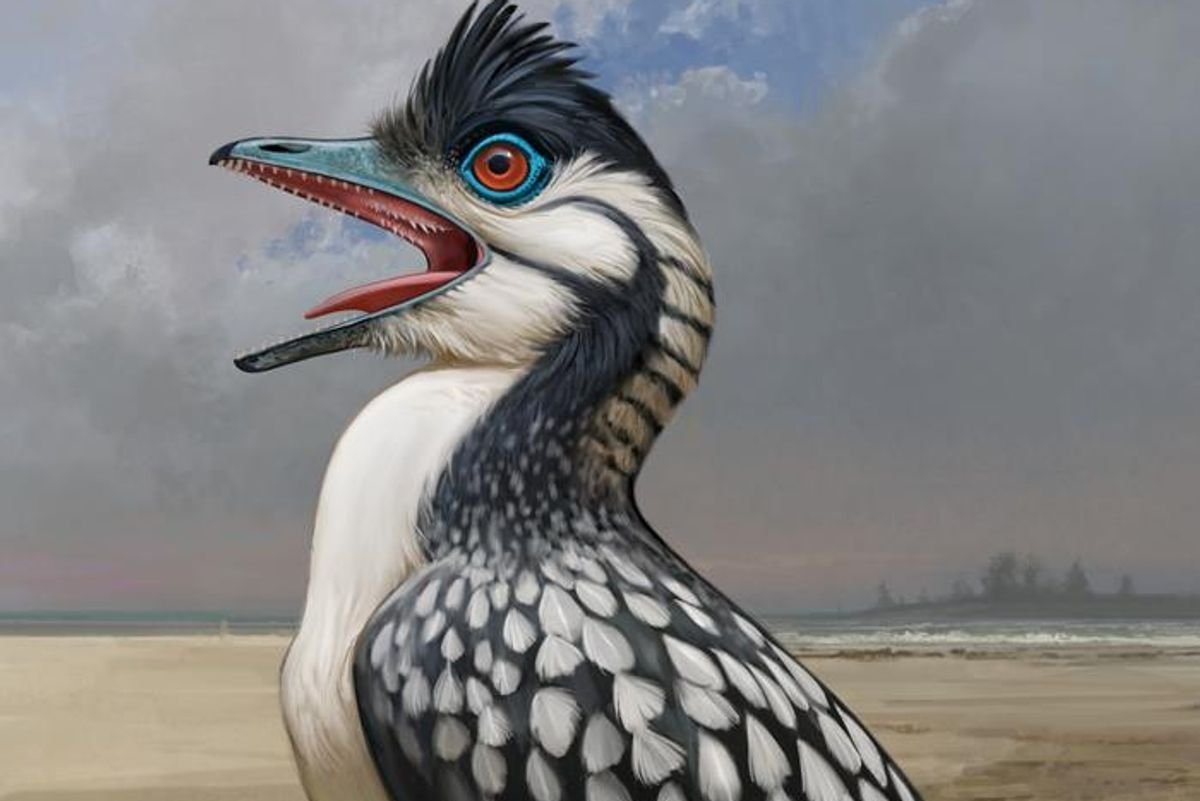
Archaeopteryx — The Earliest Known Bird — Had a Strange Mouth, but Fed Like Modern Birds
Birds didn’t invent flight — but they’re pretty good at it. So good, in fact, that the evolution of birds from dinosaurs makes them the oldest group of flying vertebrates still in existence today. Pinpointing when the anatomical features that created birds first emerged is an ongoing investigation for paleontologists.
Taking a closer look at the famous Archaeopteryx fossil at the Field Museum in Chicago — a well‑preserved specimen of what is often considered the earliest known bird — researchers uncovered bird‑like characteristics paleontologists had never documented in fossils from that period. Instead of focusing on wings or feathers, the team identified specialized mouth features such as fleshy “teeth,” tongue bones, and sensitive beak tips, described in a study published in The Innovation.
These features have survived in birds to this day, helping them quickly find and process food — a crucial advantage for meeting the high energy demands of flight, an adaptation that began back in the age of dinosaurs.
“For a long time, there have been very few things that we could say really characterize the transition from terrestrial dinosaurs to flying bird dinosaurs,” said study lead author Jingmai O’Connor, associate curator of fossil reptiles at the Field Museum, in a press statement.
What Makes Dinosaurs Birds — Not Just Feathered Reptiles?
The indisputable characteristic of birds is their ability to fly. Because birds trace their roots back to the age of dinosaurs, understanding how flight evolved means looking millions of years into the past. The earliest known dinosaur to take to the skies is Archaeopteryx, which lived in what is now Germany around 150 million years ago.

Archaeopteryx skull under UV light.
(Image Credit: Photographer Delaney Drummond, (c) Field Museum)
Fossil remains of its long arm bones, soft tissue, and feathers suggest that the anatomical features needed to generate lift came together for the first time in Archaeopteryx. Yet other feathered dinosaurs lived at the same time, and despite these similarities, they never achieved flight.
By carefully removing the top layer of limestone from the famous “Chicago Archaeopteryx” fossil, under UV light, preparators uncovered intricate mouth structures that no fossil from this period had preserved before.
Read More: 160-Million-Year-Old Fossils Rewrite the Story of Dinosaur Flight
Archaeopteryx’s Mouth Surprisingly Similar to Modern Birds
When meticulously working on the fossil, unusual microscopic features inside the specimen’s skull stood out.
“I remember them calling me over and saying, ‘Jingmai, we found something strange, come look at it,” said O’Connor. “They showed me these tiny, glowing dots, and I had no idea what we were looking at.”
After checking with a book on bird anatomy, the researchers identified the small features found in Archaeopteryx as the first examples of oral papillae, fleshy cones on the roof of birds’ mouths, similar to teeth, helping them to eat and swallow more efficiently.
Besides oral papillae, they found other anatomical characteristics, typically seen in birds’ mouths. The Chicago Archaeopteryx skull also showed remains of a tongue bone, a feature common in birds that makes tongues more mobile, helping with reaching and manipulating food — a mobility humans lack.
“This teeny-tiny bone is one of the smallest bones in the body, and it indicates that Archaeopteryx had a highly mobile tongue, like many birds today,” described O’Connor.
CT scans of Archaeopteryx’s beak revealed another bird trademark. Small remaining tunnels indicate space for nerves usually found in birds’ bill-tip organ that helps them sense hidden food in the ground.
Efficient Feeding Makes Good Fliers
Instead of focusing on finding the anatomical features directly linked to the art of flying in dinosaur fossils, this discovery demonstrates that considering other bird-like characteristics can be a great way to tell non-avian dinosaurs and first birds apart.
Since flying requires a lot of energy, birds have evolved to be most efficient when it comes to feeding themselves and meeting their calorie needs quickly. The remains of oral papillae, tongue bones, and sensory beaks found in the Chicago Archaeopteryx, some of which represent the earliest examples in the fossil record, suggest that these were fundamental adaptations allowing them to soar the skies.
“These discoveries show this really clear shift in how dinosaurs were feeding when they started flying and had to meet the enormous energetic demands of flight,” said O’Connor. “Birds have a super-efficient digestive system — everything is modified to maximize the efficiency of eating and the calories that they can extract from food. And the digestive system starts with the mouth.”
Read More: 16,000 Fossilized Footprints Reveal South America’s Forgotten Dinosaur Highway
Article Sources
Our writers at Discovermagazine.com use peer-reviewed studies and high-quality sources for our articles, and our editors review for scientific accuracy and editorial standards. Review the sources used below for this article: